Strong, decisive engagement is needed from all parties
Following approval of the project “Low‑emission Crop Production Scheme for 2025–2035, with a vision to 2050” by the Ministry of Agriculture and the Environment, provinces and cities have moved swiftly to put plans into action.
Nguyen Thi Thu Huong, Deputy Director of the Plant Production and Protection Department, reported that 22 provinces and municipalities have already issued provincial‑level action plans.
Quang Tri province, for instance, is rolling out a low‑emission rice model across 13 communes, covering more than 6,000 hectares. In Hue city, the model “Applying technical advances; water management; straw management for low‑emission rice production” is being implemented over 20 hectares.
International organisations and businesses are also registering to participate, contributing practical models and Measurement‑Reporting‑Verification (MRV) systems.
By 2030, crop production zones will be established according to commodity and ecological region. Priority will be given to rice, coffee, fruit trees and maize, aligning with comparative advantages.
The Plant Production and Protection Department has stated that by 2030, crop production zones will be established according to commodity and ecological region. Priority will be given to rice, coffee, fruit trees and maize, aligning with comparative advantages.
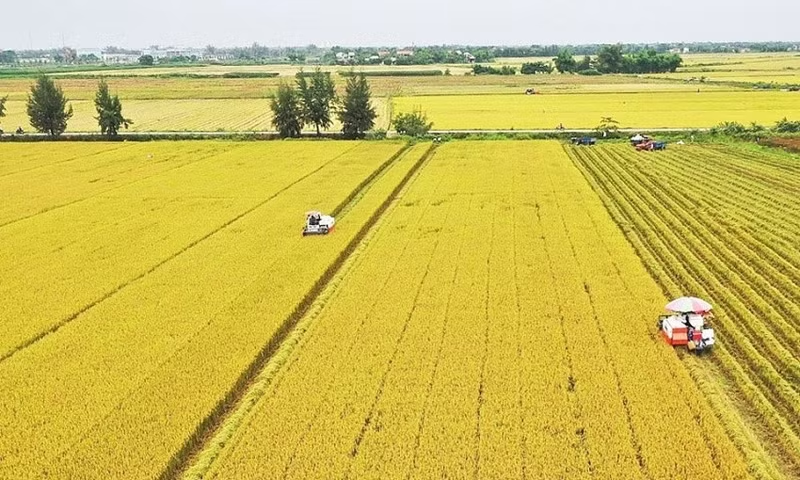
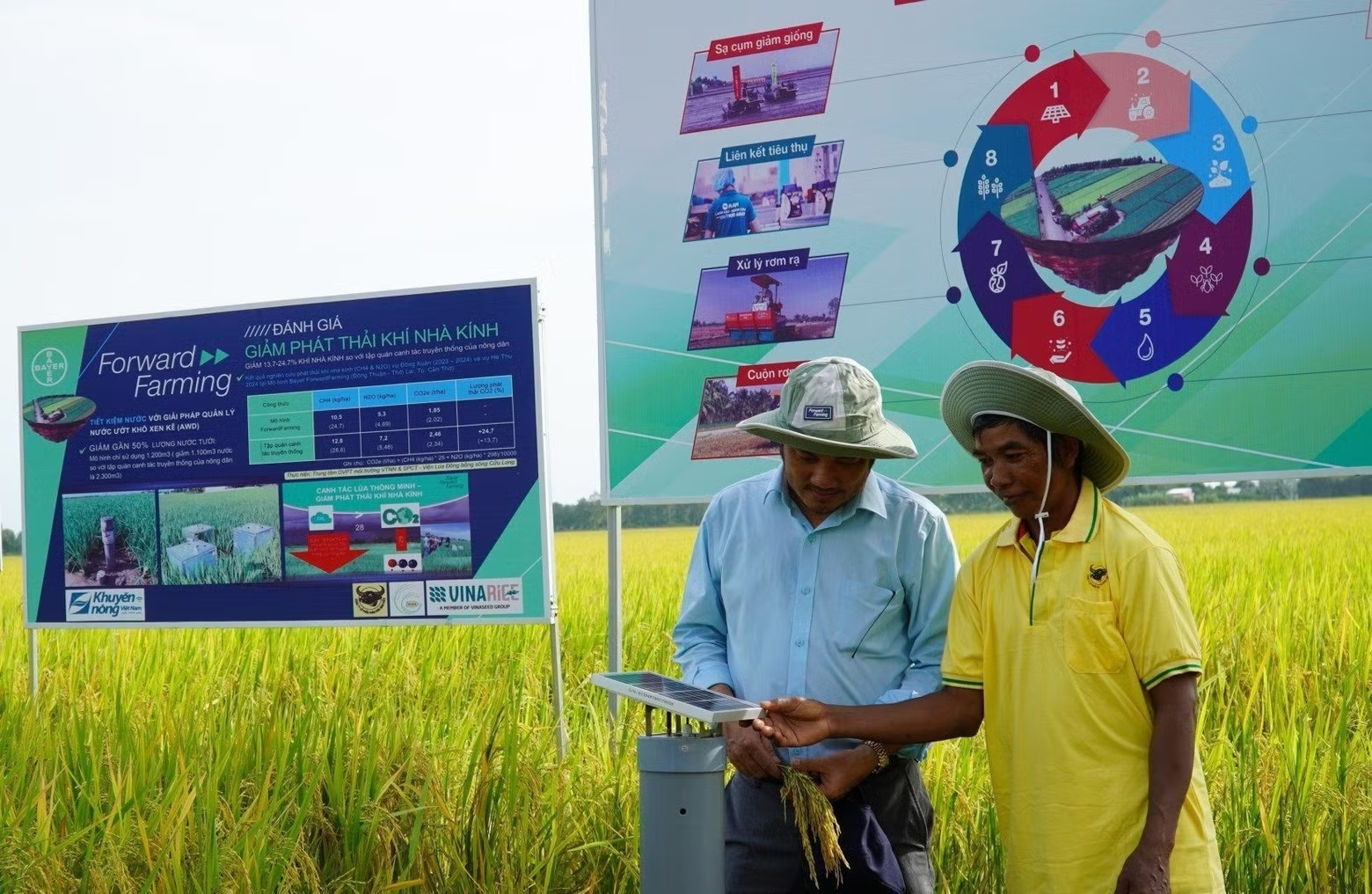
For rice, expansion will centre on alternate wetting and drying (AWD) techniques, straw management, reduced seeding rates, optimised fertiliser use and synchronised mechanisation. This will be linked to the flagship project of establishing one million hectares of high‑quality, low‑emission rice in the Mekong Delta.
For coffee, efforts will focus on circular production models, water‑saving irrigation, organic fertilisers, by‑product reuse and soil restoration in the Central Highlands and Son La Province. Pilot low‑emission coffee zones will also be connected to traceability and sustainable export.
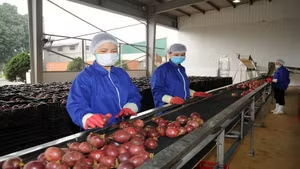
For fruit crops such as durian, dragon fruit, pomelo, passion fruit and mango, the emphasis will be on irrigation management and by‑product treatment to meet international green standards.
At the same time, MRV systems will be standardised from central to local levels, with rice and coffee prioritised before extending to other key crops.
Harnessing the role of localities
The agriculture sector has set a target: by 2035, crop production will reduce total greenhouse gas emissions (CO2e) by at least 15% compared with the 2020 baseline.
Plans include developing a “low‑emission” label for products across crop value chains. Each province is expected to implement one to two scalable low‑emission cropping models and pilot at least 15 cultivation models capable of generating carbon credits that meet international standards.
The agriculture sector has set a target: by 2035, crop production will reduce total greenhouse gas emissions (CO2e) by at least 15% compared with the 2020 baseline.
Deputy Minister of Agriculture and the Environment Hoang Trung emphasised that the project’s core objective is to gradually build a sustainable cropping system that adapts to climate change, reduces emissions, lowers input costs, raises farmers’ incomes and strengthens the global standing of Vietnamese agricultural produce.
The transition requires a decisive shift from a quantity‑driven mindset to one focused on quality, efficiency, added value and environmental responsibility.
Under this strategy, the central government will provide direction, establish mechanisms and offer technical support. Localities, meanwhile, will be responsible for organising implementation, mobilising resources and developing large‑scale, replicable low‑emission production models.
Local authorities must play the leading role in field implementation: proactively selecting production zones, crops and suitable models; mobilising resources; and reorganising production through linked value chains.