Son La province has 521 active agricultural cooperatives. Many of these cooperatives have actively adopted green production standards such as registered growing areas, traceability, VietGAP, GlobalGAP, HACCP, and organic certifications, and have implemented greenhouse and water-saving irrigation systems.
Currently, Son La has 63 cooperatives with registered growing areas, of which 58 have registered growing areas for export; 99 cooperatives are participating in the development of 125 OCOP products. During the 2022-2024 period, 78 cooperatives received VietGAP, HACCP, and organic certifications.
According to Duong Gia Dinh, Deputy Director of the Department of Agriculture and Environment of Son La province, green agriculture is a production method that rationally utilises natural resources, reduces greenhouse gas emissions, limits the use of harmful chemicals, protects the environment, and aims for sustainable development.
According to Dinh, the implementation of green agricultural models has brought about an economic increase of 15%-20% compared to conventional production thanks to reduced production costs, increased product value, meeting food safety requirements, traceability and export standards, and at the same time, agricultural products are more competitive in demanding markets such as the European Union, Japan and the US.
Green production models not only bring economic benefits but also contribute to reducing soil, water, and air pollution; protecting soil fertility; reducing greenhouse gas emissions; and effectively utilising agricultural by-products to develop a circular economy.
One typical example is the Bich Thao Coffee Cooperative in Chieng Coi ward. Nguyen Xuan Thao, the cooperative’s director, stated: In 2017, the cooperative was small, with only 11 members and 50 hectares of cultivated land. Farmers were accustomed to harvesting coffee beans by stripping branches and unripe fruit, drying them roughly outdoors, and using many chemical fertilizers, leading to soil degradation and very low and unstable prices for raw coffee beans.
After nearly a decade of transformation, the Bich Thao Coffee Cooperative has expanded to 150 hectares of specialty coffee, linking production with approximately 1,200 farming households; achieving VietGAP and UTZ certifications; and implementing digital planting area codes and a traceability system using QR codes.
The entire production process at Bich Thao Coffee Cooperative has been transformed towards sustainability, from harvesting 100% ripe cherries and using organic fertilizers to processing with anaerobic fermentation and drying in a closed greenhouse system.
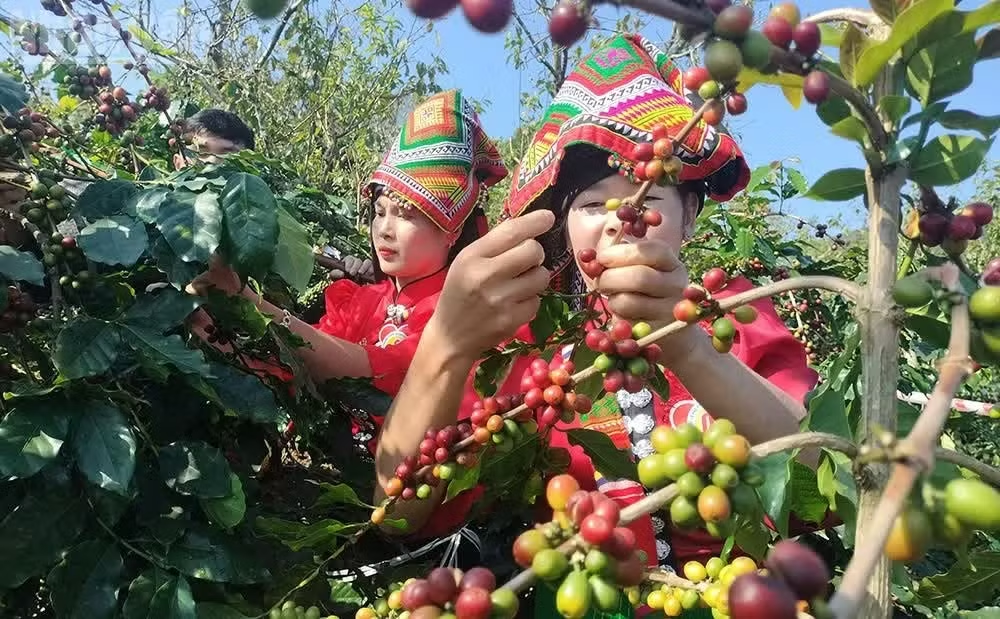
Nguyen Xuan Thao added that the cooperative has invested heavily in “green” infrastructure, including a greenhouse system that controls humidity and temperature, automated machinery for sorting and colour-coded coffee beans, and the cost of quality inspection for export to Europe.
Thanks to this approach, the Bich Thao coffee cooperative’s revenue currently exceeds 40 billion VND per year. Processed coffee products sell for 230,000-270,000 VND/kg, significantly higher than regular raw coffee. The cooperative provides stable employment for dozens of local workers with an average income of over 10 million VND per month.
As one of the households participating in the cooperative's production linkage, Nguyen Xuan Tung shared: “My family has 3 hectares of coffee and the cooperative guarantees the purchase of all our products. By participating in the linkage, households receive guidance on organic coffee cultivation techniques and utilize production by-products as fertilizer, resulting in a 20-30% increase in yield and selling price compared to before.”
According to Nguyen Xuan Tung, Bich Thao Coffee Cooperative also invested in a German and US technology screening machine system, a roasting and grinding line, and a modern storage warehouse. Currently, its processing capacity reaches 80 tons of green coffee beans per day and night, and it exports 4,000-6,000 tonnes of green coffee beans annually to more than 20 countries.
Not only in the field of agriculture, the circular economy model is being effectively applied by many businesses in Son La. At Son La Sugar Corporation, all by-products from the sugarcane processing process are utilised to produce fertilizer and power generation fuel. Approximately 120,000 tonnes of bagasse per season are used as fuel, providing steam for a 9 MW power plant.
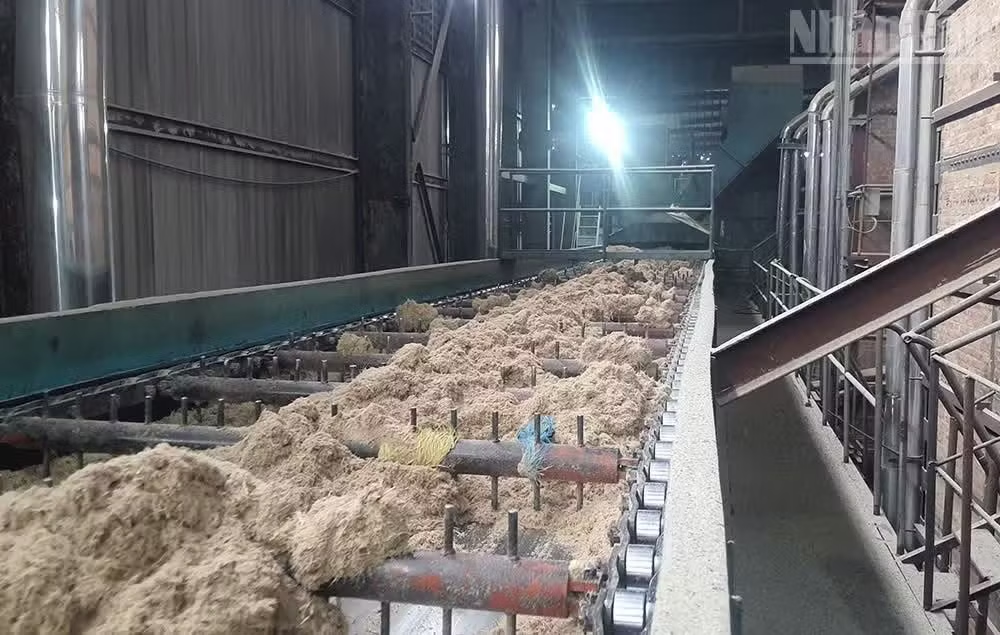
Excess bagasse is sold to pellet manufacturers for export or to cooperatives for the production of organic fertilizer. Ash and sludge are also collected for fertilizer production in the raw material area.
Similarly, at the Song Lam Tay Bac Fertilizer Plant, coffee husks, cassava peels, cassava pulp, and fruit by-products from agricultural processing plants are reused as raw materials for organic fertilizer production, contributing to waste reduction and increasing the value of by-products.
Along with the green transformation, many high-tech agricultural production models in Son La are yielding outstanding economic results. Bell peppers, grafted tomatoes, cantaloupe, and Korean honeydew melons grown in greenhouses are generating revenue ranging from several hundred million to over 1 billion VND per hectare. Many new fruit varieties such as the Queen custard apple, Golden Longan 205, Black Grape, and yellow passion fruit are also opening up promising avenues for farmers.
Duong Gia Dinh, Deputy Director of the Provincial Department of Agriculture and Environment, stated that Son La is continuing to support cooperatives and businesses in applying digital technology in a practical and effective way to form a digital agricultural ecosystem and enhance the competitiveness of local agricultural products.
The province has issued Plan No. 111/KH-UBND on the implementation, application, and management of the traceability system for the period 2026-2030. The goal is to provide in-depth training for 100% of state management officials involved in traceability, and to support 100% of businesses and cooperatives in need with the skills to implement and operate the traceability system.
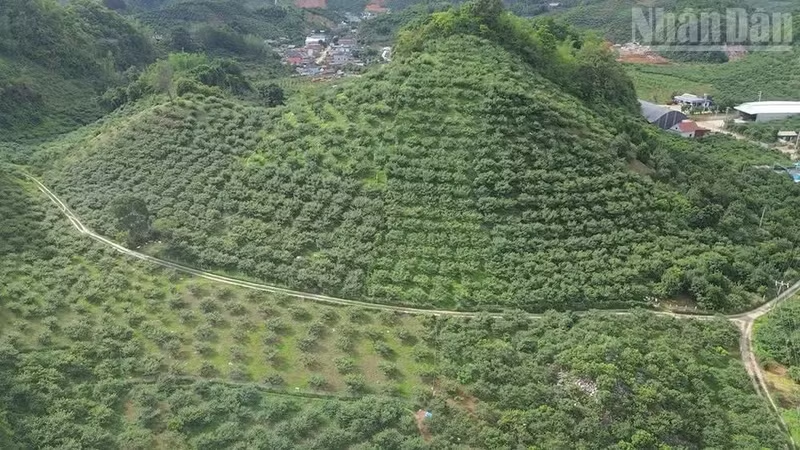
Currently, Son La has over 85,000 hectares of fruit trees, 33,600 hectares of coffee, 6,132 hectares of tea, and approximately 10,000 hectares of sugarcane. Among these, mangoes are one of the key crops with over 16,450 hectares and 71 export-oriented growing area codes.
At Xuan Tien Agricultural Cooperative in Yen Chau commune, members have changed their farming methods towards using biological products and limiting the use of chemical pesticides to meet the increasingly high demands of the market.
Quang Van Xuan, Director of the cooperative, said that the cooperative is coordinating with businesses to complete the documentation and take samples for quality testing before sending offers to the Japanese market. Thanks to proper cultivation techniques, this year’s mango crop is expected to have a higher percentage of first-grade fruit than in previous years.
However, according to Xuan, for sustainable development, cooperatives need to proactively shift from traditional agricultural production thinking to digital and green agricultural economics; promote the application of electronic logs, traceability, production management software, sensor systems, and water-saving irrigation to improve production efficiency.
Following the direction of the Son La province’s agricultural sector, in the coming time, the province will continue to strengthen the management capacity of cooperatives, develop production linked to local advantages, expand value chain linkages and consumption markets, and link cooperative development with the construction of new rural areas.
With the results achieved, green transformation and digital transformation are becoming important drivers helping Son La’s agriculture develop in a modern and sustainable direction, increasing the value of agricultural products and improving the lives of people in rural and mountainous areas.