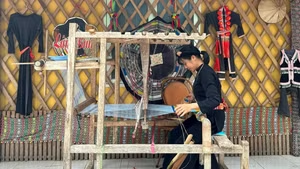
Artefacts transformed into living narratives
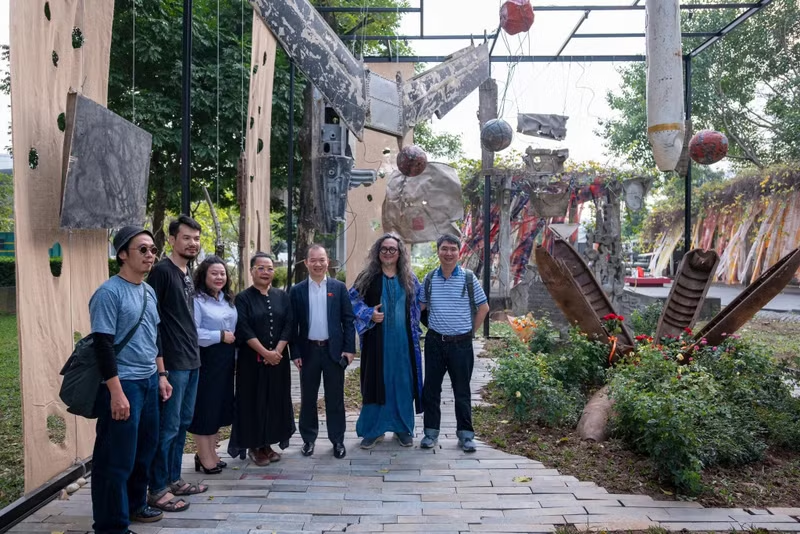
The Ha Noi Museum is currently hosting an art installation exhibition entitled ‘Chien Tranh Va Hoa Binh’ (War and Peace). The exhibition features a large steel frame where fragments of aircraft fuselages that once carried bombs and ammunition during the war hang suspended, seemingly transformed into drifting clouds. In this space, bombs that once brought devastation now lie amidst the green of grass, trees, and flowers. Some visitors even place flowers among the bomb fragments.
This space features a replica of the bas-relief depicting the capture of American pilot John McCain at Truc Bach Lake in Ha Noi in 1967. The bas-relief is surrounded by lotus flower arrangements and multicoloured silk ribbons – symbols of peace and rebirth. These aircraft wreckage pieces and bomb casings are original artefacts preserved at the Ha Noi Museum.
The museum also presents artefacts from the Vuon Chuoi archaeological site in Hoai Duc Commune, Ha Noi, one of the country’s most significant sites. The exhibition space is designed with a rough, reddish-brown tone; visitors walk through a tunnel-like path resembling an underground passage to reach the main room.
There, archaeological artefacts are displayed alongside large-format photographs recreating the site, enhanced by modern projection techniques that make visitors feel as if they are stepping into vast excavation pits.
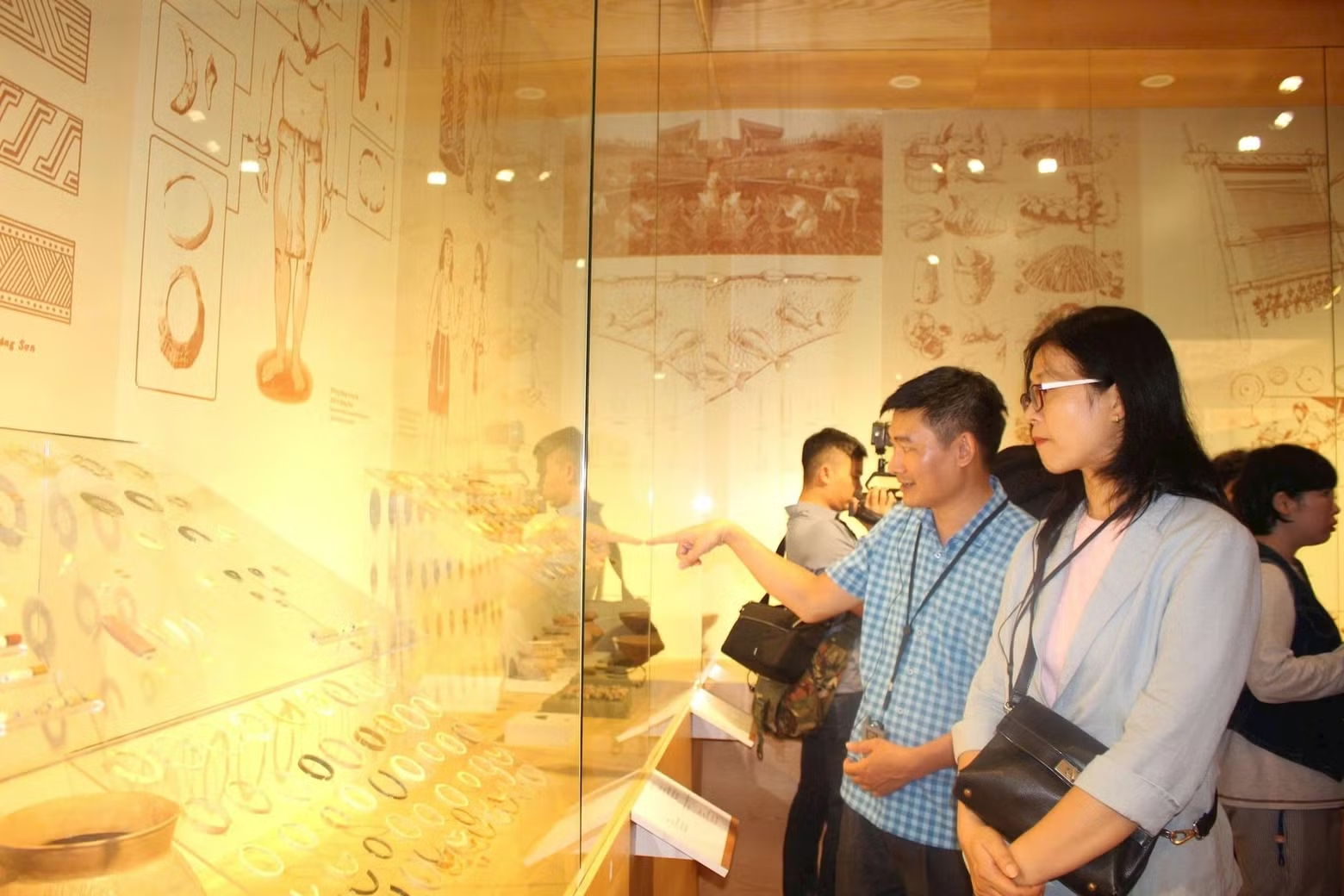
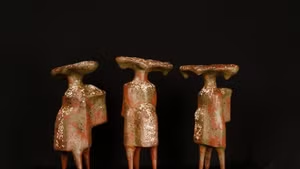
To celebrate the Year of the Horse 2026, the Museum also displays artefacts featuring horse motifs in Vietnamese history and art.
According to art expert Dr Tran Huu Yen The, modern museums are not merely places to provide knowledge but also spaces to transmit values and inspire communities through “storytelling” with artefacts. He praised the Ha Noi Museum for doing this effectively.
The Ha Noi Museum houses seven artefacts and groups of artefacts recognised as National Treasures, including the Co Loa Bronze Drum, the Co Loa bronze ploughshare collection, the Tran Dynasty weapon collection from Giang Vo School of Martial Arts, and a Bat Trang ceramic worshipping object dated to the 17th–18th century.
Among them, the weapon collection from Giang Vo School of Martial Arts was discovered near Ngoc Khanh Lake in Ha Noi. Through this collection, viewers learn that Ha Noi is not only a land of time-honoured civilisation but also one embodying sportsmanship. The collection showcases diverse weapon types: spears, javelins, long swords, short swords, crescent blades, tridents, and signal cannons.
Building momentum for cultural industry growth
The four-storey Ha Noi Museum is designed in the form of an inverted pyramid. The higher visitors ascend, the more the space opens up for exploration. Artefacts and documents are curated to convey stories vividly, combining original artefacts, images, documentary films, and projection techniques to create an engaging experience.
With a large display area and a collection of 70,000 diverse artefacts, the Ha Noi Museum is one of the capital’s most significant cultural institutions.
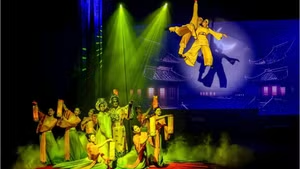
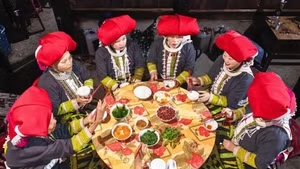
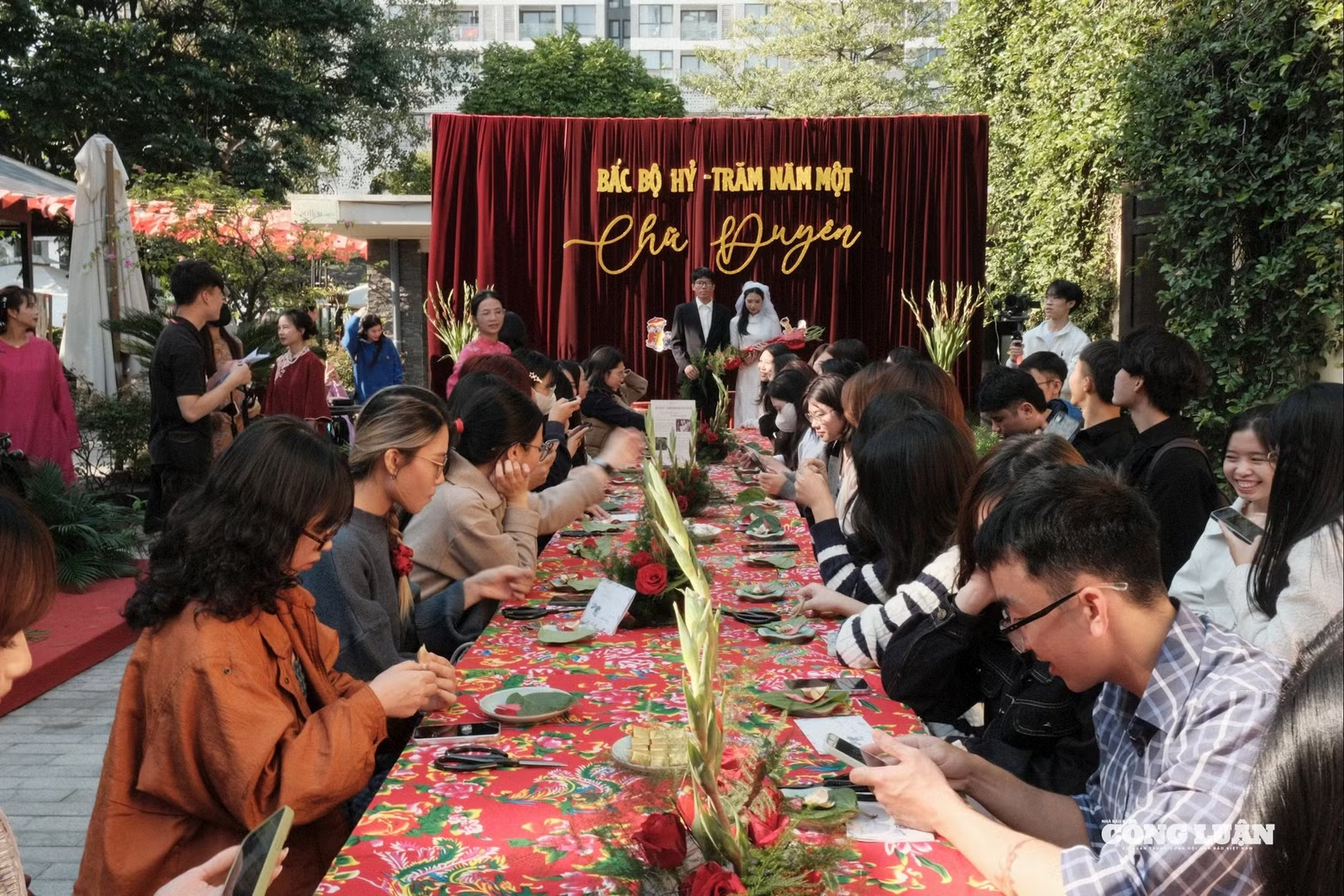
Director Nguyen Tien Da emphasised that the museum always welcomes creative activities from artists and artisans. In 2025 alone, over 40 creative events and projects were held at the museum, including exhibitions on water puppetry and wedding customs in Northern Viet Nam.
Ha Noi Museum is gradually transforming into a creative hub, a highlight of the cultural industry.
“Through these activities, the museum aims to become an incubator for youth creativity,” Director Da said.
Currently, the Ha Noi Museum hosts talks, workshops, exhibitions, displays, and artist residencies. It also serves as a venue for research and learning by scholars, students, and pupils. The museum is gradually transforming into a creative hub, a highlight of the cultural industry.
The museum has collaborated with schools in Ha Noi to provide a learning environment for students, while also partnering with travel businesses to make it an attractive destination for those exploring the capital.
Dr Nguyen Quoc Quan, former Director of the Viet Nam National Museum of History, suggested that the Ha Noi Museum could design “study tours” lasting half a day or a full day, connecting with tourist sites and developing dedicated souvenirs to further promote its brand.