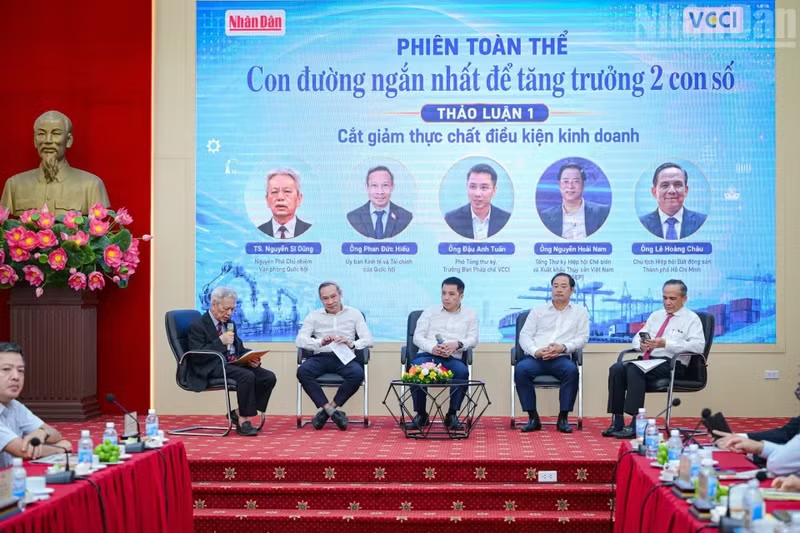
The seminar "Double-digit growth – Driven by enterprises", was jointly organised by Nhan Dan (People) newspaper and the Viet Nam Federation of Commerce and Industry (VCCI).
It provided a platform for policymakers, economists and business representatives to discuss practical measures to improve the investment climate, remove barriers to business activity and unlock the private sector's growth potential.
Speaking at the event, Le Quoc Minh, member of the Party Central Committee (PCC) and Editor-in-Chief of Nhan Dan Newspaper said the double-digit growth target was not merely an economic objective but a strategic requirement for Viet Nam's next stage of development. Le Quoc Minh, who is also Deputy Head of the PCC’s Commission for Communication, Education and Mass Mobilisation, and Chairman of the Viet Nam Journalists’ Association stressed that the country needed to move beyond steady growth towards sustaining high growth over many years.

VCCI Chairman Ho Sy Hung said Viet Nam could no longer rely solely on traditional growth drivers such as investment, exports and resource exploitation. Instead, institutional reform should take priority by creating a more transparent, predictable and business-friendly environment.
He pointed to cumbersome administrative procedures, overlapping regulations and inconsistent business conditions as major obstacles that continue to increase compliance costs and discourage investment. According to the VCCI Chairman, Viet Nam's greatest untapped source of growth lies in removing these bottlenecks and shifting from restrictive regulation to modern, accountable governance centred on businesses.
The seminar featured two panel discussions focusing on streamlining business regulations and strengthening the private sector as the core driver of economic growth.
Participants called for meaningful reductions in administrative procedures while preventing unnecessary regulatory requirements from re-emerging in new forms. They also discussed measures to improve private firms' access to capital, land, skilled labour, technology and markets.
Deputy Governor of the State Bank of Viet Nam Nguyen Ngoc Canh said the central bank had maintained stable policy interest rates during the first half of 2026 while encouraging commercial banks to lower lending rates and expand credit for small and medium-sized enterprises, innovation, digital transformation, green transition, infrastructure and digital technology.
However, speakers agreed that monetary support alone would have limited impact unless institutional constraints were addressed.
Recommendations from the seminar will be submitted to relevant authorities to support further reforms aimed at reducing compliance costs, strengthening business confidence and enabling the private sector to play a greater role in achieving Viet Nam's long-term growth ambitions.