Dutch businesses have expressed strong confidence in Viet Nam's growth prospects, applauding the country's institutional reforms, innovation agenda and plans to develop an international financial centre.
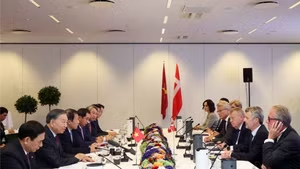
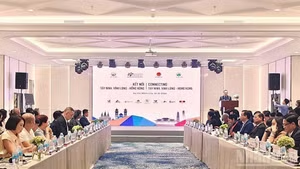
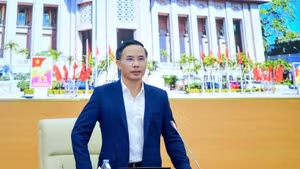
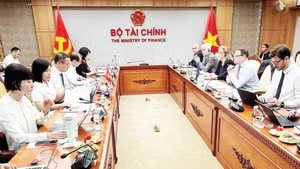
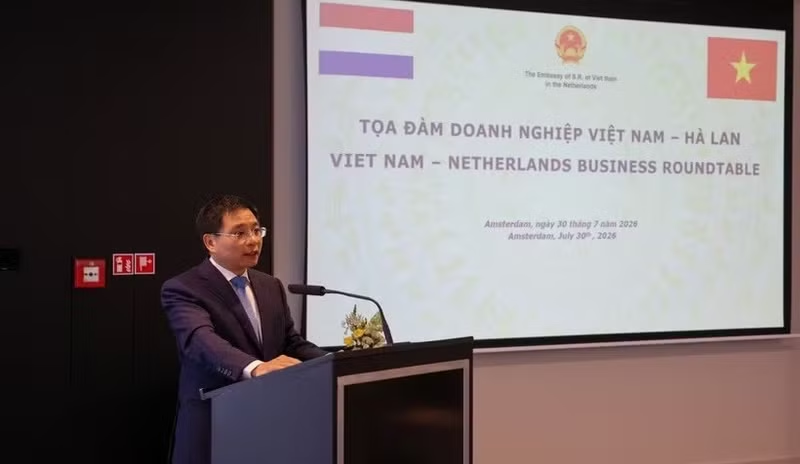
The remarks were made at a business roundtable chaired by Deputy Prime Minister Nguyen Van Thang in Amsterdam on July 30, part his working visit to the Netherlands.
The event brought together representatives from government agencies, financial institutions, business associations and leading Dutch companies operating in high technology, semiconductors, logistics, maritime services, infrastructure, energy, water management and sustainable development.
Addressing the meeting, Thang welcomed the Dutch business community's growing interest in the Vietnamese market and opportunities for bilateral cooperation. He said the Viet Nam–Netherlands relationship has continued to develop in a substantive and effective manner, particularly trade, investment and economic cooperation.
The Netherlands is currently Viet Nam's largest trading partner in the European Union (EU) and an important gateway for Vietnamese goods to enter the European market. Bilateral trade exceeded 6.74 billion USD in the first five months of 2026, up 21.9% year-on-year. As of the end of May, the Netherlands had 476 valid investment projects in Viet Nam with total registered capital of more than 15 billion USD, maintaining its position as the largest EU investor in the country.
Major Dutch corporations, including Heineken, Unilever, De Heus and Philips, have established a long-term presence and operated successfully in Viet Nam, according to the Deputy PM.
Building on the Comprehensive Partnership established in 2019 and existing sectoral strategic cooperation frameworks, the two countries’ ties have ample room to grow in areas with high complementarity such as financial services, logistics, seaports, high technology, water management, green transition and innovation, he said.
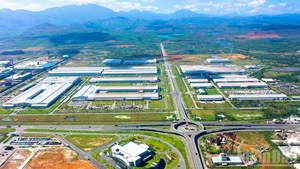
Thang also noted Viet Nam's ongoing efforts to improve institutional frameworks, develop modern infrastructure, promote science, technology and innovation, and foster a highly skilled workforce. At the same time, the country is accelerating the establishment and operation of the International Financial Centre in Ho Chi Minh City and Da Nang to create a new growth engine and mobilise resources for development.
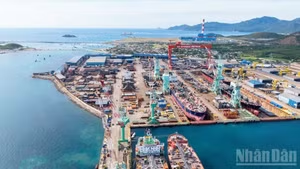
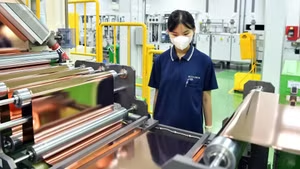
Dutch businesses welcomed Viet Nam's reform agenda and showed strong interest in expanding collaboration in finance and international financial services, semiconductors, artificial intelligence, logistics, ports, shipbuilding, water management, renewable energy and green transition.
Participants also discussed financing mechanisms for infrastructure and sustainable development projects, investment attraction policies and strategies for developing high-quality human resources. They called on Viet Nam to maintain a stable, transparent and predictable investment environment to support long-term business plans.
Many Dutch companies shared plans to expand their operations, increase investment capital and explore new projects in Viet Nam.
At the roundtable, Deputy Minister of Finance Nguyen Thi Bich Ngoc, Deputy Governor of the State Bank of Viet Nam Pham Tien Dung and representatives of relevant ministries addressed issues raised by businesses, including the single-window investment mechanism, blended finance tools, Viet Nam's semiconductor development strategy, and new investment incentives and support policies.