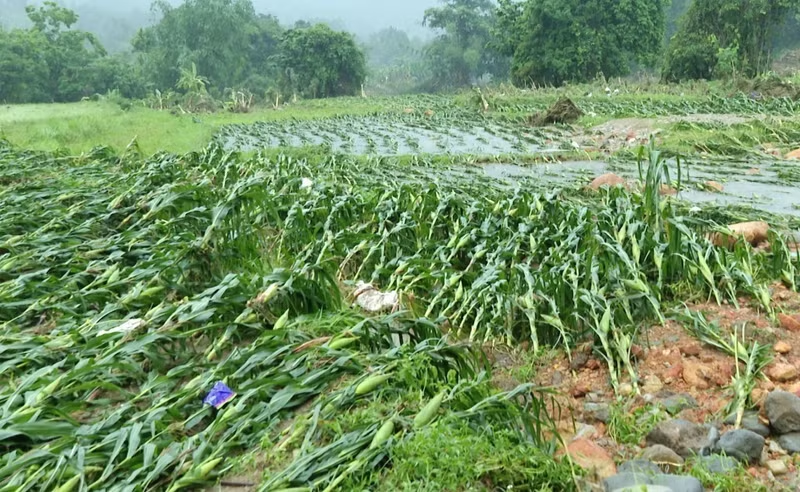
Under recently-issued Directive No. 23/CT-TTg on implementing Conclusion No. 213-KL/TW dated November 21, 2025 of the Party Central Committee’s Secretariat, provincial and municipal Party secretaries and chairpersons are required to take direct responsibility for disaster prevention and recovery work in their localities.
Local authorities have been instructed to identify high-risk areas and potential disaster scenarios, strengthen preparedness and inspection efforts, and update disaster response plans to address severe storms, landslides, extreme flooding and historic inundation risks.
The directive also requires localities to review the safety and resilience of disaster prevention infrastructure and essential facilities, prioritising upgrades and repairs to vulnerable dykes and reservoirs ahead of the 2026 rainy and storm season. Reservoir operations must be managed proactively to ensure downstream safety in all situations.
Authorities are also tasked with strengthening commune-level disaster response teams by increasing investment in equipment and support tools to improve rapid-response capacity, particularly during large-scale and extreme weather events.
The directive stresses the need to step up public awareness campaigns and encourage strict compliance with disaster warnings and safety regulations in order to minimise losses caused by negligence or complacency. Localities are required to proactively organise evacuations from high-risk areas when necessary.
In addition, provinces and cities must accelerate resettlement plans for households living in disaster-prone areas, integrate disaster prevention into socio-economic development planning, and identify locations vulnerable to flash floods, landslides and deep flooding to arrange temporary shelters for residents during the storm season.
The Ministry of Agriculture and Environment has been assigned to lead disaster prevention and recovery efforts, while promptly advising the PM and the National Civil Defence Steering Committee on responses to complex or large-scale disasters beyond local authority.
The ministry is also tasked with improving disaster forecasting and early warning systems, particularly for extreme weather events, while coordinating the safe operation of reservoirs and dams.
It will work with local authorities to allocate resources for upgrading and repairing dykes and reservoirs before the 2026 rainy season, and strengthen disaster preparedness training and communication campaigns, especially on digital and social media platforms.
The Ministry of National Defence has been instructed to maintain round-the-clock rescue and relief readiness and deploy the national 112 hotline system to receive information and support disaster response and search-and-rescue operations.
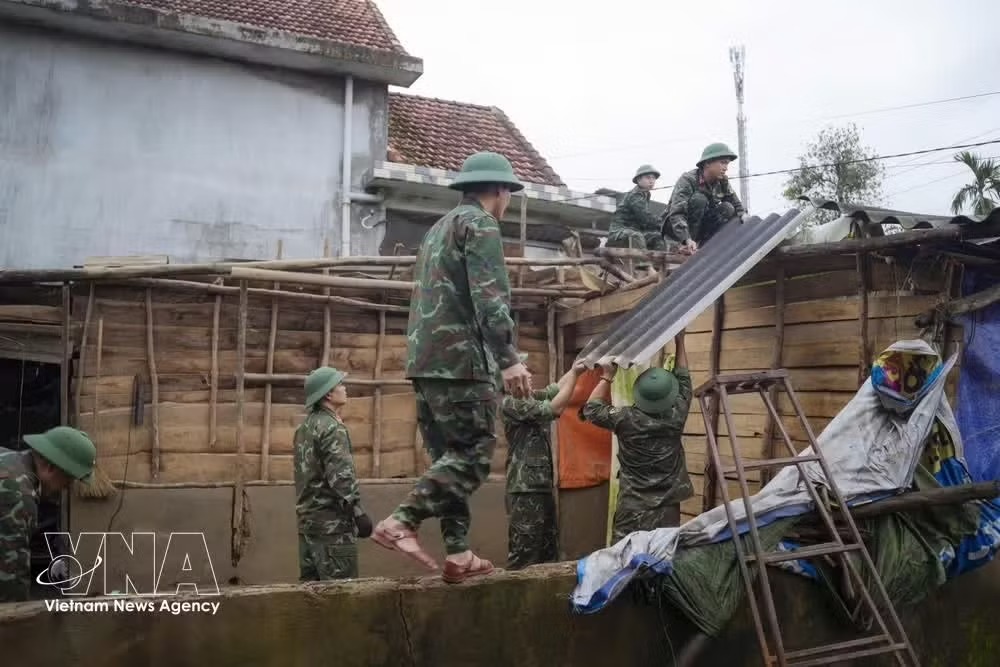
Meanwhile, the Ministry of Public Security will coordinate personnel and vehicles for disaster response, strengthen enforcement against illegal dyke encroachment and riverbed violations, and ensure public security, rescue operations and traffic safety during storms and floods.
The Ministry of Construction has been tasked with reviewing and addressing transport infrastructure bottlenecks that obstruct flood drainage, implementing anti-landslide measures, ensuring road and maritime safety during the rainy season, and preparing materials and personnel to restore transport links after disasters.
The directive also calls for urgent deployment of technological infrastructure, power supply and telecommunications systems to ensure uninterrupted disaster response operations under all circumstances.
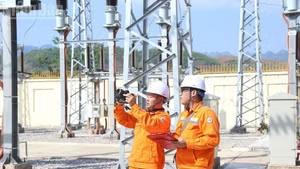
The Ministry of Industry and Trade has been instructed to tighten safety management at hydropower reservoirs, ensure stable power supply during storms and floods, and maintain reserves of essential goods for areas frequently isolated by flooding.
The Ministry of Science and Technology will coordinate with relevant agencies to expand the application of science and technology, particularly artificial intelligence and digital transformation, in disaster prevention and search-and-rescue activities. Telecommunications providers are also required to ensure uninterrupted communications, especially in mountainous and high-risk areas vulnerable to isolation during extreme weather.



![[Infographic] Key points from General Secretary and President To Lam’s opening remarks at the 14th PCC’S 4th plenum](https://en-cdn.nhandan.vn/images/j0QNt7m_5iy1OXpnUKiwG61aYhTv_B140GWhfriF26JwZbNNJ8LWetfvXUhz4Az6/1-8220.jpg.avif)