Threats from invasive alien insects
Invasive alien insects are becoming an increasingly serious threat to forest health and livelihoods, especially as global trade expands and climate change heightens the risk of pest outbreaks. According to scientists’ statistics, worldwide forest pests damage around 35 million hectares of forest each year, posing severe challenges to forest resource management and protection.
The regional project “Building a biosecurity and forest health network in Southeast Asia” is implemented with support from the Australian Centre for International Agricultural Research (ACIAR). It aims to strengthen monitoring capacity, early detection, and response to forest pests in Viet Nam, Laos, Cambodia, Thailand, Malaysia, and Indonesia, by connecting management agencies, research institutions, and the private sector across the region.
A key component of the project is the High-Risk Site Surveillance (HRSS) trapping programme, designed to detect early the potential entry of invasive insect species at critical gateways such as airports, seaports, and border areas. In Viet Nam, the surveillance system has been deployed at three locations: the cargo terminal of Noi Bai International Airport, a timber market in Hai Phong near Dinh Vu Port, and pine forests in Lang Son province.
According to Dr Dao Ngoc Quang, Director of the Forest Protection Research Centre (FPRC) under the Viet Nam Academy of Forest Sciences, the centre is the lead implementing agency in Viet Nam for the ACIAR-funded project, which has been carried out since 2022 in six Southeast Asian countries.
Dr Quang said the project has two main objectives: building a biosecurity and forest health network to enhance preparedness against invasive alien species, and strengthening professional capacity for participating agencies and technical staff.
Dr Quang added that alien species are organisms not native to a given area but introduced from elsewhere. When entering a new environment, some fail to adapt and die out; however, if they face few natural enemies, little biological competition, and suitable ecological conditions, they can proliferate rapidly, disrupt local ecological balance, and become invasive alien species beyond human control. In forest protection, the project focuses mainly on insects and organisms harmful to forest trees.
Dr Quang explained that invasive alien species can enter through three main pathways. First, natural pathways, such as wind, storms, or water currents carrying fungal spores or small insects. Second, deliberate human introduction, for example importing organisms for research or biological control, which can create new risks if not tightly managed. Third, unintentional pathways linked to trade and human travel, when pests or pathogens are hidden in goods, packaging, timber materials, or even clothing and luggage.
From this reality, the project prioritised monitoring in high-risk areas where alien species are most likely to appear first. In Viet Nam, the three selected sites are Noi Bai Airport, which handles large volumes of international cargo and passengers; a timber storage area near Dinh Vu Port in Hai Phong; and planted forests near the border in Lang Son province. The border forest site was proposed by Viet Nam and approved by the project, given the tangible risk of natural cross-border incursions.
During 2023–2024, the research team collected nearly 3,000 insect samples belonging to around 40 species, including bark beetles, ambrosia beetles, and longhorn beetles. The data are used to build pest inventories serving monitoring, early warning, and forest biosecurity policy formulation.
In Lang Son’s border forests alone, despite the short implementation period, samples accounted for nearly half of the total collected, indicating a noteworthy risk of pest incursions. Identification requires complex steps from morphological analysis to DNA testing; to date, about 40 species have been identified, some of which require further study to assess their invasive potential.
“Panning for gold in timber” in border forests
Once a week, project staff shoulder their backpacks, cross steep slopes, and rugged terrain to reach pine plantations along the Lang Son border. The journey is long and weather unpredictable, yet each trap is checked strictly according to protocol, and each tiny insect specimen is carefully collected.
Sharing the challenges of fieldwork, project officer Nguyen Hoai Thu said the greatest difficulty is access. Trap sites are remote and require climbing steep terrain, so local forest rangers or residents familiar with the area must accompany the team.
As project staff are not permanently stationed in the forest, local support is also needed to monitor trap sites. Without close coordination, traps may be disturbed by passers-by or even removed before scheduled inspections, disrupting continuous monitoring.
Beyond terrain challenges, sample classification is time-consuming due to the large number of species with very similar morphology, requiring meticulous observation of fine details and careful comparison to ensure accurate identification.
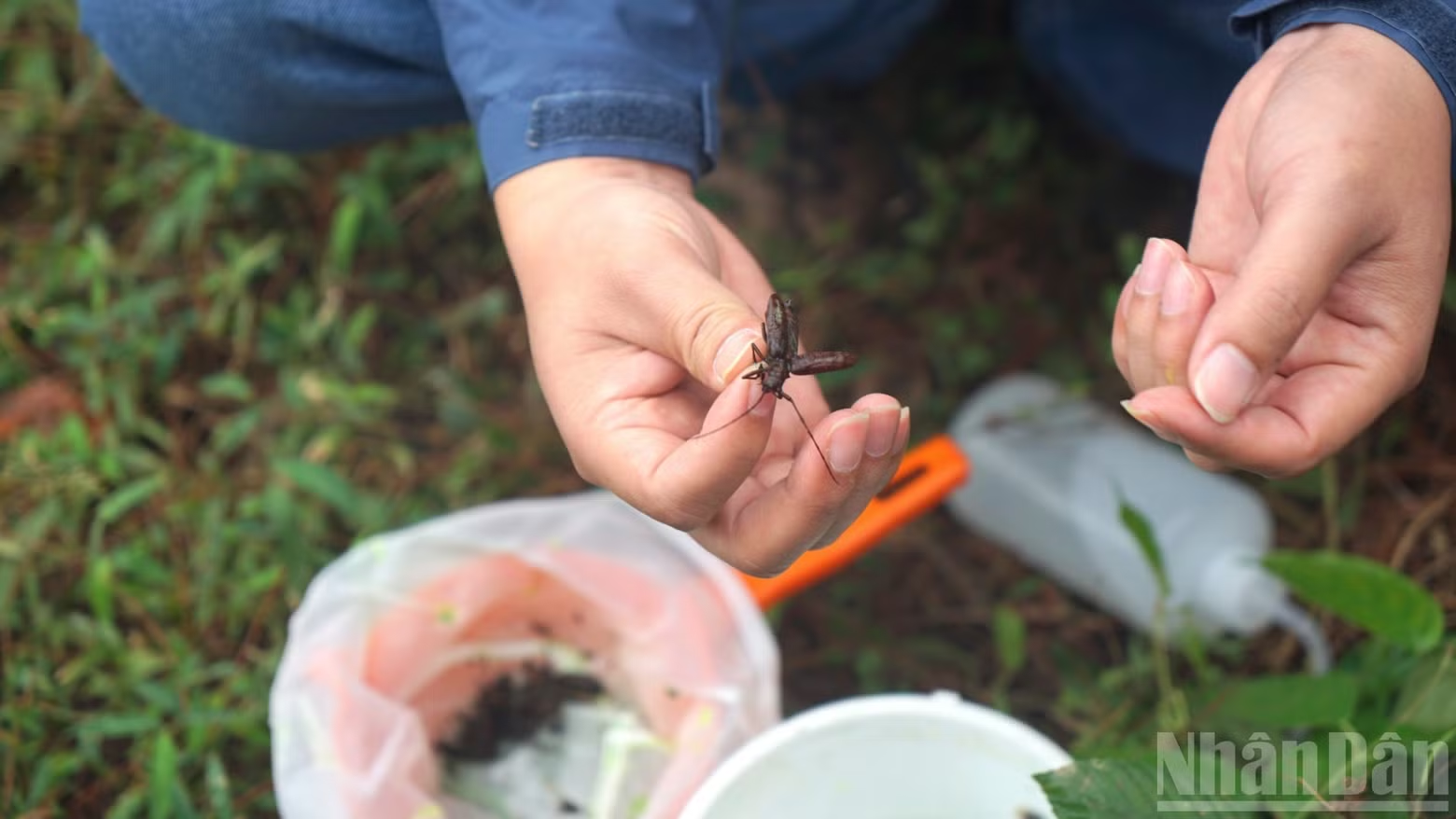
In Lang Son, monitoring traps are set in pine plantations near Na Hinh Border Guard Post and in household forests in Ban Anh hamlet, Thuy Hung commune. Traps have been checked and samples collected weekly since April 2024.
This quiet, repetitive work is humorously likened by project staff to “panning for gold in timber”, except that the “gold” here is not precious metal but harmful insects — crucial clues for protecting forest health early and from afar.
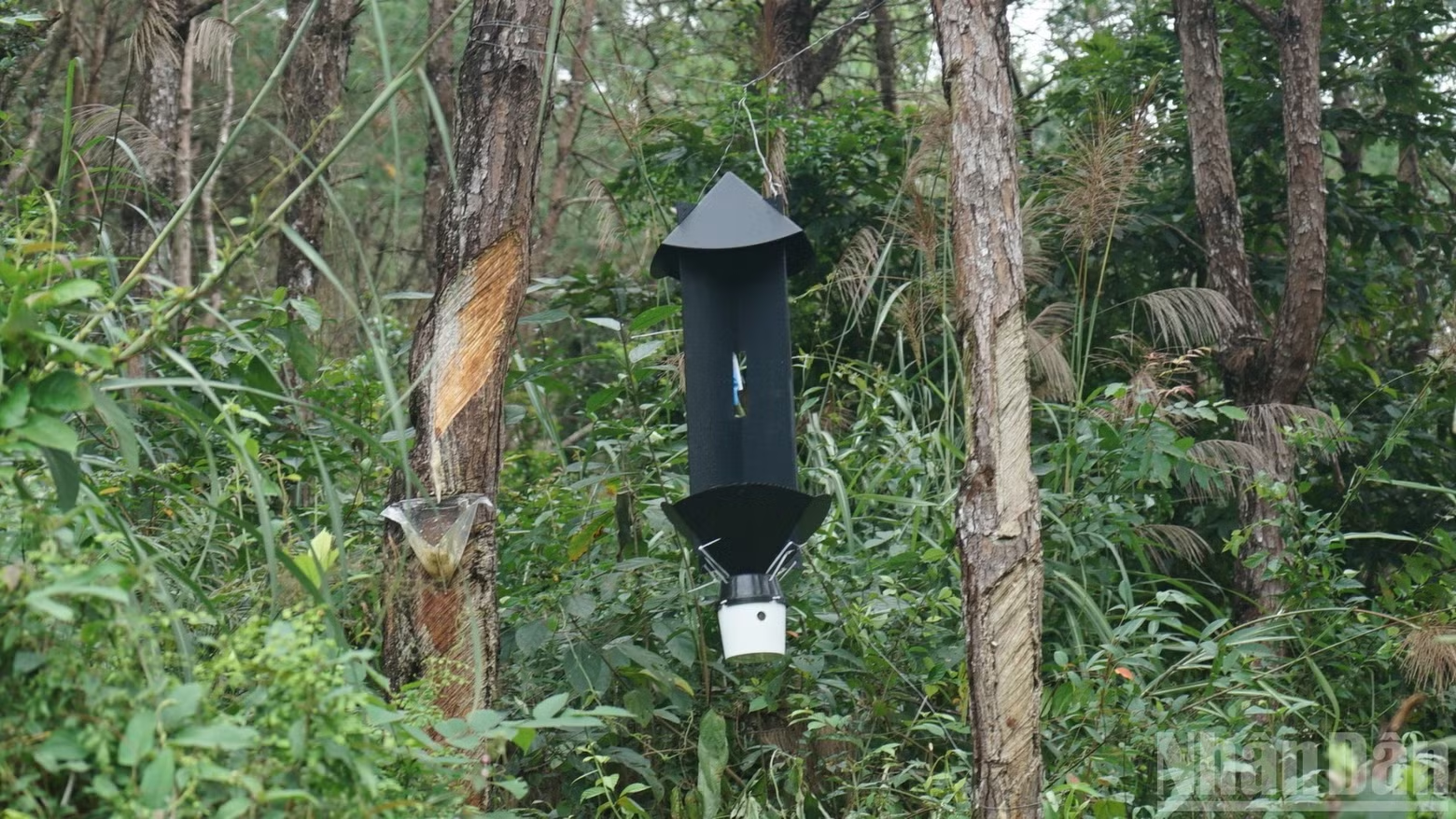
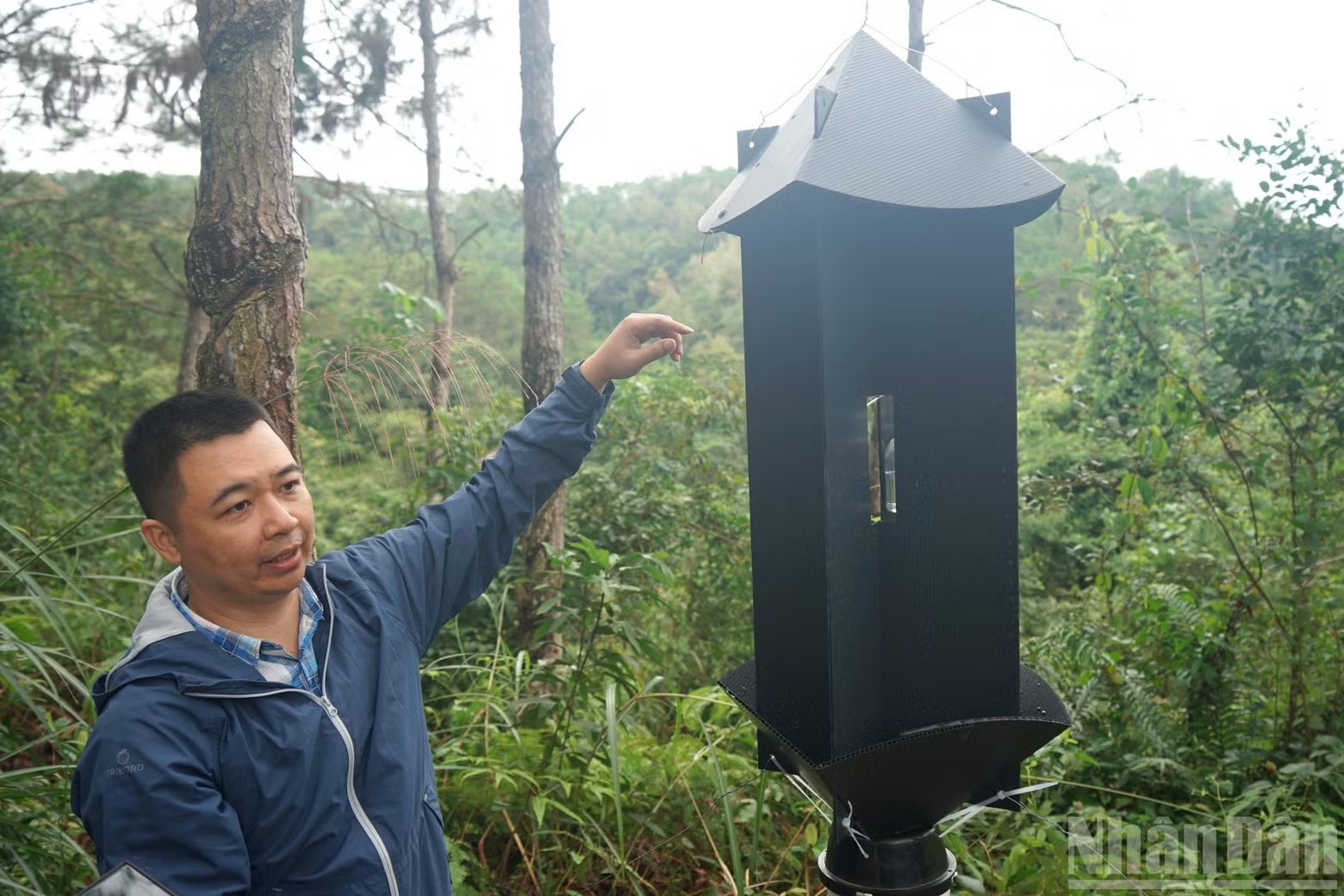
Following the team into the field, we observed multiple insect traps suspended deep within pine forests. According to Dr Nguyen Manh Ha, project officer, the traps use various attractants to lure different insect groups such as longhorn beetles, bark beetles, and ambrosia beetles.
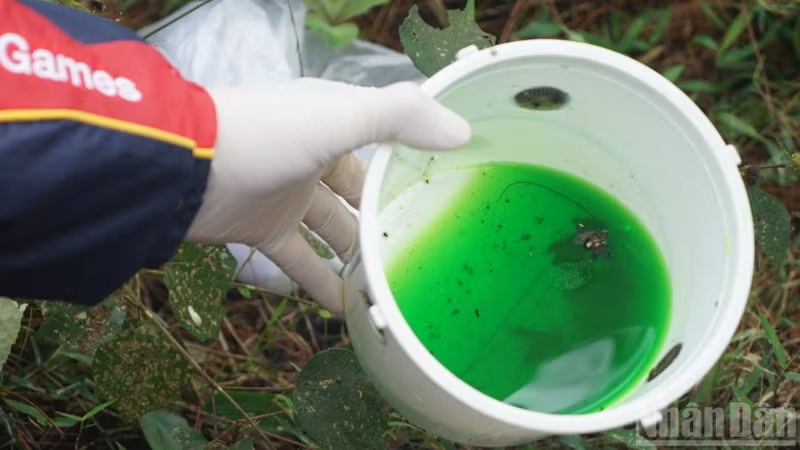
Each panel trap carries three attractants simultaneously: Cerambycid mix lure, alpha-pinene, and 99% ethanol. The preservation solution is glycerol diluted with water at a 50/50 ratio.
Traps are hung in open positions free from shrub obstruction, about 1.5 metres above ground; each collection tray contains around 600 ml of preservation solution.
Dr Tran Xuan Hung, from the Forest Entomology Division of the Forest Protection Research Centre, explained that trap inspection follows strict procedures. During collection, the tray is removed and the solution filtered through cloth and sieves to ensure no insect—however small—is missed.
The tray is cleaned and the trap wiped to maintain a smooth surface for effective attraction. Filtered samples are wrapped in cloth, placed in plastic bags or jars, fully labelled with location, time, collector, and trap code, then stored in cool boxes and transported to laboratories for freezer storage to prevent discolouration or deformation. Preservation solution is never reused and must be replaced after each collection.
After a week, samples are retrieved. Larger insects can be classified relatively quickly, but smaller beetles require microscopic examination of features such as size, wing patterns, antennae, and thoracic legs.
Difficult samples are photographed and sent to foreign experts, or DNA is extracted for precise identification, then cross-checked against existing insect lists in Viet Nam to identify invasive alien species.
Reflecting on countless forest trips involving repeated cycles of setting traps, collecting samples, recording data, and carrying specimens back to laboratories, Dr Hung said his work sometimes feels “no different from panning for gold in timber”.
But the “gold”, he emphasised, is not immediately visible — it lies in early detection of invasive insects quietly entering forests. From these tiny specimens, scientists gain the basis to issue warnings, research control measures, and help protect timber resources, forests, and long-term livelihoods.
A biosecurity network from border forests
According to Hoang Ngoc Khoi, Head of the Van Lang Forest Ranger Unit under the Lang Son Provincial Forest Protection Department, research and early detection of pests — especially invasive alien species — are of great significance for forest protection.
In recent years, invasive bamboo grasshoppers and yellow grasshoppers crossing from across the border have caused severe damage to planted forests in the area; once populations explode, conventional spraying measures are largely ineffective.
Early detection of invasive species provides a scientific foundation for developing more effective control measures, serving forestry in the long term and helping protect planted forests.
Although the project is still new and results are not yet complete, local authorities highly value the significance of trap deployment, monitoring, and initial data collection, and actively support site provision, guidance, and field protection.
Dr Dao Ngoc Quang said the project’s ultimate outcome is to compile a list of collected insect species, identify which are alien and which may become invasive, thereby providing a scientific basis for management recommendations. However, fully assessing damage levels requires further research on biological characteristics, adaptability, and long-term impacts of each species.
International studies show that investment in preventive measures and early monitoring of forest pests yields very high economic returns, with benefit–cost ratios up to 30:1. In contrast, once invasive species develop into outbreaks, response costs are enormous and prolonged.
In Viet Nam, annual monitoring costs under the project are currently around 80,000 AUD for all three sites — far lower than the cost of mitigating outbreaks.
Dr Quang stressed that forest biosecurity monitoring must be continuous and expanded spatially. At present, monitoring points are limited to some northern areas, while Viet Nam has a long land border, extensive coastline, and many major ports nationwide. Expanding and maintaining the monitoring network annually would significantly reduce risks, protect forest health, and sustain livelihoods.
Assessing project outcomes, Australian Ambassador to Viet Nam Gillian Bird noted that over the past 32 years, through ACIAR, Australia has invested in agricultural research to support Viet Nam’s economic development, with more than 260 research projects involving Vietnamese partners.
The forest biosecurity project supports Vietnamese researchers in building essential scientific evidence to protect the economic value and health of planted forests from invasive alien species.
“It is wonderful to see the project helping build a regional forest biosecurity cooperation network, where Vietnamese scientists share research results and support capacity-building for colleagues in Cambodia, Laos, Thailand, Malaysia, and Indonesia,” Ambassador Gillian Bird said.
The quiet footsteps through deep forests on this “panning for gold in timber” journey are laying foundations for forest biosecurity. When “gold” is found in time, forests are protected at their roots, early on, and Viet Nam’s forests gain greater resilience against the increasingly complex threats posed by nature and human activity.