From “having enough to eat” to export stature
From a rice-based civilisation spanning thousands of years, farmers in the Mekong Delta have inherited and further developed their traditions to form today’s key rice-producing region. Rice has become the backbone of livelihoods and the foundation shaping the region’s agricultural landscape.
After 1975, one of the country’s most pressing challenges was ensuring food security. In 1977, the Cuu Long Delta Rice Research Institute was established at a time when the region was still largely cultivating seasonal rice, with a planted area of around 1.7–2 million hectares and output of approximately 7 million tonnes per year.
Dr Tran Ngoc Thach, Director of the Cuu Long Delta Rice Research Institute, said the institute’s initial tasks were to collect, purify and improve the yields of local seasonal rice varieties, while building facilities and training human resources.
It was not until the first half of the 1980s that the institute began implementing breeding programmes to raise yields and shorten growth cycles. At that time, the main challenge was that seasonal rice could only be grown once a year, while improved varieties such as Than Nong 8, IR36, IR42 and IR64 had long growth periods (110–140 days), making them unsuitable for the Mekong Delta’s annual flood conditions. The requirement, therefore, was for high-yield, short-duration varieties that could be cultivated before or after flooding.
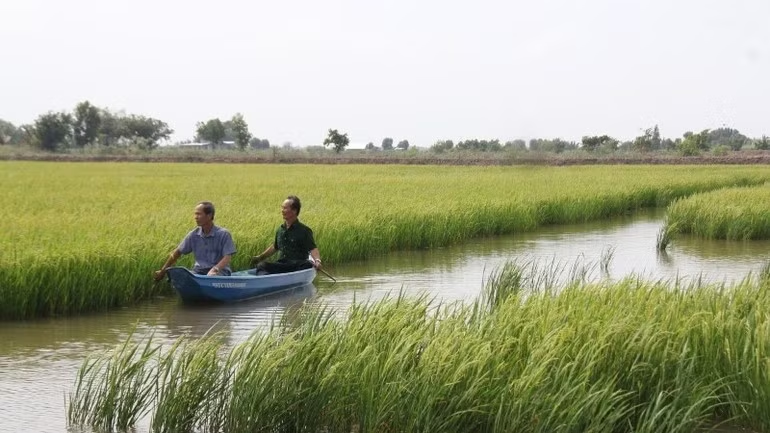
Dr Tran Ngoc Thach recalled: “The institute’s most significant milestone and success was the recognition of the OM80 variety in 1988, which met both growth duration and yield requirements.” These were essential attributes for rice varieties at a time when the country’s priority was simply to “have enough to eat”.
By 1989–1990, Viet Nam had achieved food self-sufficiency and began exporting rice, marking a historic turning point. From the initial goal of food security, breeding efforts moved on to pest and disease resistance, adaptation to adverse conditions, and later to improving rice quality.
Today, Viet Nam is deeply integrated into the global market, with its largest segment being long-grain white rice, which holds a competitive edge thanks to low production costs and steadily improving quality. This segment delivers high profits for farmers. Dr Tran Ngoc Thach affirmed: “The diligence, creativity and willingness to embrace new approaches among farmers are decisive factors behind the success of Viet Nam’s rice sector.”
The journey from “having enough to eat” to export prominence demonstrates the strong adaptability and innovative capacity of Viet Nam’s rice industry. From the first varieties developed by the Cuu Long Delta Rice Research Institute to today’s high-quality fields, the efforts of scientists and farmers have laid the foundation for Vietnamese rice to reach global markets.
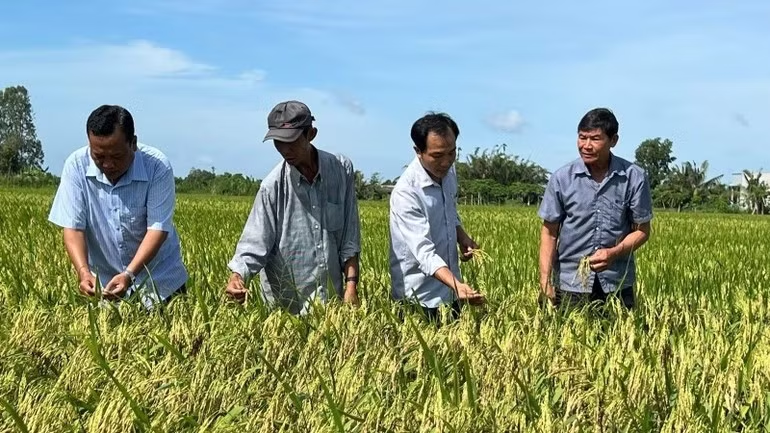
As market requirements become increasingly stringent, the rice sector continues to move towards higher quality, sustainability and greater added value, reinforcing the standing of Vietnamese agriculture.
Vietnamese rice on a new growth trajectory
Associate Professor Dr Bui Ba Bong, Chairman of the Viet Nam Rice Sector Association—a pioneer in connecting sustainable rice value chains linked to the one-million-hectare programme for high-quality, low-emission rice—said the association was established just two years ago with the aim of becoming a “small thread” linking the two most important stakeholders in the sector: rice growers and consumers.
Through this connection, a wide range of actors have contributed to building a sustainable rice ecosystem, including scientists, state management agencies and committed farmers closely attached to their fields.
At the same time, underscoring the pivotal role of food safety in developing the rice sector, Dr Phan Thi Thu Hien, Director of the Post-Import Plant Quarantine Centre II, noted that rice consumption is influenced by two key groups of factors.
The first is the production stage, which involves pesticide residues, toxic chemicals and heavy metals—factors that can directly affect the quality of agricultural products.
The second is processing and storage, where risks related to impurities and aflatoxin can arise if storage conditions are inadequate, leading to mould and posing threats to consumer health.
At the field production stage, Dr Phan Thi Thu Hien stressed the need to pay close attention to permissible pesticide residue levels in rice products, whether for domestic consumption or export. In addition, plant quarantine-related factors also play an important role.
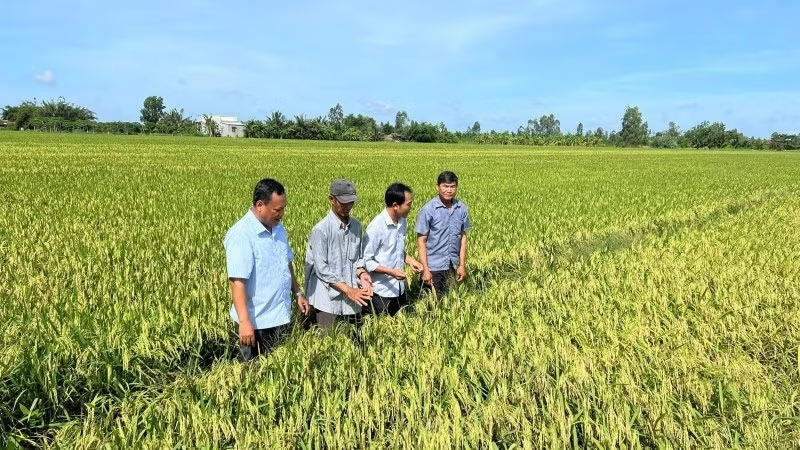
At the same time, farmers need a solid understanding of major pests affecting rice crops, and must select appropriate control measures while keeping up to date with official lists of plant protection products permitted for use in Viet Nam.
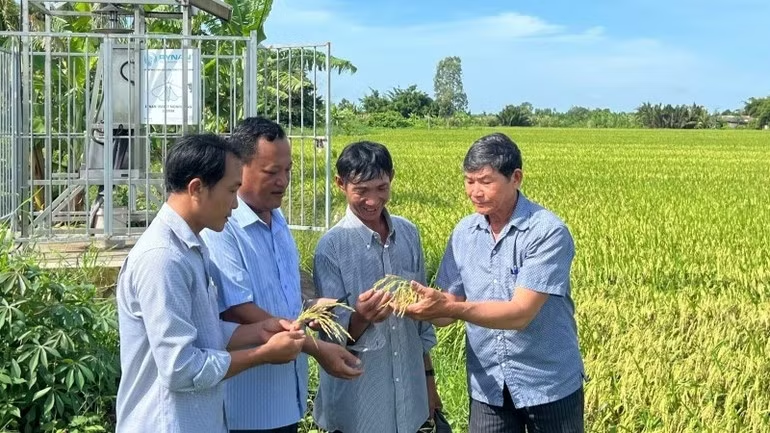
Beyond complying with domestic regulations, rice producers targeting export markets must also understand the specific requirements of each importing country. According to Dr Phan Thi Thu Hien, each country has its own regulations, with differing maximum residue limits for each commodity.
This requires producers to clearly identify their target markets from the outset, and to standardise production and processing procedures accordingly. Even for the domestic market, full compliance with food safety criteria is an essential requirement to safeguard consumer rights and health.
Increasingly stringent requirements for quality and food safety are opening up a new development pathway for Viet Nam’s rice sector: not only producing more, but producing cleanly, transparently and responsibly.
As farmers proactively change practices, enterprises invest more deeply in processing, and associations play a coordinating role, the rice sector is forming a new, more modern and sustainable standard. This is the foundation for Vietnamese rice to enhance its value and confidently conquer even the most demanding markets.