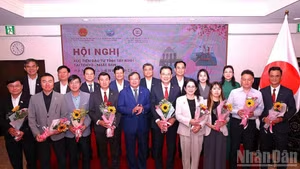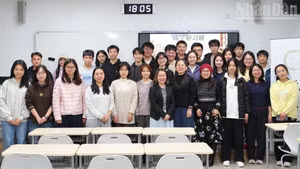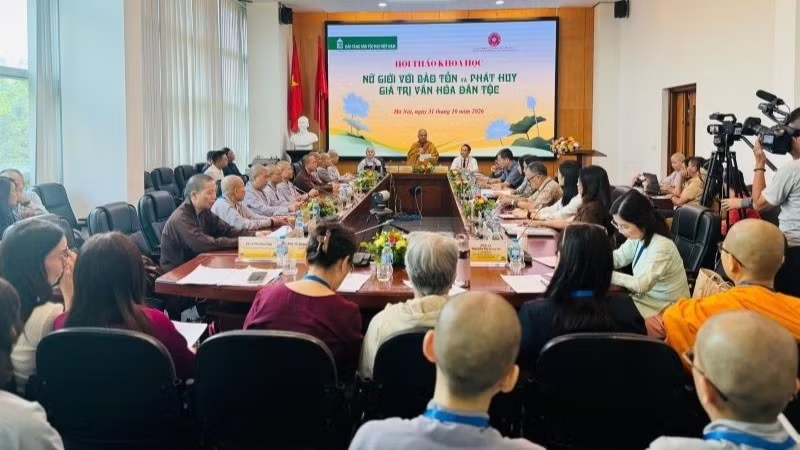
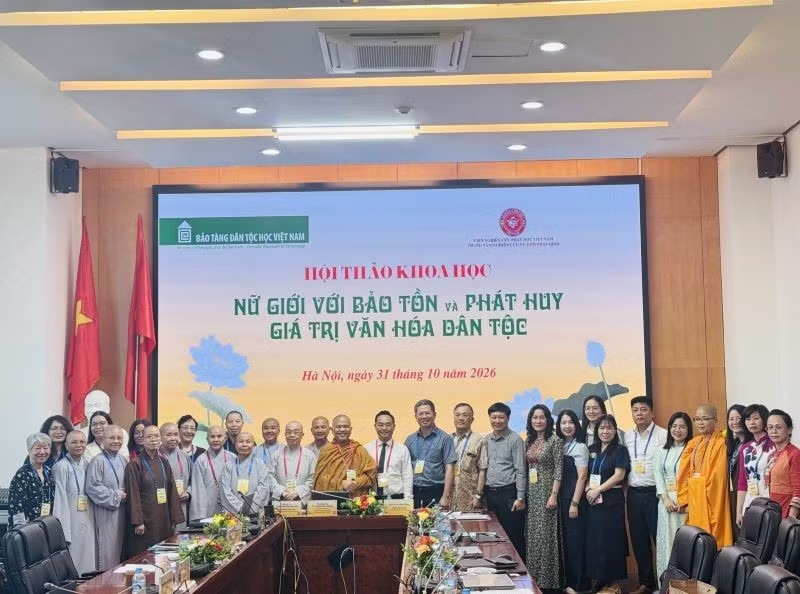
Featuring 30 selected research papers, the conference raised issues concerning historical documents, cultural practices and the role of women as active agents in heritage preservation and the sustainable development of Buddhist culture.
The conference brought together researchers from various fields, nuns and those directly engaged in Buddhist cultural practices. In addition to examining the contributions of women in general and Buddhist women in particular, the research topics included Sino-Nom documents concerning Hau Phat inscriptions recording the contributions of nuns to the restoration and repair of pagodas, as well as those of Buddhists who made donations to pagodas in the hope of being commemorated after death; the role of nuns in educational activities, cultural transmission, social work, the establishment of charitable homes, support for the poor and tree planting, among other activities.
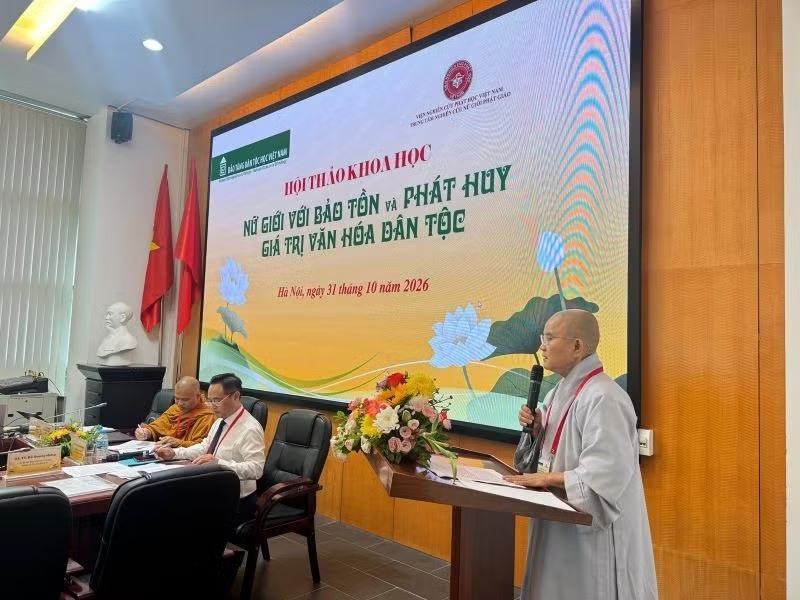
The papers presented highlighted the significant contributions made by Vietnamese Buddhist nuns to the preservation and development of national culture, particularly contemporary Vietnamese Buddhist culture.
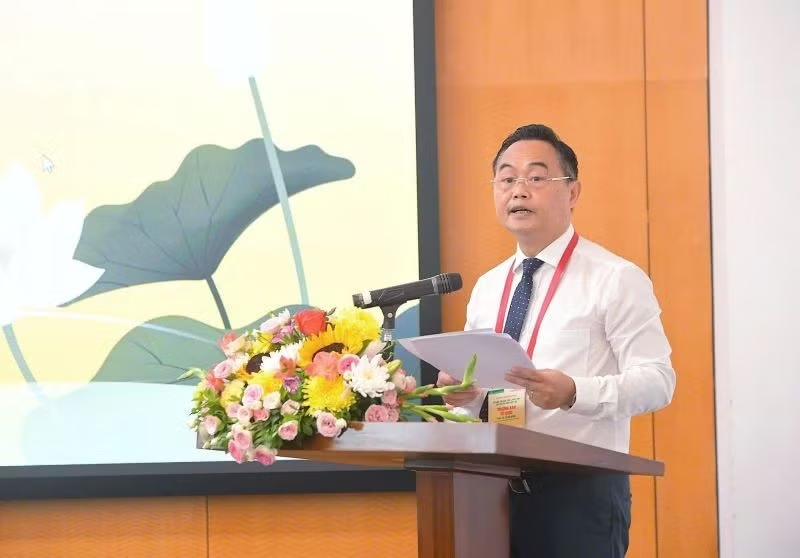
In her introductory report, Associate Professor and Doctor Le Hai Dang said that the research presented at the conference examined women in their role as creators, practitioners and transmitters of culture, linking preservation with the lives, knowledge and voices of communities.
The conference focused on three key themes: women in the preservation and transmission of traditional cultural values and historical memory; women in promoting cultural values and shaping contemporary identity; and methodological orientations, museum institutions and sustainable development policies.
According to the programme, the papers were arranged in the opening session and two paper presentation sessions, connecting the study of historical heritage with cultural practices and the requirements for preserving and developing Buddhist cultural heritage in association with national culture.
During the opening session, Venerable Doctor Thich Nhu Nguyet (Hue Lam) presented a paper entitled “Hoa Dam special issue – A cultural fortress of contemporary Vietnamese Buddhist nuns”. This topic provided an additional perspective on the role of press heritage in preserving memories and connecting Buddhist nuns, while suggesting ways to explore archival materials to identify women’s contributions to Buddhist cultural life.
Studies of the language, cuisine, clothing and lives of Vietnamese communities overseas raised the issue of preserving cultural identity in relation to multicultural environments. Papers by Buddhist nuns further clarified the role of education, the provision of educational opportunities for younger generations and the continuation of traditions in contemporary life.
Drawing on the body of selected research papers, the introductory report also raised the issue of preserving weaving crafts and brocade clothing in relation to livelihoods, women’s economic status and their ability to make independent decisions. For Buddhist women, early childhood education, charitable healthcare, social welfare and relief work were considered areas demonstrating the connection between ethical values and social needs.
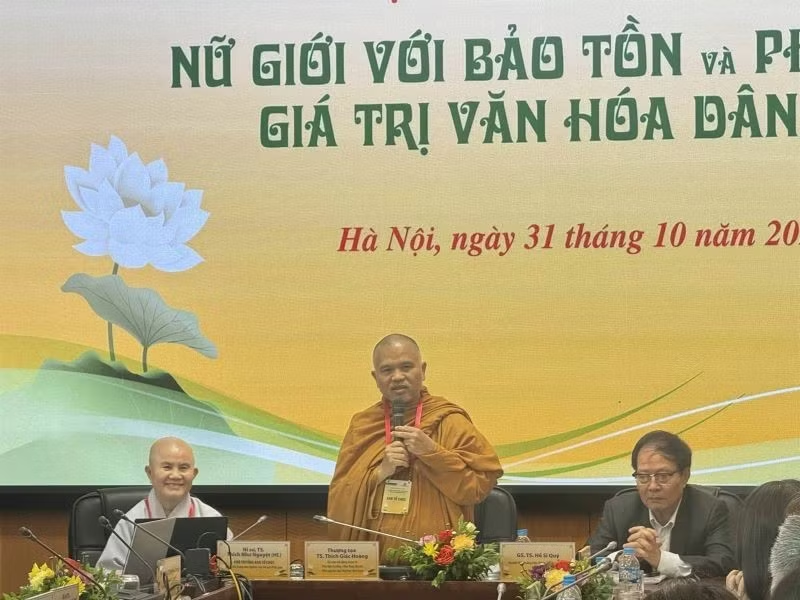
In his concluding remarks, Most Venerable Doctor Thich Giac Hoang, Deputy Director and Deputy Secretary-General of the Viet Nam Buddhist Research Institute, emphasised the role of women and Buddhist nuns as active agents in social life, Buddhism and national culture. He acknowledged the role of women in giving birth to, nurturing and educating successive generations, while highly appreciating the contributions of women and Buddhist nuns to charitable activities, social welfare and community care. He also stressed the task of transmitting culture to younger generations of Vietnamese people overseas, linking the preservation of cultural identity with the adoption of new values, while affirming the spirit of equality in Buddhism and the need to promote the role of women and Buddhist nuns.