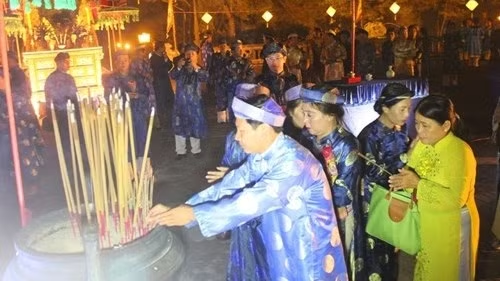
The ritual, one of the conventional rites under the Nguyen Dynasty (1802-1945) and part of the ongoing 2014 Hue Festival, has been restored and conducted as it was done during the feudal era.
Measures have been taken to enable more people to join in the incense-offering ceremony, said Phan Thanh Hai, director of the Centre for the Reservation of Hue Relics.
The Nam Giao Esplanade was built in Duong Xuan village, south of the ancient Hue Citadel, in 1806, under the reign of the dynasty’s founder, King Gia Long (1762-1820). In 1807, the king held his first worshipping ceremony there.
It was recognised by UNESCO as world cultural heritage in 1993.
The biennial Hue Festival, the eighth of its kind, is taking place in the UNESCO-recognised World Cultural Heritage city of Hue from April 12–20, honouring Vietnam’s unique cultural and historical values.