A lever for growth
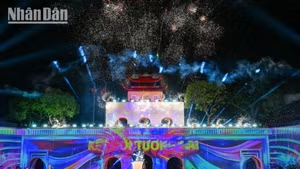
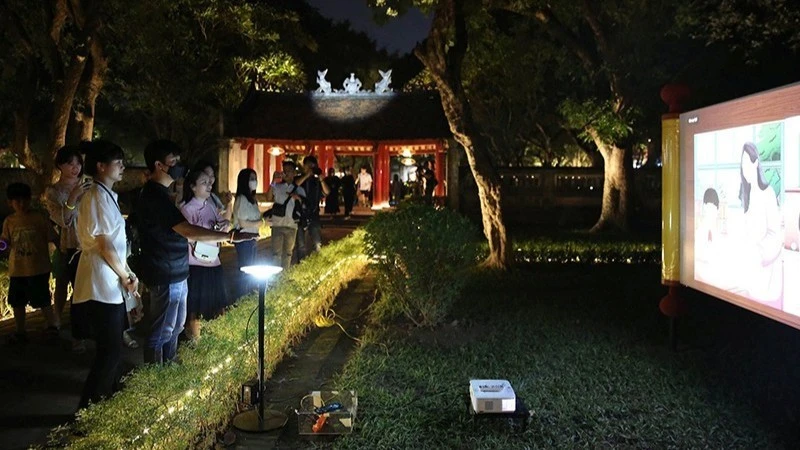
In a short period of time, technology has created new approaches to the conservation and promotion of heritage values. At the Van Mieu – Quoc Tu Giam (Temple of Literature), Ha Noi’s Old Quarter, and the Thang Long Imperial Citadel, night tours combining light shows and augmented reality have expanded the ways in which visitors can explore heritage sites.
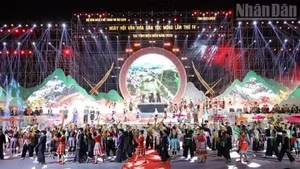
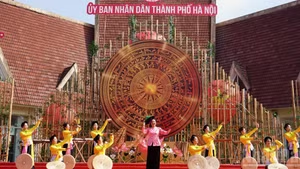
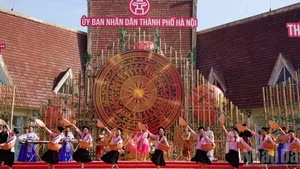
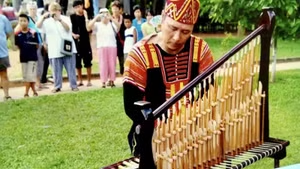
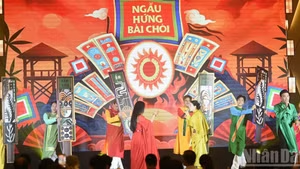
Large-scale outdoor performances such as “The Quintessence of Tonkin” and “Hoi An Memories” attract audiences by revitalising traditional values and building a chain of cultural and artistic services that deliver economic returns. In contemporary life, performing arts, folk music, indigenous knowledge and local customs have been “reborn”, becoming compelling highlights within cultural and tourism activities.
At the Temple of Literature, Ha Noi’s Old Quarter and the Thang Long Imperial Citadel, night tours integrating light projections and augmented reality broaden the heritage experience.
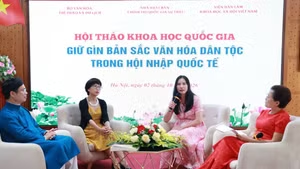
Dr Tran Doan Lam, former Director of the World Publishing House, observes: “Viet Nam’s heritage-based economic activities are taking shape along three directions: cultural tourism and experiential activities; the development of creative industries and the digital economy; and public–private cooperation in conservation and infrastructure investment. The exploitation of ‘heritage-derived products’ not only generates revenue for conservation but also brings heritage closer to younger audiences and connects with international markets.”
The heritage economy is emerging as a dynamic, interdisciplinary field operating across culture, education, tourism and services. “The Quintessence of Tonkin” show exemplifies the transformation of traditional materials into a distinctive performing arts product. This model creates an ecosystem comprising tangible and intangible culture and a chain of derivative products. The revenue generated circulates back into restoration and conservation efforts, supporting artisans and training future generations of creative practitioners.
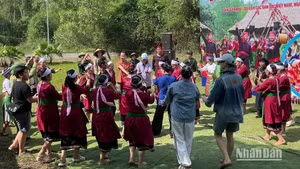
This new direction requires a scientific approach, professional management and, above all, respect for the original values of heritage. When communities are empowered to manage and benefit from their own cultural assets, heritage becomes a “living resource” that amplifies endogenous strength.
Institutions and foundations for creativity
Experience shows that when properly harnessed, cultural heritage becomes an important economic resource for many localities. In the ancient town of Hoi An, conservation is closely integrated with residents’ daily lives. The world natural heritage site of Ha Long Bay promotes green tourism in tandem with sustainable development. However, despite stable revenues, the exploitation of heritage values faces numerous challenges. Restoration efforts often lack scientific foundations; experiential products remain limited; financial and human resources are modest; and commercial pressures risk undermining the authenticity of heritage and its surrounding environment.
Hoi An continues to seek a balance between modern living needs and the conservation of ancient houses, while Ha Long must reconcile economic interests with the protection of natural landscapes. These issues call for supportive mechanisms and policies. The draft Political Report for the 14th National Party Congress emphasises the principle of “preserving and promoting the values of cultural heritage in association with developing the heritage economy.” This direction reflects the need to codify the concept of the “heritage economy”, creating a foundation for heritage to serve as a long-term driver of growth.
Conservation must go hand in hand with innovation, shifting from merely ‘preserving’ to ‘creating’, placing heritage at the centre of creativity and experience, with communities directly involved and benefiting. This is the key to transforming heritage into a powerful resource that drives cultural and local economic development.
To expand heritage-based economic activities, it is necessary to establish a coherent policy framework linking culture, tourism and creative industries, ensuring consistency in management and development. According to Dr Tran Huu Son, Director of the Institute of Applied Folk Culture, it is essential to identify and map out categories within the heritage economy, analyse their characteristics and values, and assess impacts and relationships when developing the heritage economy at local levels.
Dr Dang Van Bai, Vice Chairman of the National Cultural Heritage Council, argues that a fundamental shift in approach is required. Conservation must go hand in hand with innovation, shifting from merely ‘preserving’ to ‘creating’, placing heritage at the centre of creativity and experience, with communities directly involved and benefiting. This is the key to transforming heritage into a powerful resource that drives cultural and local economic development.
In addition, localities need to focus on training human resources for heritage management, cultural communication and promoting public–private partnership models to expand creative start-up spaces. Alongside digital technology, creative economic thinking and community engagement, revenue generated from heritage will contribute to preserving traditional cultural values and driving the development of related economic sectors.