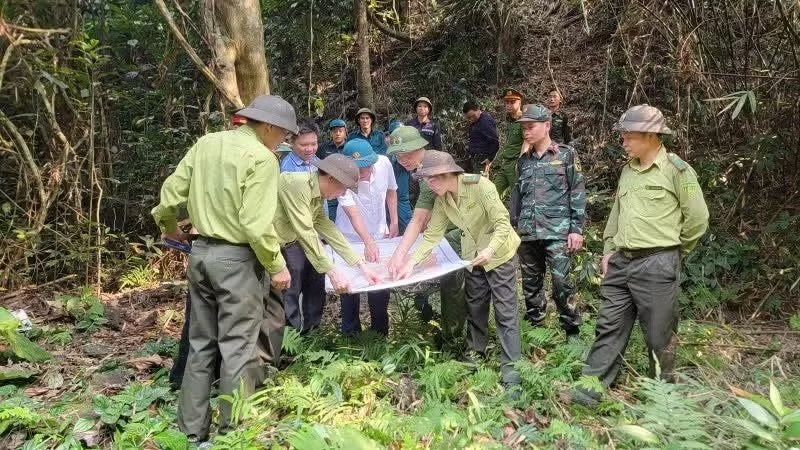
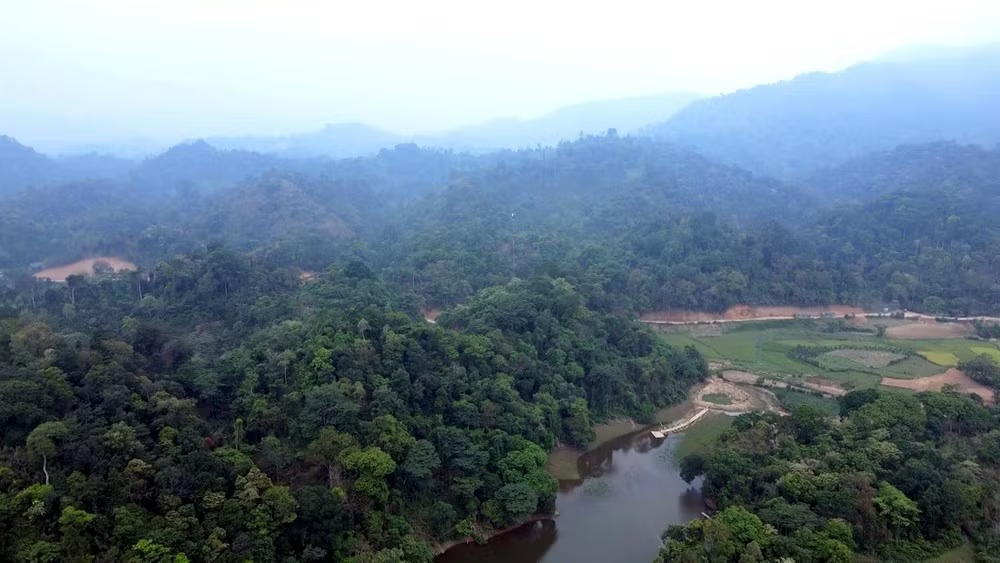
The Forest Protection Unit of Region I of Tuyen Quang Province is currently managing and protecting the Tan Trao special-use forest in Tan Trao Commune, covering more than 4,000 hectares and home to 734 plant species belonging to 456 genera. Among them, there are 26 species listed in the Viet Nam Red Book, such as honey apple, Gynostemma pentaphyllum, and Madhuca pasquieri, which have high ecological and medicinal value.
Beyond its conservation value, the forest is also an important buffer area protecting revolutionary historical relics within the Tan Trao Special National Relic Site. Therefore, forest management here has a dual function: preserving biodiversity while safeguarding cultural heritage. Close coordination between forest rangers and the local community has created a sustainable “green shield” for the Tan Trao forest.
Forest patrols by the forest protection team of Tan Trao Commune are maintained regularly with the participation of local residents. With the limited workforce, large management area, and complex terrain, the application of software and mapping tools to monitor forest developments is very necessary. Preserving the green cover of the forest is both a source of pride and motivation for those engaged in forest protection.
Be Van Sang, a member of the forest protection team of Tan Trao Commune, said that to protect the forest effectively, local residents maintain close coordination with forest rangers, organising weekly patrols. During these patrols, members not only inspect forest conditions and detect early signs of encroachment but also directly raise awareness and remind people to comply with forest protection regulations. Despite difficult travel conditions and complex terrain, they remain committed to safeguarding the forest, considering it both a responsibility and a way to protect the community’s long-term livelihoods and environment.

Chu Van Linh from the Forest Protection Unit of Region I said that to improve knowledge and skills in digital transformation for forest rangers, the unit has organised thematic sessions on digital transformation, guiding staff and Party members in applying technology to forest protection. At the same time, the unit has produced videos with realistic images and sound on forest protection and fire prevention and control, which are shared on the “Forest Rangers’ Diary” fanpage and in Zalo groups of each village, contributing to improving communication effectiveness and enabling information to spread quickly and interactively with many people.
The Forest Protection Unit of Region III in Tuyen Quang Province is responsible for managing, protecting, and developing forests, as well as forest fire prevention and control in 11 commune-level administrative units in the province, with a total natural forest area of more than 123,430 hectares and a forest coverage rate exceeding 61%.
To equip residents with better knowledge of forest fire prevention and control when handling vegetation, officers of the Forest Protection Unit of Region III regularly coordinate with local forest ranger teams to provide on-site guidance. This helps residents master procedures and skills for vegetation clearing and fire prevention and control measures, thereby improving their knowledge of afforestation and forest protection.
Nguyen Xuan Hung from the Forest Protection Unit of Region III said that forest rangers frequently visit local areas to guide residents in properly clearing and burning vegetation, requiring controlled burning in small patches to reduce the risk of fire spreading. During hot, dry, and windy conditions, people must closely monitor the entire burning process to ensure strict fire control, while informing neighbouring households to coordinate preventive measures. In case of a forest fire, it is necessary to promptly notify local communities, authorities, and forest rangers for timely response.
“In addition, the application of information technology in forest management helps forecast forest fire risks in specific areas. This allows forest rangers to promptly inform authorities and residents for proactive prevention,” Hung added.
Tuyen Quang Province has a total forest and forestry land area of over 1 million hectares, with a forest coverage rate of 62.2%, ranking second nationwide and fourth in terms of forest area. With the large forest management area, complex terrain, and limited workforce, the application of software and mapping tools to monitor forest developments is essential. From satellite imagery and forest development figures on the software, the unit can regularly monitor the situation of forest resources, and it is also easy and fast for data compilation.
Thanks to the application of science and technology, since the beginning of 2026, forest rangers in the province have detected 286 suspected forest fire points and 15 suspected forest change points, promptly notifying local forest rangers and forest owners for verification and handling, preventing forest fires and deforestation.
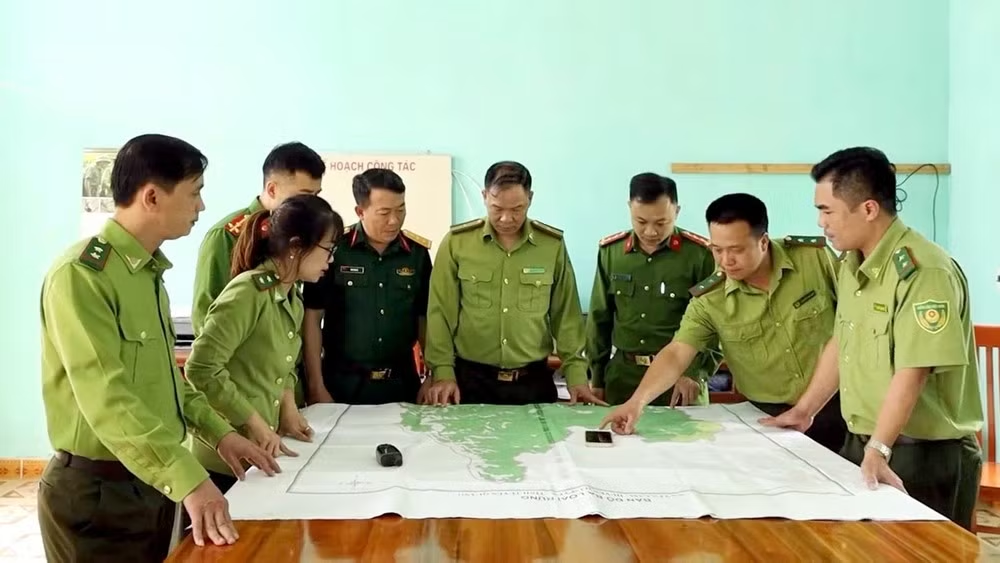
Dao Duy Tuan, Head of the Forest Protection Sub-Department of Tuyen Quang Province, said that in the coming time, the province’s forest ranger force will continue to promote the application of information technology and digital transformation in forest management and protection, considering it a key solution to improve effectiveness in the condition of large forest areas, complex terrain, and limited personnel. At the same time, the unit will also review and supplement processes for applying science and technology in monitoring forest developments and forest fire prevention and control, while accelerating the deployment of specialised software to support forest management, protection, and development, thereby enhancing the effectiveness of state management in forestry.
The effective application of software not only improves monitoring and forest protection capacity but also supports advisory, direction, and operational work, moving towards sustainable and efficient forest resource management. This is also an important foundation to contribute to effectively implementing the project “Developing Tuyen Quang into a high-tech forestry zone and a centre for wood production and processing.”