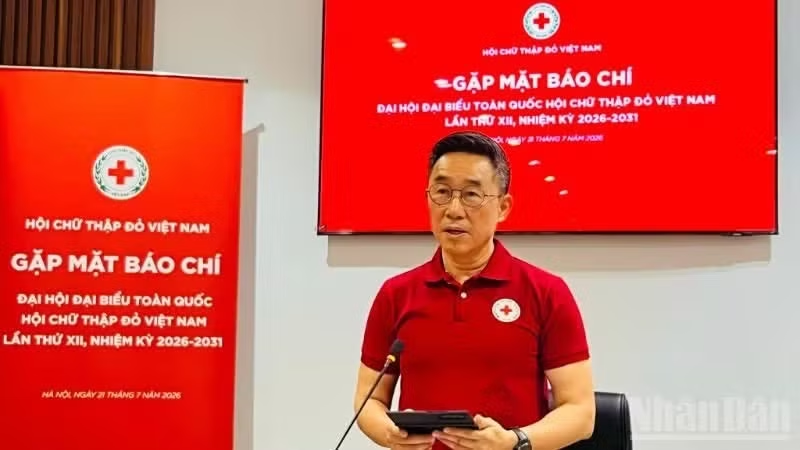
On July 21, in Ha Noi, the VRCS convened a press conference to provide information about its 12th National Congress, for the 2026–2031 tenure.
The Congress heralds a new stage of development for the VRCS in the context of the country entering a new era of development with increasingly high demands on humanitarian work, social welfare, and sustainable development.
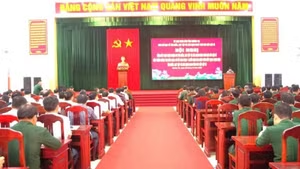
At a press conference, Vice President and Secretary General of the VRCS Central Committee, Nguyen Hai Anh, declared that the Congress will convene in Ha Noi from July 27–28, 2026, with the participation of approximately 500 exemplary delegates representing Red Cross officials, members, volunteers, and youth nationwide, along with representatives from the Party, State, Viet Nam Fatherland Front, central ministries and agencies, international organisations, and domestic and foreign partners.
During its 11th term, the total value of humanitarian activities of the VRCS surpassed over 21.1 trillion VND, assisting more than 52 million people. The “Humanitarian Movement” has become a unique hallmark of Viet Nam; the “Humanitarian Month” is increasingly cementing its status as a peak period for nationwide humanitarian work.
Alongside this, community health care activities, voluntary blood donation, first aid, humanitarian diplomacy, resource mobilisation, and disaster response have all witnessed robust expansion. The Society has also gradually pivoted from a purely relief-oriented mindset to integrating relief with livelihood restoration and bolstering the self-reliance of people and communities.
The Vice President and Secretary General of the VRCS also emphasised that in the next term, the Society will prioritise implementing major breakthroughs in innovating operational methods; improving governance capacity and the quality of its staff; promoting comprehensive digital transformation; building a humanitarian ecosystem based on social connectivity; and strongly developing the capacity to coordinate resources.