These are not only inevitable global trends but also objective requirements for Viet Nam to enhance its national competitiveness, fulfil its international commitments on sustainable development, respond to climate change and advance a just energy transition.
In this process, promoting the role of women—who account for more than half of the population and nearly half of the national workforce—is of particular importance. If given access to knowledge, technology, financial resources, and an innovation-friendly environment, women will not only adapt to these transitions but also become creators of new value, driving inclusive and sustainable development.
Recognising this need, the draft Political Report for the 14th National Congress of the Viet Nam Women's Union for the 2026–2031 term identifies supporting women to participate effectively in the digital and green economy through strategic, synchronous and long-term solutions as one of the organisation's key priorities.
Strengthening digital capacity – a prerequisite for women to participate in the new economy
Digital transformation is fundamentally changing production, governance, distribution, and consumption worldwide. However, the digital gap among different population groups, particularly in rural, mountainous and remote areas, remains a major challenge. For women, especially disadvantaged women, a lack of digital skills means fewer opportunities to access employment, markets, and essential public services.
In practice, during the past term, the Women's Union has proactively renewed its operating methods, promoted the application of information technology and gradually built digital platforms across its organisational system. The annual theme, "Enhancing the application of information technology in Women's Union activities", has been implemented synchronously from the central to grassroots levels. Programmes such as the "Women's Festival on Digital Transformation Journey," competitions on applying information technology in Union activities and specialised seminars on digital transformation have helped improve digital awareness and skills among officials, members and women.
So far, 100% of grassroots Women's Union branches have applied software in their operations, while more than 92% of local chapters use social networks to connect members and implement their activities. This is an important foundation for the organisation to move into a new stage of more comprehensive digital transformation.
In the next term, the "Digital Literacy for All" movement will be rolled out extensively to popularise digital skills among women. By the end of the term, the targets are for at least 80% of members and 60% of women to meet the required standards of digital citizenship, with every woman equipped with at least one basic digital skill and the ability to protect herself in the online environment.
This is not merely a technical target but a fundamental solution to ensure that no one is left behind in the national digital transformation process. When women are able to make effective use of digital platforms, access online public services, electronic payment, e-commerce, or adopt new business models, their opportunities to increase incomes, develop livelihoods and participate in social governance are significantly expanded.
More importantly, digital transformation changes not only the tools of work but also the development mindset. From small-scale production to chain linkages, from traditional business models to digital commerce, and from passive participation to proactively seeking market opportunities, women need to be fully equipped with the capabilities required to adapt to and lead this transformation.
Green transition – opening up new opportunities for women
Alongside digital transformation, the green economy is becoming a leading global development trend. For Viet Nam, shifting towards a green growth model is not only essential for environmental protection but also a solution for improving the quality of economic growth and ensuring sustainable livelihoods for the people.
In this process, women enjoy distinct advantages because of their direct roles in agricultural production, household consumption and community well-being. With their strong capacity to spread social values, women can become pioneers in promoting green lifestyles, the circular economy and sustainable consumption.
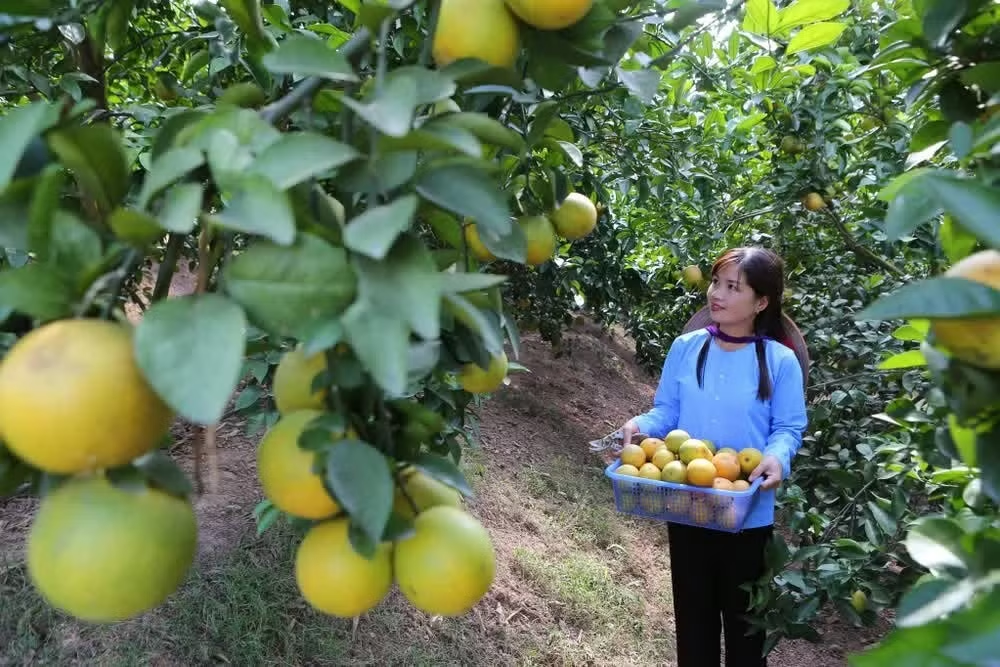
In recent years, many models led by women have demonstrated positive results in environmental protection and sustainable livelihood development. Programmes such as "Green women", "Green houses", "Household solid waste separation at source", "Women say no to plastic bags and single-use plastic products", and "Women's flower-lined roads" have been implemented nationwide, helping to raise public awareness of environmental protection.
According to the Viet Nam Women's Union, around 10,000 environmental protection and climate change response models have been established, generating positive impacts across communities. Notably, many of these models have evolved beyond awareness campaigns to become livelihood models that create jobs and generate income for women.
During the next term, the Union will focus on supporting women farmers in applying science and technology, developing One Commune One Product (OCOP) products, transforming production towards greener, cleaner and more sustainable practices, and encouraging women to participate in green supply chains, the circular economy, and low-emission production models.
Notably, a pilot initiative entitled "One Woman – One Family – One Economic Development Model", integrating both digital and green transformation, will be launched. This practical approach places households at the centre of economic development while motivating women to take a more proactive role in reshaping local growth models.
At the same time, encouraging women and girls to pursue science, technology, engineering and mathematics (STEM) will help build a highly skilled female workforce for the digital and green economy of the future. In the era of science, technology and innovation, investing in women's knowledge is an investment in the nation's long-term development.
Fostering entrepreneurship and developing the collective economy
A digital and green economy cannot be developed without innovation and entrepreneurship. In recent years, Vietnamese women have increasingly demonstrated their dynamism in economic development, from household businesses to enterprises, cooperatives and community-based economic models.
During the past term, support programmes for women's entrepreneurship were implemented in a comprehensive and synchronous manner, generating a strong ripple effect. Some 118,000 women received start-up support, while more than 41,000 business ideas and start-up projects were developed. An ecosystem supporting women's entrepreneurship has also been established, enabling women to gain access to knowledge, governance skills, financial resources, and markets.
In particular, the Project on supporting women's entrepreneurship for the 2026–2035 period approved by the government will continue to provide mechanisms to help women from developing livelihoods to becoming business owners, with priority given to innovation, digital technology, environmentally friendly products, and green value chains.
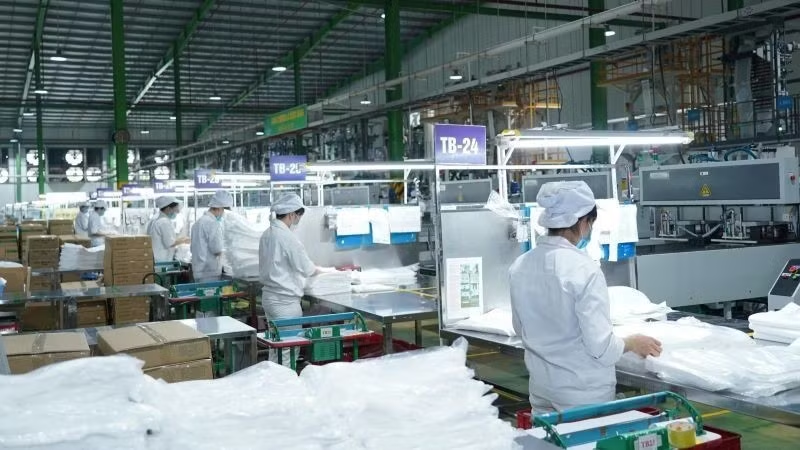
Alongside individual entrepreneurship, the collective economy managed by women has also been identified as an important avenue for creating stable jobs and increasing incomes for female labourers. By the end of 2025, Women's Union organisations at all levels had supported the establishment of 706 new cooperatives and maintained more than 10,000 cooperative groups managed by women.
During the new term, each province and centrally governed city will strive to establish at least one cluster of livelihood projects and cooperatives managed by women in line with the digital economy, green economy, and circular economy. This will not only promote economic development but also strengthen women's leadership and organisational capacity in production in the modern economy.
Expanding access to digital finance and technology
To help women to practically participate in the digital and green economy, access to financial resources and technology have decisive significance.
In recent years, Women's Union organisations at all levels have actively connected women with concessional credit, financial services, and financial literacy programmes. By early 2026, the total value of loans entrusted through the Union had exceeded 189 trillion VND, supporting nearly 2.8 million borrowers in developing production and business activities.
Microfinance services have also been expanded through greater application of technology and the diversification of financial and non-financial products, helping poor and disadvantaged women gradually integrate into the market.
In the next term, greater efforts will be made to support women in accessing e-commerce, cashless payment systems, digital platforms, and technological applications in production and business. The “Vietnamese Women App”, together with the Union's digital platforms, will serve as channels providing women with practical knowledge, market information, and economic skills.
The country now stands at a major opportunity to accelerate its development through science and technology, innovation and green development. In this process, harnessing women's potential, intellect and creativity is not only a matter of gender equality but also a key driver of national development.
When women are given opportunities to access digital knowledge, green resources and an innovation-friendly environment, they will become not only beneficiaries of development but also active creators of new growth, contributing to the building of a modern, humane and sustainable economy in the country's new era of development.