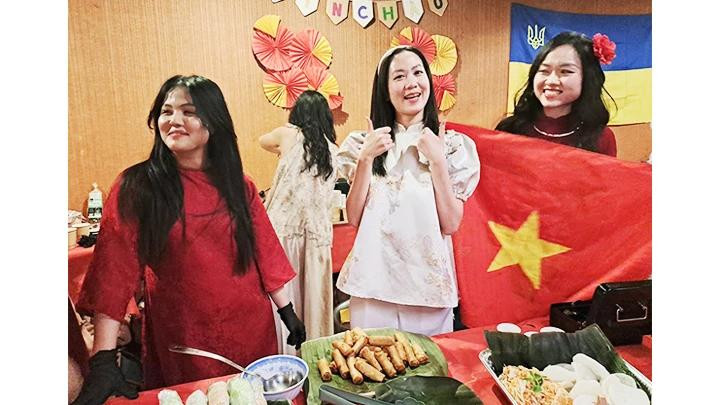
Every year in early April, a unique food festival titled “Around the World with 80 Dishes” is held in Besancon, a city in eastern France near the Swiss border, in which international students from all continents participate as chefs, offering a diverse range of cultures and culinary arts.
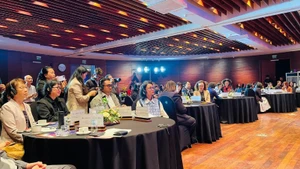
Over two days, the city’s authorities, in collaboration with the International Student Association, host food stalls and artistic exchanges at the grand “Le Kursaal” theatre, a heritage construction built in 1893 dedicated to the city’s visual and musical arts.
International food festival “Around the World with 80 Dishes”
Ranked 11th among cities in France with the largest student populations, hosting over 6,000 international students annually, Besancon also has a language centre (CLA) that welcomes around 3,500 French language trainees every academic term. It can be considered a hub of cultural convergence. The city often adopts policies that encourage international communities to present their cultures to local residents.
For 36 years, the “Around the World with 80 Dishes” food festival has become one of the largest and most prestigious cultural exchange events between local French residents and international students. Every year, the festival attracts several thousand participants over just two evenings. It is both an opportunity for the French to discover global cuisine and a chance for students to connect with locals and introduce the culture and cuisine of their countries. Festivalgoers select dishes not only based on taste but also on how the student-chefs introduce and promote them. Thus, the success of each participating group depends greatly on the subtlety and finesse of its members.
For Vietnamese students, the food festival never fails to impress attendees. Although the event lasts only two days, preparations begin early in the year, including costumes, performance numbers, and dish selection. As the venue is a theatre stage, with fewer than 200 guests allowed per session (excluding organisers and participants), there is no space for on-site cooking. As such, meticulous planning is required from the student chefs. To ensure broad appeal, the dishes must be refined, flavourful, quick, simple, and above all, representative of the nation’s cuisine.
The Vietnamese students’ table included popular dishes that define national cuisine such as spring rolls, fried rice, prawn crackers, various salads, soups, and braised meats. In 2025, they also added Vietnamese sweet soups (che) for dessert. These sweet soups are both familiar and novel to Westerners: familiar due to the use of humble, widely available ingredients; and novel in the creative combinations unfamiliar to local palates. For example, green beans, commonly used in savoury soups in France, are used in Vietnamese sweet soups. This originality became a highlight of the Vietnamese stall. One guest remarked that che was the most impressive dish due to the gentle sweetness and fragrant aroma of mung beans, nodding appreciatively while enjoying the dessert, calling it truly refined.
Young people deliver a message of a dynamic Viet Nam
Perhaps the most distinctive feature this year wasn’t just the food but the vibrant and youthful energy of the students. Lan Anh, a student who has lived and studied there for four years and is currently the President of the Vietnamese Student Association in Besancon, shared that students were informed of the festival plan since the end of last year. Each student chose their own outfit style, but all agreed to wear the traditional long dress (ao dai).
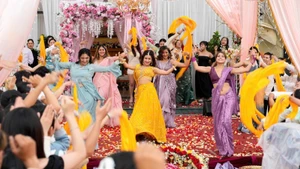
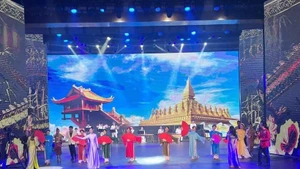
Lan Anh further explained that the ao dai not only represents the brand and identity of Vietnamese culture but also enhances the beauty of the East Asian figure, while being practical for performing and serving at the festival. Since the start of the year, Vietnamese students organised cultural rehearsals aiming to bring dances that combined both young generation’s energy and traditional Vietnamese elements to the festival. Each performance lasted just over two minutes but reflected long periods of practice and creative development.
Thanks to such dynamic and innovative performances, many guests were thoroughly impressed. At the leaders’ table, Aline Chassagne, an expert in culture, heritage and museums, attended with her son and commented that Vietnamese youth are energetic and vibrant. She added that although she had never travelled to Viet Nam, the image presented by the students at the festival has made her wish to visit the country. Her son, sitting beside her, agreed, saying the Vietnamese food was delicious.
With over 30 countries participating in this year’s “Around the World with 80 Dishes” festival, the Vietnamese students not only won admiration from the local residents but also praise from international student communities. Though they were neither professional chefs nor dancers, their youth, passion, creativity, and confidence made these young students truly outstanding cultural ambassadors of Viet Nam abroad.