This marks an important milestone, affirming the dynamism and effectiveness of professional collaboration among museums, heritage sites, and collectors in enhancing communication efforts and promoting the value of national treasures.
Forging cultural and heritage values
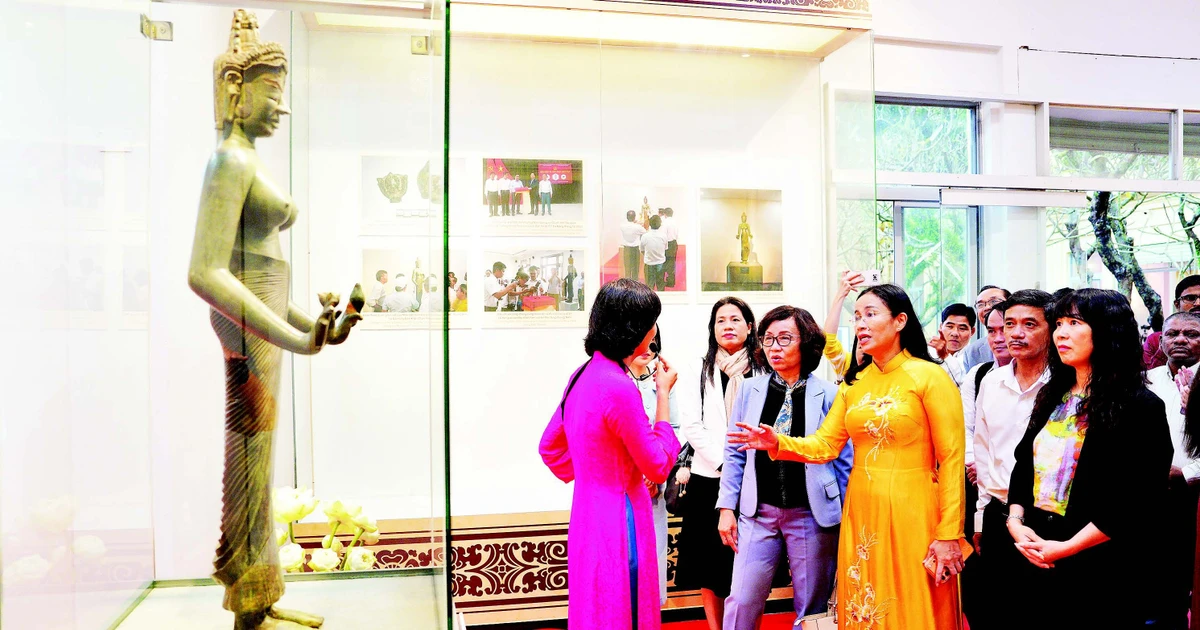
For the first time, the Da Nang Museum of Cham Sculpture has organised an exhibition entitled “National Treasures — Heritage within Da Nang” to provide residents and visitors with complete information and images of the 19 recently recognised national treasures in Da Nang City.
These are rare artefacts assessed against scientific criteria, each embodying outstanding and significant historical and cultural values. For the first time, visitors can admire 14 original artefacts and two replicas in person. The remaining three national treasures, due to their connection with heritage sites and conservation requirements, are displayed through documents and photographic materials exhibited simultaneously.
The exhibition space “National Treasures — Heritage within Da Nang” at the Museum of Cham Sculpture presents a journey back through time, allowing the public to explore artefacts from the Dong Son culture, including two treasures from collector Luong Hoang Long, which reflect sophisticated bronze-casting techniques and the rich material and spiritual life of ancient Vietnamese communities between the 3rd and 1st centuries BC. The Sa Huynh cultural artefacts showcase a distinctive aesthetic mindset and exceptional craftsmanship in jewellery-making of ancient communities in central Viet Nam from the 3rd century BC to the mid-1st century. Meanwhile, Cham cultural artefacts testify to the continuity of development, integration, and cultural adaptation in central Viet Nam from the 7th to the 13th century, with strong influences from Hinduism and Buddhism expressed through sculptural works still visible today at the My Son World Cultural Heritage site, the Museum of Cham Sculpture, and the Da Nang Museum.
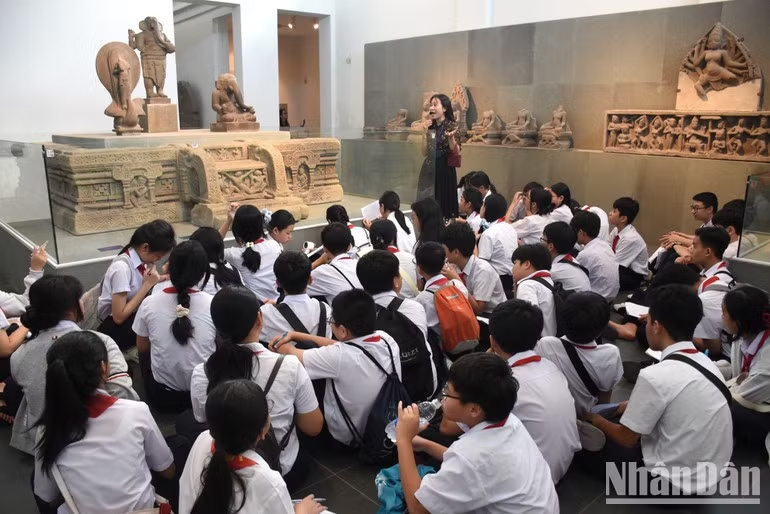
According to Le Thi Thu Trang, Director of the Museum of Cham Sculpture: National treasures can be considered the crystallisation of culture — a symbolic, distinctive and proud identity marker to introduce the depth and uniqueness of Vietnamese culture to both domestic and international audiences. From the success of this event, we hope it will serve as a foundation for further linkages and cooperation to create new, unique cultural tourism experiences, contributing to making the city a leading destination in the region — modern yet rich in national cultural identity.
In the context of integration and globalisation, the work of preserving, promoting, and transmitting the values of traditional cultural heritage faces many challenges. Da Nang’s cultural sector is striving to introduce, promote, and nurture pride in national culture, especially among the younger generation.
Danve D. Sandu, Assistant Director and Conservation Expert from the Archaeological Survey of India (ASI), currently working on conservation at the My Son sanctuary, noted: “Displaying original national treasures to serve the public and tourists is a tremendous effort by the Da Nang City authorities. Older generations have the responsibility to pass on precious values, while younger generations must actively receive, preserve, and develop these cultural heritages in the new context — this is the most effective way to spread the value of national treasures.”
Building a strategy to promote the value of national treasures
People’s Artist and Director Huynh Van Hung, former Director of the Da Nang Department of Culture and Sports, affirmed: In 1919, the Museum of Cham Sculpture was built by the French and has been in operation ever since. As cultural workers, we are proud and consider the Museum of Cham Sculpture a precious gem of cultural heritage, where the finest elements of Cham culture converge, including many national treasures.
“The fact that Da Nang is, for the first time, exhibiting original national treasures is truly meaningful, helping to introduce to domestic and international audiences that Viet Nam has a unified yet diverse culture, reflecting the harmony and interaction among ethnic cultures within the Vietnamese community,” said People’s Artist Huynh Van Hung.
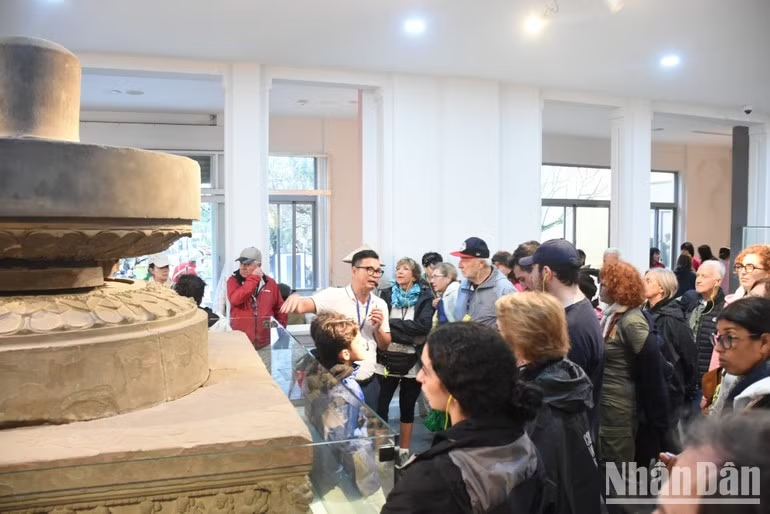
Architect and researcher Le Tri Cong proposes developing a strategy to contemporise and spread the value of Cham sculptural national treasures. The beauty of Cham sculpture must be brought out of museum glass cases to become part of popular culture and digital life. One of the most crucial elements is digitisation and virtual reality technology. We cannot transport sandstone national treasures around the world, but digital data can. This is a decisive first step — and the Museum of Cham Sculpture has taken substantial strides in this direction.
However, it is necessary to build a virtual exhibition space where viewers from anywhere in the world can “step into” My Son or Dong Duong during their golden eras. There, national treasures would be placed in their original architectural contexts rather than displayed in isolation as in current museums. Within physical museum spaces, 3D mapping technology should be applied to original artefacts, and artificial intelligence (AI) should be integrated into visitor applications.
“To allow Da Nang’s national treasures, including the national treasure statues, to truly shine, we must dare to break away from creating an overly distant sense of sacredness. Let the public ‘touch’ heritage through technology, emotion, and contemporary aesthetics,” emphasised researcher Le Tri Cong.
Given Da Nang’s current development context, recognising the importance of cultural and heritage values is essential. Da Nang needs a long-term strategy to maximise the value of its national treasures, not only to honour their cultural and historical significance but also to affirm the role of heritage in the city’s sustainable development. This is where the past remains vibrant and the present continues the journey of preserving and promoting the cultural identity of the Vietnamese nation.