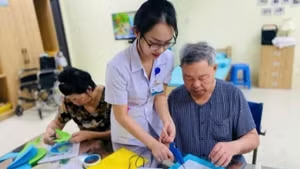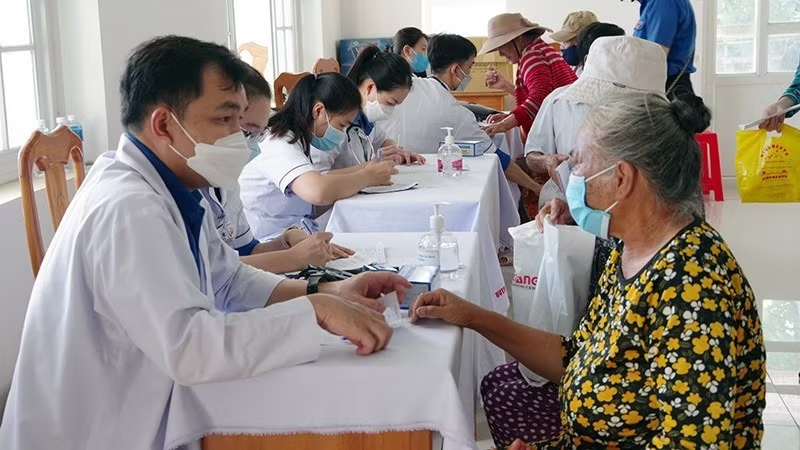
The Directive makes clear that, alongside the achievements recorded, work relating to older people has yet to meet practical requirements in the context of rapidly accelerating population ageing. At present, the network of care facilities for older people, including day-care centres, community activity houses, and forms of home-based support, remains insufficient, with limitations in quality and effectiveness.
Enterprises, organisations, and individuals investing in facilities for the care of older people face numerous difficulties, particularly in accessing land, resources, and preferential policies. Comprehensive, long-term, and overarching solutions aimed at promoting the role of older people during the phase of adaptation to population ageing have not yet been implemented in a coordinated manner.
To address these shortcomings, the Prime Minister has instructed ministries and sectors, with the Ministry of Culture, Sports and Tourism taking the lead in coordination with relevant agencies and local authorities, to make effective use of existing cultural institutions to care for cultural and spiritual life, and to organise sports, cultural, and artistic activities to improve the physical and mental health of older people.
In recent years, the grassroots cultural and sports infrastructure system has been invested in, contributing to the improvement of spiritual life, the promotion of physical exercise movements, and the building of a healthy cultural environment. However, many clubs, cultural houses, sports areas, and community centres have yet to allocate spaces or adopt models suited to the characteristics and needs of older people, resulting in limited participation by senior citizens in cultural and sports activities.
Notably, following the implementation of the two-tier local government model, many provinces and cities have been studying and converting surplus office buildings into cultural institutions serving the community. From the perspective of improving the quality of work relating to older people, the organisation of the cultural institution system needs to be approached with a long-term vision, directly linked to the task of caring for the lives of senior citizens.
Community activity spaces that are newly built, renovated, or upgraded should focus on ensuring synchronous investment in scale, facilities, equipment, and functional rooms, creating favourable conditions for all citizens to participate in cultural, artistic, physical, and sports activities.
Under the National Target Programme on Cultural Development for the 2025–2035 period, the goal by 2030 is for 100% of provincial-level administrative units to have all three types of cultural institutions: a cultural centre or cultural and sports centre, a museum, and a library, while ensuring the effective operation of grassroots cultural institutions at commune and village levels.
Accordingly, in each phase, and even on an annual basis, localities need to pay greater attention to exploiting, designing, and organising the cultural institution system in a friendly manner that meets the needs of older people; prioritising the allocation of appropriate spaces in cultural houses, parks, and grassroots activity venues; and improving safe and convenient access conditions in line with age-related characteristics, with particular optimisation for older groups.
In addition, local authorities should proactively diversify sports, cultural, and artistic activities, as well as club-based models, in ways that suit the psychology, physical condition, and social interaction needs of older people. These measures will help improve health, strengthen community bonds, and enhance the cultural and spiritual life of older people amid rapidly accelerating population ageing.