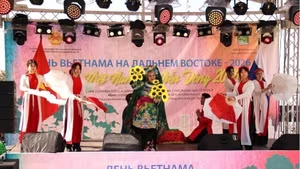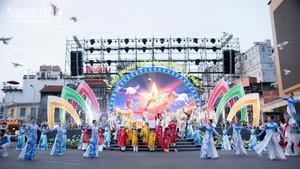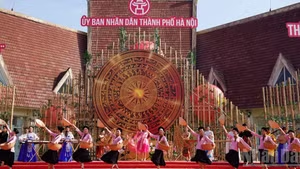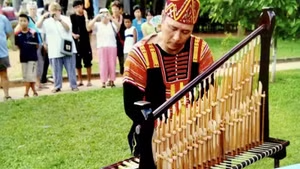
Beyond safeguarding traditional cultural values, Hue is steadily affirming its position as one of the nation’s leading cultural centres – one where culture serves as an inherent source of strength and a driver of sustainable development, and where people are both the creators and custodians of the former imperial capital’s unique character.
Preserving the spirit of Hue
Hue is renowned not only for its complex of imperial monuments, court music and distinctive festivals, but also for a unique system of cultural values cultivated across centuries as the former imperial capital, reflected in its rich tangible and intangible heritage. What makes Hue particularly captivating is the depth of its culture and the character of its people: elegant, composed, respectful of social etiquette, compassionate and thoughtful.
According to Hue cultural researcher Nguyen Xuan Hoa, the city’s enduring value lies not only in its citadels, palaces, royal tombs and court music, but also in a living cultural space embedded in the everyday lives of its people.
He noted: “Hue’s most precious heritage is not only its tangible heritage but also its living heritage – the people of Hue. If the character of those people is lost, it will be difficult to preserve Hue’s distinct identity amid the currents of integration and modern development.”
Over recent decades, alongside rapid urbanisation and the pressures of market-driven growth, many traditional cultural values have faced the risk of erosion. Historic garden houses have gradually dwindled in number; many traditional crafts lack a new generation of practitioners; and the pace of modern life has altered the once tranquil and refined way of life associated with the former imperial capital.
According to many researchers, the greatest concern is not the changing urban landscape itself, but the possibility that cultural identity may erode under the pressures of modern life if it is not actively preserved by the community.
Hue Party Secretary Nguyen Dinh Trung emphasised that the development of Hue’s culture and its people must be integrated into the broader strategy of building a centrally governed city – a strategy grounded in preserving and promoting the heritage values of the former imperial capital.
Culture is both the spiritual foundation of society and an endogenous resource, a particularly important form of soft power for ensuring Hue’s rapid and sustainable development.
According to Trung, Hue cannot develop by becoming a replica of other modern cities. Instead, it must advance on the strength of its cultural depth, with culture serving as the foundation and people as the centre of all development policies.
In every development initiative, Hue must preserve the essential character of the former imperial capital while fostering a new generation of residents who are modern and dynamic yet retain elegance, humaneness and deep-rooted cultural values.
This perspective has become a guiding principle in the city’s current development strategy. The overarching objective is to preserve heritage while cultivating a new model of the modern Hue citizen: civilised, elegant, friendly and creative, yet firmly grounded in traditional cultural values.
To achieve this, the city is focusing on building a healthy cultural environment across families, schools and residential communities; strengthening education in traditional values; raising awareness of heritage preservation; and promoting a cultured urban lifestyle.
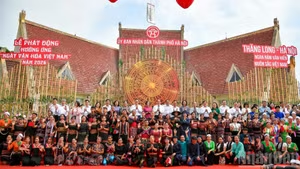
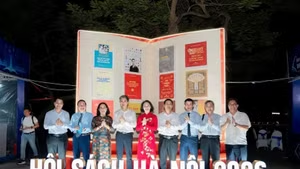
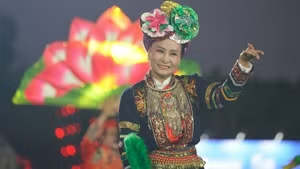
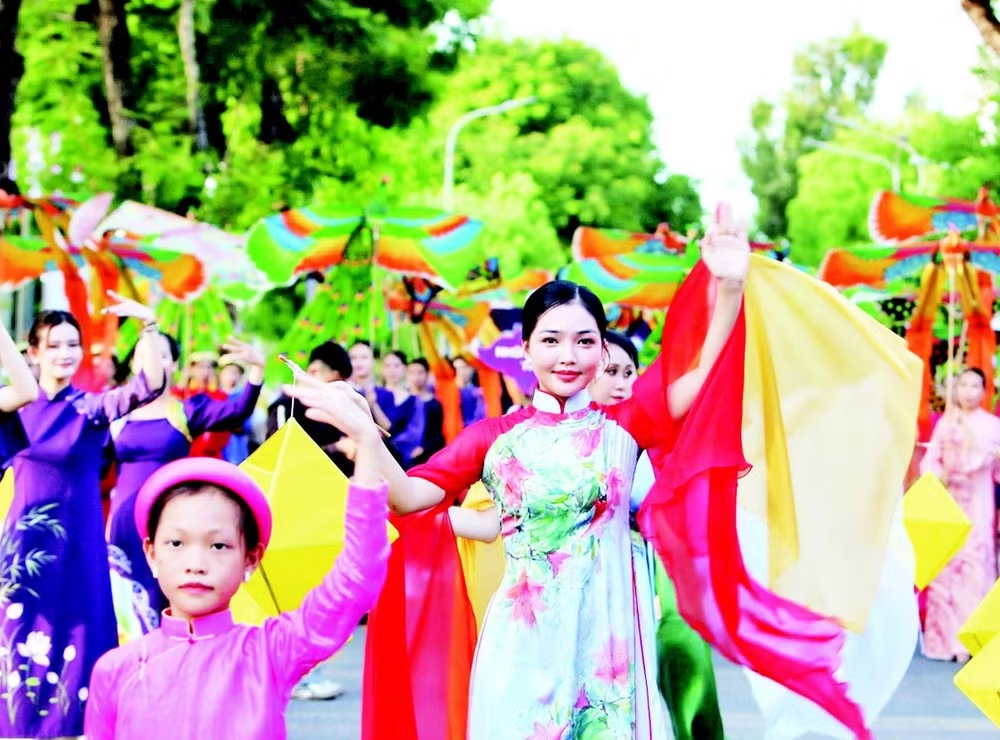
Numerous initiatives are being implemented in parallel, including the revival of traditional festivals, the promotion of Hue’s ao dai, and the preservation of Hue folk singing, royal court tuong opera and traditional craft villages – all aimed at bringing Hue’s cultural values into contemporary life.
Unlocking the potential of culture and people
In recent years, Hue has progressively leveraged its heritage as a resource for socio-economic development through heritage tourism, cultural industries and creative sectors. The most prominent example is the Hue Festival, the city’s flagship cultural brand of national and international renown.
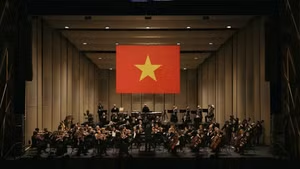
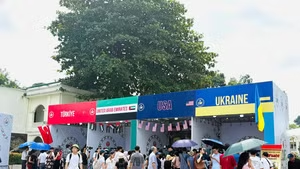
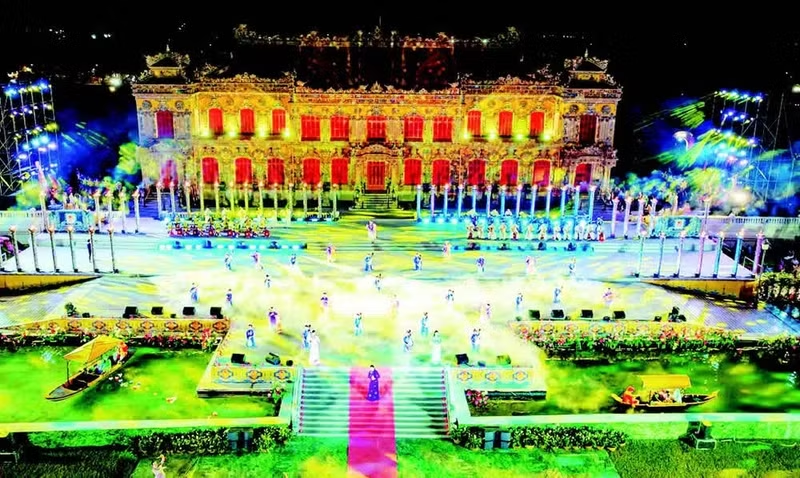
Where once only a periodic festival was held, Hue now hosts a year-round programme featuring hundreds of cultural and artistic events. Ao dai festivals, street art performances, light shows at the Imperial Citadel, community cultural initiatives along the Perfume River, culinary festivals, royal court music performances and international artistic exchanges have all helped revitalise the cultural life of the former imperial capital in ways that are more contemporary and accessible to both residents and visitors.
In 2025, Hue welcomed approximately 6.3 million visitors, including nearly 1.9 million international arrivals, generating tourism revenue of around 13 trillion VND (approximately 493.6 million USD). These figures reflect the growing appeal of Hue’s cultural and heritage tourism. Beyond tourism, the city is also promoting the development of cultural industries linked to artistic creativity, traditional crafts, cultural performances and heritage digitisation.
Hoang Viet Trung, Director of the Hue Monuments Conservation Centre, noted that heritage preservation in the modern era should go beyond restoration and protection to actively bring heritage closer to communities through technology and contemporary approaches.
In recent years, the centre has accelerated the digitisation of heritage data, introduced virtual reality applications for tours of the Imperial Citadel, developed smart guide systems, digitised artefacts; and promoted heritage through digital platforms to create new experiences for visitors, particularly younger generations.
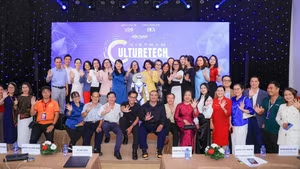
The city has also prioritised the development of creative spaces, a night-time economy, pedestrian streets, community arts initiatives and distinctive cultural products to breathe new life into the heritage city.
However, many cultural experts have warned that if heritage is exploited superficially or excessively commercialised, it risks losing its authenticity. Hue’s greatest challenge today is not merely achieving rapid development but ensuring that development remains on the right course without sacrificing the city’s unique identity.
The researcher Buu Y argued that Hue should pursue development through genuine cultural depth rather than surface-level appeal. A heritage city can only be truly sustainable when culture remains present in everyday life and people become active creators of culture.
Hue Chairman Nguyen Khac Toan affirmed that Hue does not seek development at any cost; instead, it remains committed to a balanced approach that harmonises preservation with modernisation, placing culture at the foundation and people at the centre of every development policy. This principle will continue to guide the city as it establishes a distinctive model of heritage city development for Viet Nam.