More than eight decades devoted to a traditional craft
As one leaves the main road leading into Tan Hung Commune, Hung Yen Province, Tat Vien Village comes into view, with modest houses nestled beneath the longan trees that are characteristic of the region. Walking deeper into the narrow lanes, the home of artisan Luong Son Bac is filled with the rustic fragrance of bamboo. Bundles of bamboo are neatly stacked, finely split bamboo strips are arranged in piles by the veranda, and fish traps of various sizes hang beneath the roof, silently telling the story of a craft that has been practised here for generations.
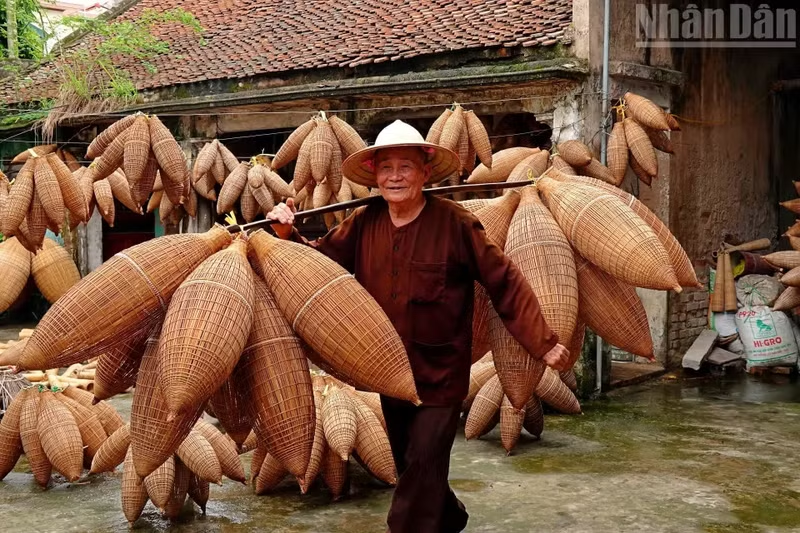
At the age of 87, artisan Luong Son Bac still works skilfully with bamboo strips. His hands continue to split, shave, and weave bamboo rings with the ease of someone who has devoted more than 80 years to the craft. Born into a family that had practised fish trap weaving for generations, he began learning the trade at the age of five. Although he spent several years away from home serving in the military and later working elsewhere, the first thing he returned to upon coming home was the family craft.
Recalling the past, the artisan recounted a time when the entire village was alive with weaving. During the day, villagers worked in the fields, and in the evenings, they gathered around bundles of bamboo, making fish traps to supplement their income while preserving their traditional craft. Over more than eight decades, Bac has not only witnessed the changes in the village but has also played a direct role in preserving and developing the traditional craft. The fish traps made by his family supported three generations and raised nine children.
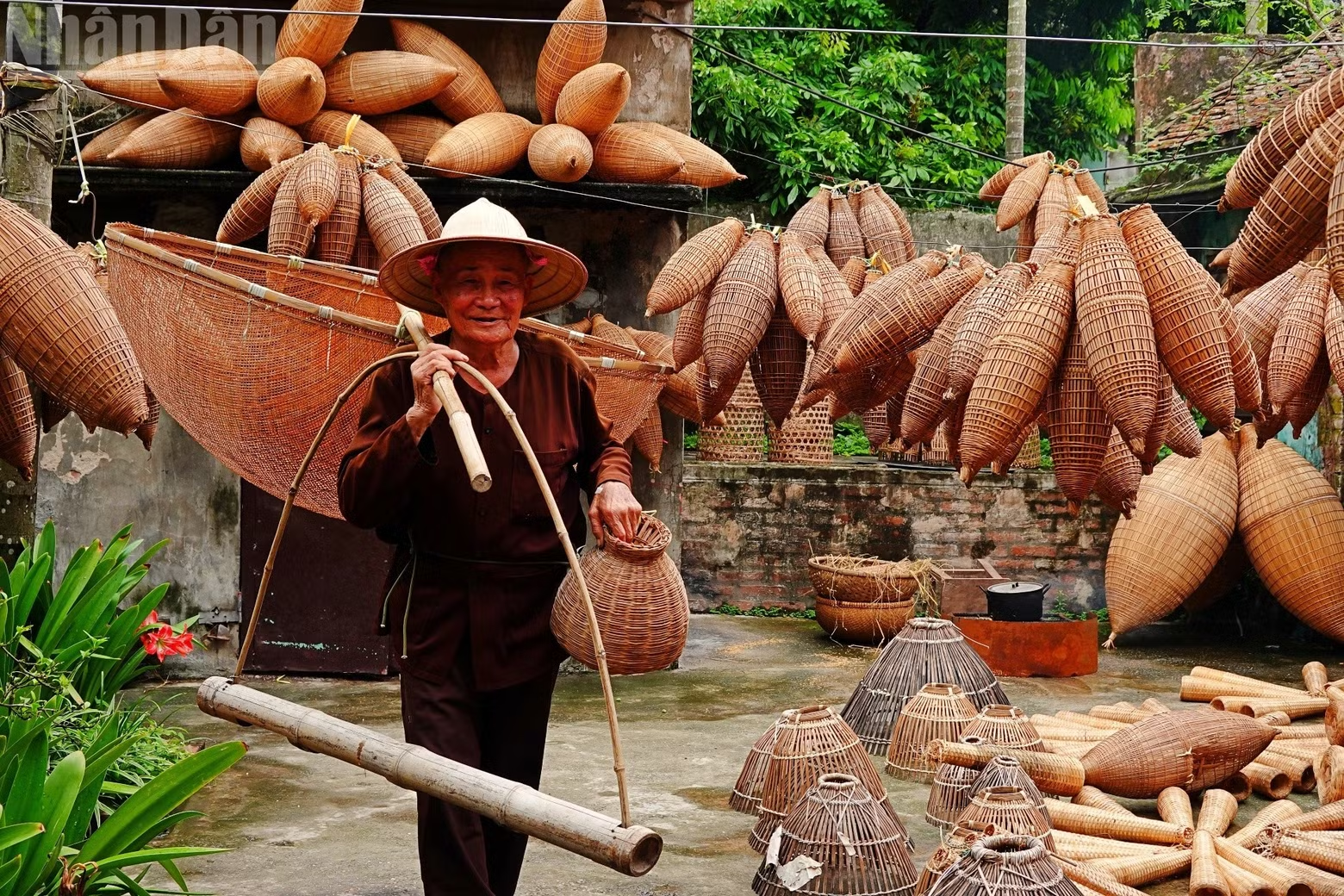
Today, as fish traps are no longer used solely for catching fish and shrimp, the products have found new purposes. They are now exported to many countries as decorative items while also attracting visitors who come to experience the traditional craft. For more than 30 years, the house of artisan Luong Son Bac has become a familiar destination for both domestic and international visitors.
"Many people come here to film, take photographs, and learn about the craft. I am delighted that more and more people are discovering our traditional village craft. Thu Si's bamboo fish trap weaving craft will never disappear or fade away. Instead, it will continue to grow and develop," Bac asserted with confidence.
That confidence continues to inspire the artisan, who has devoted almost his entire life to bamboo weaving, to work diligently every day. Through the story of Luong Son Bac, the picture of Thu Si craft village gradually emerges. Although it is no longer as lively as it once was, the village quietly preserves and nurtures its traditional values through its people's love for the craft and pride in their homeland.
Preserving the craft through everyday dedication
From the story of artisan Luong Son Bac, the image of Thu Si craft village comes into sharp focus through its houses, where bamboo, rattan, and unfinished fish traps remain a common sight. Unlike decades ago, fish-trap weaving is no longer the primary source of income for most families and has instead become a supplementary occupation.
During the day, the younger generation pursues modern careers and return home in the evenings to help their parents and grandparents finish the handcrafted traps. For the elderly, weaving fish traps is not only a familiar routine but a vital way to remain engaged and preserve the traditional craft of their homeland.
Making a bamboo fish trap demands a rigorous, multi-stage process, including selecting bamboo, splitting and shaving the strips, weaving the body, shaping the opening and making the inward-pointing funnel. Among these, crafting the funnel stands as the most critical step. Thin bamboo strips are carefully arranged into a funnel shape, allowing fish and shrimp to enter but rendering escape nearly impossible. Each fish trap, whether large or small, requires a different weaving technique, demanding skill, patience, and years of accumulated experience.
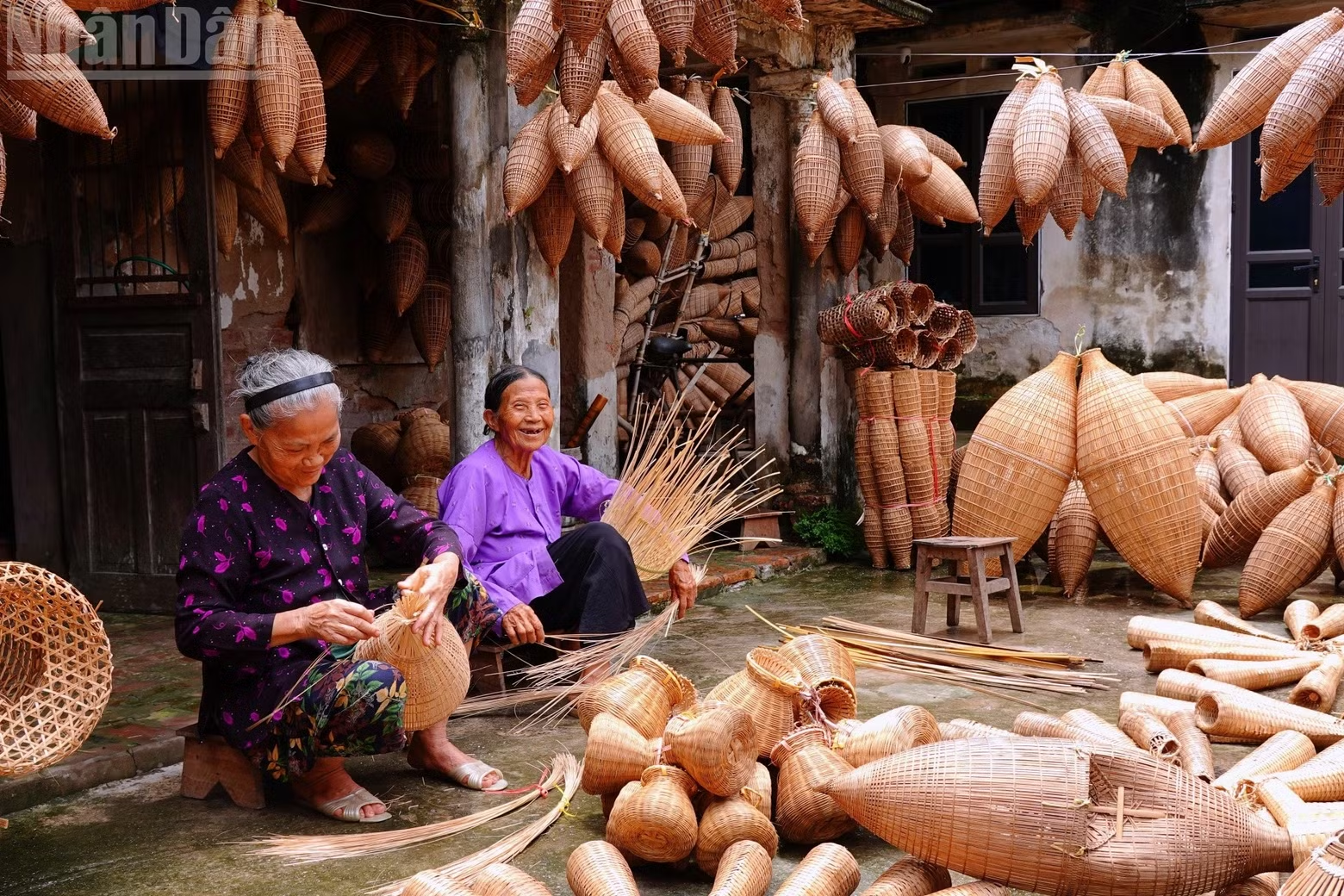
Sitting in front of her house, her hands darting effortlessly through the bamboo strips, 80-year-old Pham Thi Thuy knows every stage of the process by heart. She has practised the craft since she was eight or nine years old, when weaving fish traps was an intrinsic rite of passage for children in the village. For Thuy, weaving today is no longer about earning a living but about an enduring passion woven into her identity.
According to Thuy, life in the village has undergone a profound transformation. Younger generations now have many more career opportunities and can no longer devote all their time to the craft. Even so, the craft endures, as younger family members still spend their free time helping their parents and grandparents. As a result, the craft has never truly faded from the households in Thu Si.
For the people of the village, it is highly improbable the craft will ever return to its golden age half a century ago, when almost every household depended on fish trap weaving for its livelihood. However, the true triumph is that the tradition refuses to die. Fish traps are still made every day, not only for sale, export, or tourism, but also to anchor a cherished piece of the village’s collective memory.
Perhaps the greatest value of Thu Si craft village today is no longer measured by the number of households still practising the craft or the number of products made each day. More importantly, the tradition continues naturally as part of everyday life. Elderly villagers patiently weave bamboo to keep themselves active, younger generations spend their evenings weaving after work, and the finished fish traps travel with visitors, broadcasting the legacy of a northern Vietnamese village to many different places.
The passage of time may change the role of a traditional craft, but it can never fully extinguish the love that the people of Thu Si have for bamboo fish trap weaving. Every fish trap woven from simple bamboo strips embodies not just the artisan’s profound skill, but also memories of evenings when the entire village worked together, pride in their homeland, and a shared determination to preserve this cultural feature for future generations.