In recent days, a large-scale livestream campaign entitled "Touching heritage – urban memories" has been launched in Ho Chi Minh City through a partnership between the city's Department of Culture and Sports, the Viet Nam Cultural Heritage Conservation Support Fund, and TikTok Viet Nam.
When technology accompanies heritage
Throughout the campaign, from June to July 2026, viewers of livestreams on the Heritage of Viet Nam TikTok channel have joined content creators such as Nguyen Duc Huy, Hung Luong, and My Thien as they explore Ben Thanh, Sai Gon, and Cho Lon wards to discover a wide range of heritage sites, architectural works, cultural spaces, and distinctive cuisine such as: Independence Palace, Ben Thanh Market, Metro Station, Fine Arts Museum, Notre Dame Cathedral, Central Post Office, City Theatre, and Hai Thuong Lan Ong Street.
What makes the campaign particularly appealing is that heritage is presented in a lively and engaging way through compelling storytelling and emotional experiences, rather than through dry descriptions.
"Touching Heritage – Urban Memories" is the first practical step in implementing the "dLocals Ho Chi Minh City" programme, an initiative designed to bring local cultural heritage closer to communities through digital platforms.
The first two livestream sessions alone generated millions of views and interactions on TikTok. Many viewers were moved by seeing heritage spaces associated with their memories, while others felt inspired to visit these places in person.
In recent years, Viet Nam has increasingly championed the application of digital technology to preserve and promote the value of cultural heritage, with many initiatives achieving encouraging results.
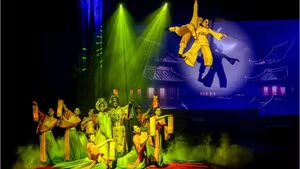
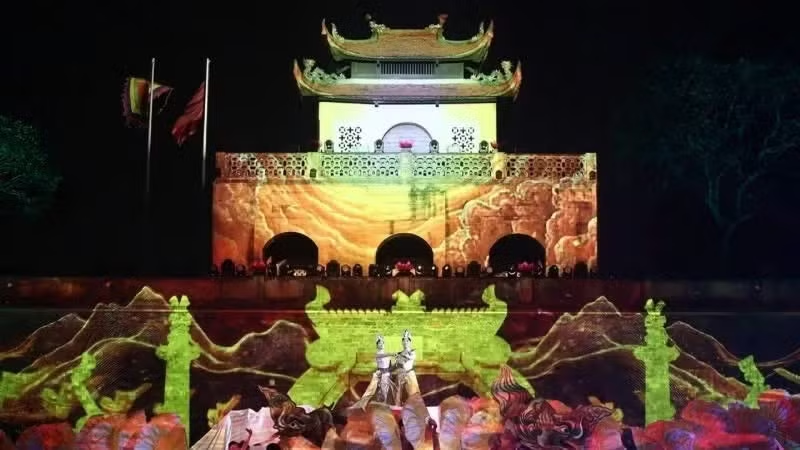
Examples include the night tour "Tinh hoa dao hoc” (Essence of Education) at the Van Mieu – Quoc Tu Giam (Temple of Literature), where 3D mapping technology and multimedia projection techniques have become powerful tools to enhance the appeal of stories about Viet Nam’s scholarly traditions, and the iMuseum VFA application at the Viet Nam Fine Arts Museum, which provides navigation and multilingual audio guides.
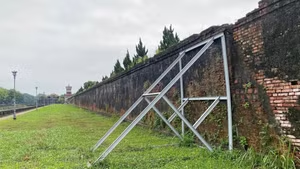
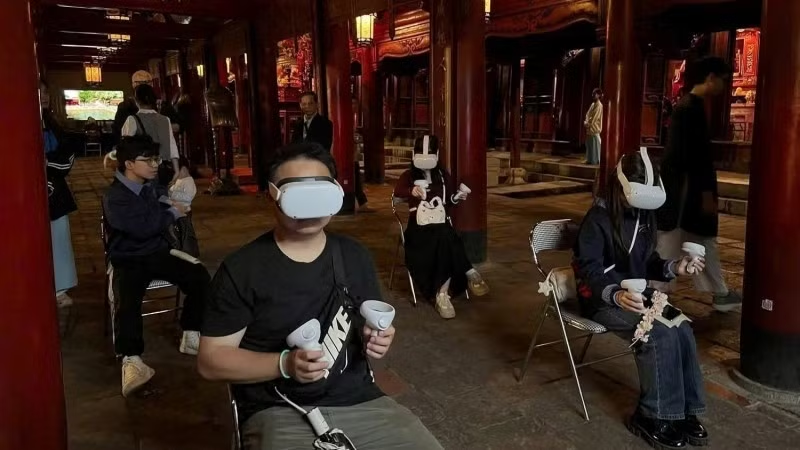
In addition, many institutions, including the Imperial Citadel of Thang Long, the Complex of Hue Monuments, the National Museum of Vietnamese History, and the National Archives Centres, have launched online exhibitions, virtual reality tours, and 3D displays, creating cultural and tourism products that draw substantial visitor numbers.
There is no denying that, in the digital era, technology has become an effective bridge linking cultural heritage with contemporary audiences. Heritage is no longer viewed solely as something to preserve but is increasingly recognised as a source of creativity that can be reinterpreted and developed into new value chains.
Transforming heritage into a resource for development
With its rich collection of tangible and intangible cultural heritage, including tens of thousands of historical relic sites across the country, Viet Nam possesses a true "gold mine" of heritage resources. If supported by technology, this treasure can become an important resource for development in culture, tourism, education, and the creative industries.
This vision is also highlighted in the Politburo’s Resolution No. 80-NQ/TW, which affirms that cultural and human development is a foundation, a vital internal resource, a powerful driving force, a key pillar, and a regulating system for the country's rapid and sustainable development.
The resolution identifies the comprehensive standardisation and digitalisation of both tangible and intangible cultural heritage as a key task. The strategy for the development of Viet Nam's cultural industries to 2030, with a vision to 2045, also recommends expanding the digitalisation of cultural heritage and establishing a national database to support artists and designers in developing new ideas. These orientations show that digital transformation in the heritage sector has become a strategic requirement.
Although encouraging progress has been made in recent years, significant obstacles remain in transforming heritage into a development resource. In many cases, heritage digitalisation is still perceived primarily as a preservation tool rather than as creative material.
In some places, technology has been used merely to create visual effects without sufficient attention to cultural depth. Connections between artisans, communities, creative businesses, technology, and the market also remain fragmented. In addition, there is a shortage of professionals who blend expertise in both technology and creative, market-oriented thinking.
In reality, while digitalisation is not the final goal of promoting heritage in the digital era, it is an essential starting point for creating new value. According to Le Thi Thu Hien, Head of the Department of Cultural Heritage, the pressing priority is to establish a unified national database with common standards that allow localities to connect and share information.
According to Master Phan Dinh Dung from Ho Chi Minh City University of Culture, Viet Nam must establish national standards for heritage digitalisation, including regulations on data formats, resolution, verification procedures, and security requirements. These standards should also be compatible with international frameworks to facilitate data connection, sharing, and international cooperation. He also emphasised the need to improve the legal framework governing digital heritage copyright to create a transparent environment for public-private partnerships.
Master Phan Dinh Dung further proposed establishing a digital heritage management faculty at higher education institutions and organising training courses on digital transformation skills to address the shortage of qualified professionals in the digital heritage sector.
Once sufficient data and resources are available, the next challenge is transforming them into products that can thrive in contemporary life. According to director Dang Le Minh Tri, Viet Nam possesses an enormous "content mine" but still lacks the "factories" capable of turning these resources into valuable intellectual property assets. He believes that this process must be carried out systematically.
Based on a thorough understanding of the core values of cultural heritage, it is necessary to identify elements with the potential to meet market demand, reinterpret them through modern creative expression without losing their original spirit, develop products with clear identities, and bring them to the right markets and platforms through effective communication strategies and strong intellectual property management.
Once this value chain is fully established, cultural heritage will truly move beyond museums and archives to become a dynamic part of the cultural industries and creative economy, generating sustainable value in the digital era.