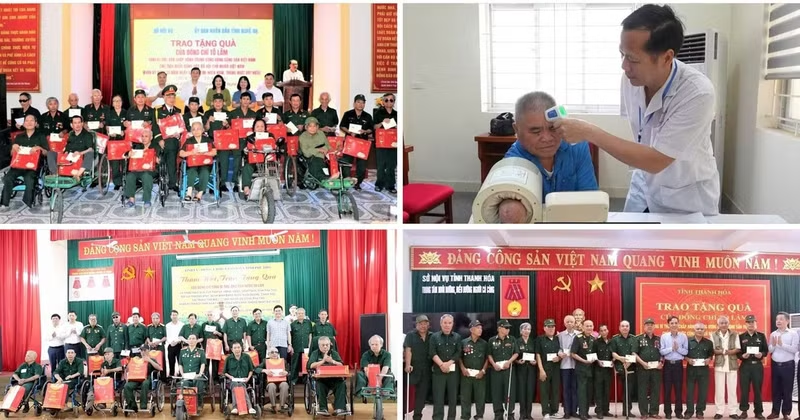
One of the key activities in the Plan focuses on improving institutions and legal policies on preferential treatment for people with meritorious services to the revolution in a comprehensive, unified and synchronised manner.
The focus is on reviewing and amending provisions in the Ordinance and guiding documents for its implementation (Decrees, Circulars, etc.) to ensure that policies for people with meritorious services are accurate, sufficient, timely, humane and aligned with practical realities.

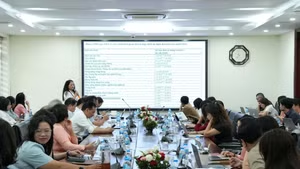
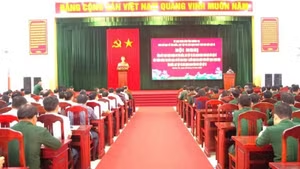
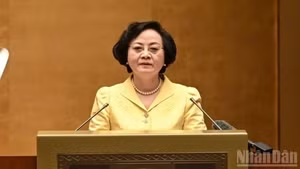
Speaking at the seminar “Searching for, Recovering and Identifying the Remains of Martyrs – A Command from the Heart”, organised by Nhan Dan Newspaper, Ms Vu Ngoc Thuy, Deputy Director General of the Department of People with Meritorious Services (Ministry of Home Affairs), stated that, towards the 80th anniversary of War Invalids and Martyrs Day, the work of improving institutions, policies and legislation on preferential treatment for people with meritorious services to the revolution is also being actively carried out.
According to Ms Vu Ngoc Thuy, Viet Nam’s legal system regarding people with meritorious services to the revolution has received attention since a very early stage. The development of laws and policies on preferential treatment for people with meritorious services has always been closely linked to practical life. The 2020 Ordinance on Preferential Treatment for People with Meritorious Services to the Revolution, together with detailed implementing decrees, is regularly reviewed and amended to ensure suitability.
The focus in 2026 is to improve the legal framework in order to enhance the effectiveness of caring for the lives of people with meritorious services through specific measures.
The Ministry of Home Affairs is concentrating resources on advising and improving institutions and policies. Accordingly, the key tasks in 2026 include completing the legal framework to enhance care for people with meritorious services through the following specific contents:
First, advising on the review of Directive No. 14-CT/TW of the Secretariat on strengthening the Party’s leadership over work related to people with meritorious services to the revolution.
Second, drafting and submitting to the Government for presentation to the National Assembly Standing Committee the amended and supplemented Ordinance on Preferential Treatment for People with Meritorious Services to the Revolution.
Third, finalising and submitting to the Government decrees detailing implementation and replacing current decrees (such as Decree No. 131/2021/ND-CP detailing and guiding the implementation of the Ordinance on Preferential Treatment for People with Meritorious Services to the Revolution and Decree No. 75/2021/ND-CP stipulating allowances, subsidies and preferential policies for people with meritorious services to the revolution); issuing special mechanisms for identifying martyrs’ remains and accelerating administrative reform.
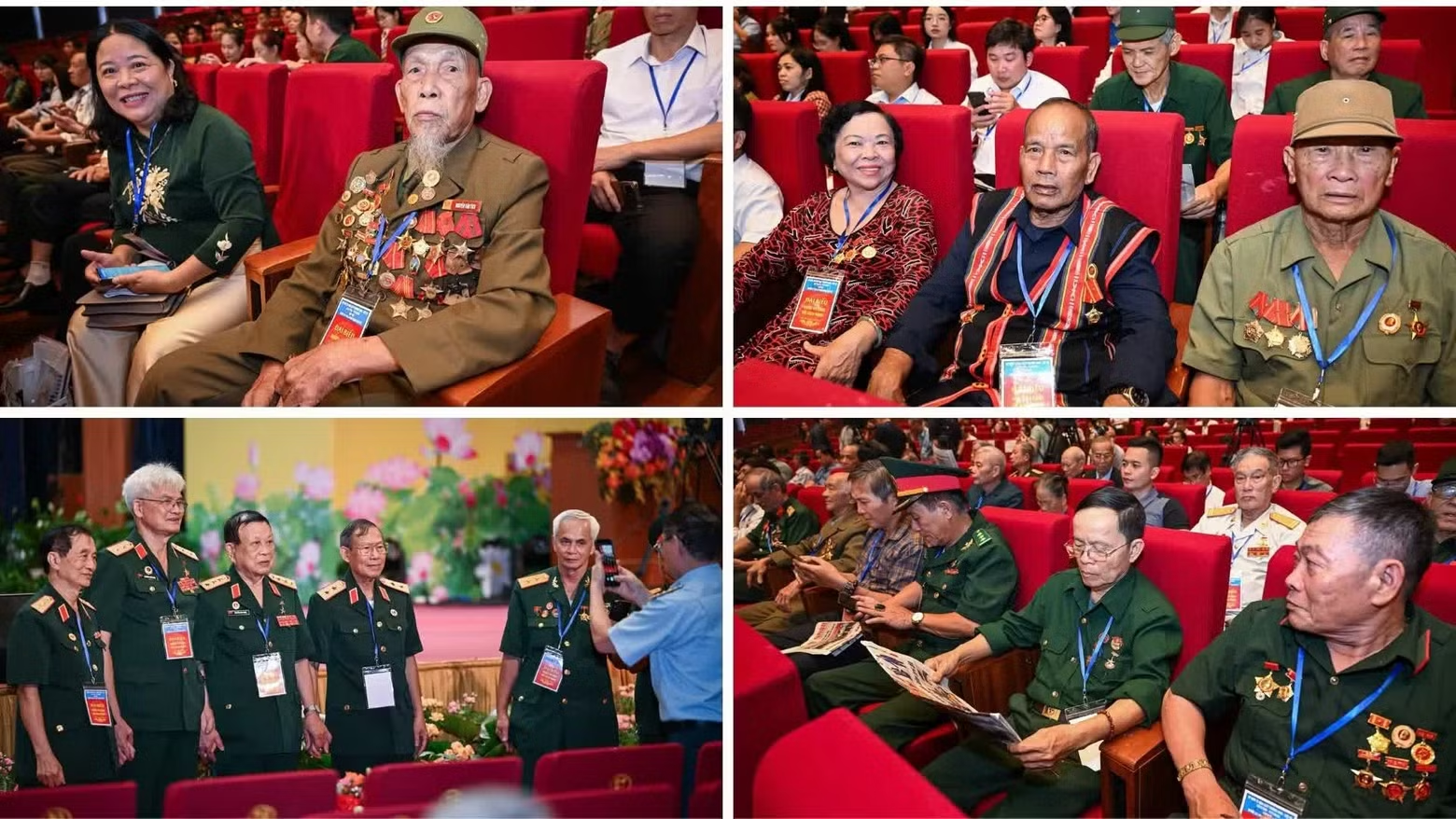
A representative of the Department of People with Meritorious Services stated that the Ministry of Home Affairs is expected to propose several important changes to ensure the best possible benefits for people with meritorious services in the coming period.
The standard preferential allowance for people with meritorious services is proposed to increase by 8% (from 2,789,000 VND to 3,012,000 VND), expected to take effect from July 1, 2026.
First is the expansion of eligible beneficiaries. The Ministry proposes adjusting the criteria for recognising martyrs among law enforcement personnel while performing duties from “fighting crime” to “preventing and combating crime” in order to cover circumstances more comprehensively and in line with reality.
Next is the adjustment of the standard allowance level. The standard preferential allowance for people with meritorious services is proposed to increase by 8% (from 2,789,000 VND to 3,012,000 VND), expected to take effect from July 1, 2026.
In addition, preferential policies relating to convalescence and caregiver allowances will be enhanced. Specifically, the convalescence regime will be changed from “once every two years” to “annually” for war invalids, sick soldiers and resistance activists affected by toxic chemicals with bodily injury rates ranging from 61% to 80%.
A caregiver allowance will also be added for veteran revolutionaries and pre-August Revolution cadres. This adjustment is necessary because these groups are now all of advanced age (over 90 years old), with declining health and requiring regular care, thereby ensuring fairness and humanity in policy implementation.
The adjustment and supplementation of these policies demonstrate the profound gratitude and special attention of the Party and the State towards people with meritorious services in the new era. This reaffirms the consistent viewpoint of continuously improving the material and spiritual lives of people with meritorious services and ensuring that policies keep pace with the country’s socio-economic development.
Photo: Deputy Director General of the Department of People with Meritorious Services Vu Ngoc Thuy also emphasised that, at present, with the focus on implementing the 500-Day Campaign to accelerate the search for, recovery and identification of martyrs’ remains, the development and improvement of institutions for people with meritorious services are receiving direct attention and guidance from the Government.
As the agency advising the Ministry of Home Affairs on policy improvement at the present stage, the Department of People with Meritorious Services faces extremely demanding tasks, particularly regarding the schedule for legal normative documents, as a large number of documents must be completed within the first six months of 2026.
Specifically, the drafting and revision of documents such as the 2020 Ordinance on Preferential Treatment for People with Meritorious Services to the Revolution, Decree No. 131/2021/ND-CP detailing and guiding the implementation of the Ordinance, Decree No. 75/2021/ND-CP stipulating allowances and preferential policies, together with the issuance of Resolution No. 26/2026/NQ-CP on special mechanisms and policies to remove obstacles in collecting samples, conducting tests and identifying the remains of martyrs lacking information through DNA analysis, were all carried out within a very short period of time.

In the new context, the requirement is to focus research on two groups of beneficiaries. The first group comprises those who directly rendered meritorious services, in order to review and expand eligible categories or raise policy benefits. The second group involves adjusting regulations to better align with practical realities.
However, public policies must be associated with actual socio-economic conditions and current management realities. Many measures may be feasible but are constrained by incomplete databases and information systems.
A major challenge at present is that records and data have been accumulated over a long period and have been affected by wars and natural disasters, resulting in losses. Efforts are currently underway to rebuild and complete database systems as comprehensively as possible, providing a basis for proposing appropriate policies for people with meritorious services, war invalids, martyrs and their families.
In the coming period, one of the highest priorities will be to study the reduction and simplification of administrative procedures relating to people with meritorious services. In the past, procedural regulations sometimes created difficulties and burdens for those implementing them due to the nature of documentation requirements. Under the close guidance of the Party and the State, and in its role as a state management agency, the home affairs sector is striving to improve policies in the best possible way, ensuring that people with meritorious services enjoy living standards equal to or higher than the average living standards of residents in their localities.
Speaking about her feelings regarding the honour of participating in the search for, recovery and identification of martyrs’ remains, Ms Vu Ngoc Thuy expressed her hope to make a small contribution to this profoundly humane mission, helping martyrs return to their families, hometowns and country, easing the pain of their relatives and healing the wounds of war during times of peace.
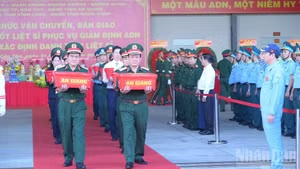
“During my participation in the 500-Day Campaign to accelerate the search for, recovery and identification of martyrs’ remains, I was truly moved by the efforts of all forces involved in the campaign, the sharing of information, and the realities of war reflected through seminars, search and recovery operations, as well as being present at ceremonies welcoming martyrs’ remains home. These activities helped me better understand my responsibility towards this collective task,” Ms Thuy said.
Representatives of the Department of People with Meritorious Services hope that the 500-Day Campaign, although conducted within a specific period, will become a turning point and a major impetus for the work of searching for, recovering and identifying martyrs throughout the country. This is a deeply meaningful activity in the journey of gratitude by the Party, the State and the people towards the heroic martyrs who sacrificed their lives for the independence and freedom of the Fatherland. It is hoped that after this campaign, both the participating forces and the information resources collected can be inherited and further developed.
The implementation of the Campaign mobilises all forces from the central to local levels, including defence and public security forces, scientific sectors, leading national forensic institutions, Steering Committees for the Search, Recovery and Identification of Martyrs’ Remains at all levels, and People’s Committees at all levels, all working together to carry out a unified programme. The Campaign operates under unified command, and all parties are ready to participate. The information collected will not only serve this 500-Day Campaign but will also provide a foundation for subsequent stages. The ultimate goal is to ensure that the search for, recovery and identification of martyrs can be conducted more effectively and efficiently in the future.