Viet Nam-India trade entering a highly positive development phase
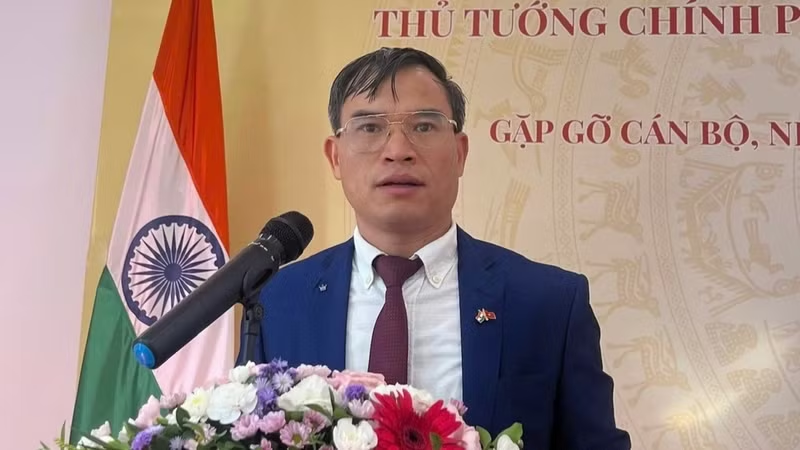
According to Vietnamese Trade Counsellor in India Bui Trung Thuong, Viet Nam-India economic and trade relations are facing an opportunity to enter a new phase of development, with the focus not only on increasing trade turnover but also on improving the quality of cooperation and strengthening investment, technology, and supply-chain links.
Ten years after the two countries upgraded their relations to a comprehensive strategic partnership in 2016, bilateral trade has recorded significant growth, reaching 16.46 billion USD in 2025, up 10.5%. Notably, in the first eight months of 2026, two-way trade reached around 13.4 billion USD, up 25% year on year, while Viet Nam's exports to India reached around 8.05 billion USD, up 16.9%.
“These figures show that Viet Nam-India trade relations are enjoying good growth momentum. However, there is still considerable room for cooperation, and an important goal in the coming period is to turn potential into more concrete results at the enterprise and value-chain levels,” Trade Counsellor Bui Trung Thuong said.
According to Trade Counsellor Bui Trung Thuong, a notable feature of Viet Nam-India bilateral trade relations is the positive shift in the structure of goods.
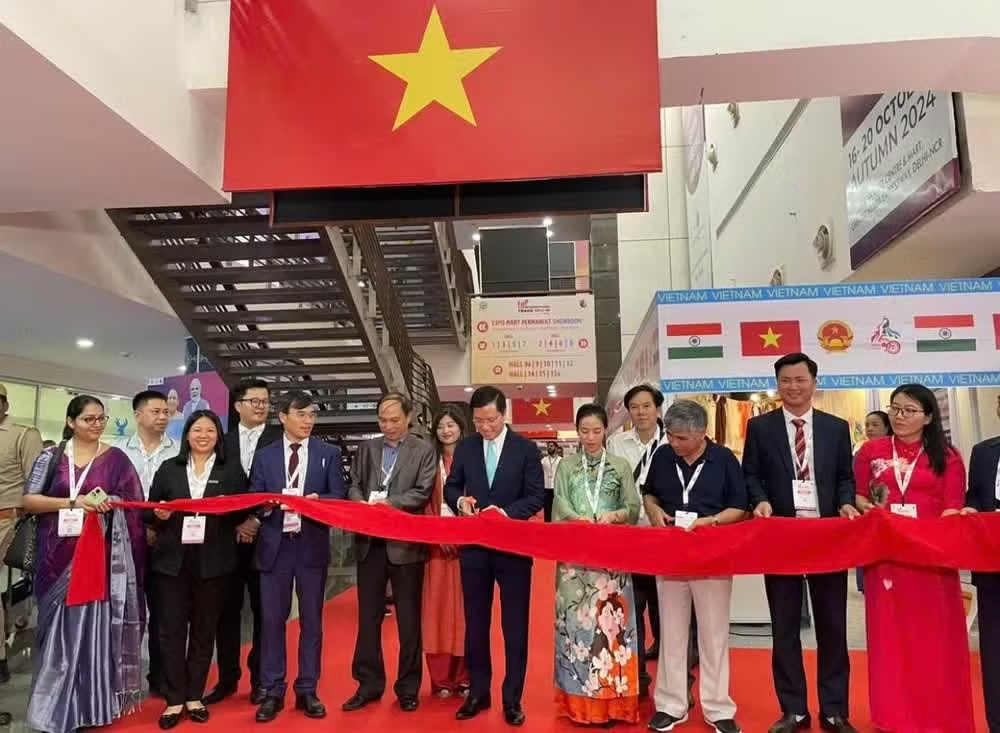
More than 70% of Viet Nam's exports to India currently consist of processed and manufactured products, including electronics, machinery, and equipment, alongside traditional strong export groups such as agricultural products, seafood, rubber, pepper, iron and steel, and iron and steel products.
Meanwhile, Viet Nam imports from India various raw materials and production inputs, pharmaceuticals, chemicals, and iron and steel.
“This shows that the two economies are relatively clearly complementary. Viet Nam can supply processed products, components, goods, and services, while India has strengths in raw materials, pharmaceuticals, chemicals, technology, and production inputs. If better connected, two-way trade would not simply be an import-export relationship but could become part of interconnected supply chains between the two countries,” Trade Counsellor Bui Trung Thuong stated.
New momentum for bilateral economic relations is also being generated by the outcomes of Party General Secretary and State President To Lam's state visit to India in May 2026. The two countries upgraded their relations to an enhanced comprehensive strategic partnership and set a target of raising bilateral trade turnover to 25 billion USD by 2030.
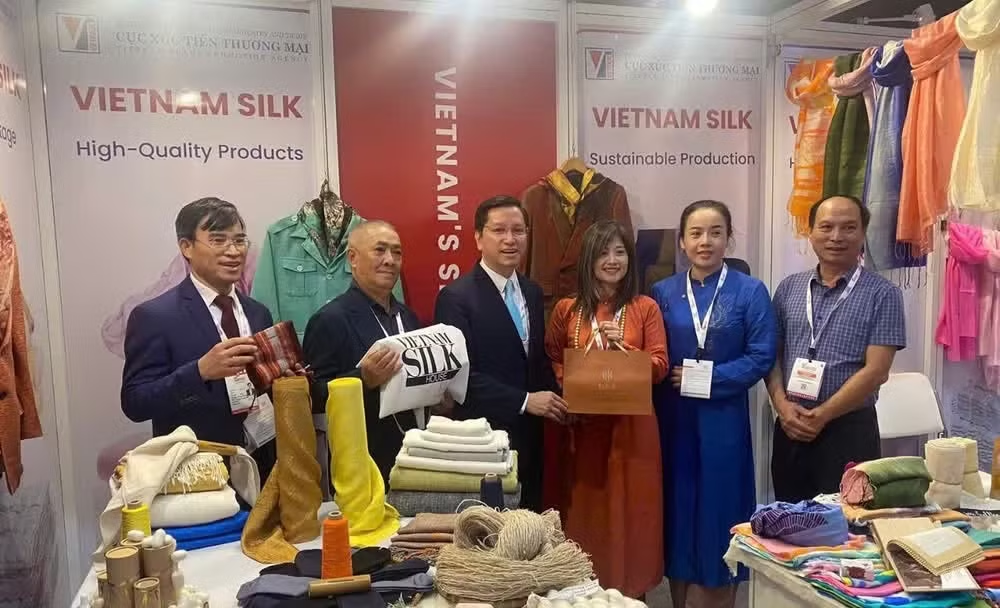
Trade Counsellor Bui Trung Thuong said that this is a well-grounded target, but achieving it requires a change in approach. “We should not only ask how to export a few more billion USD but also ask where businesses from the two countries can invest together, what products they can jointly produce, which supply chains they can jointly participate in, and what technologies they can apply to create additional value,” Trade Counsellor Bui Trung Thuong said.
India emerging as a centre for manufacturing, technology, and innovation
Assessing the Indian market, Trade Counsellor Bui Trung Thuong said its greatest advantage lies not only in its population of more than 1.47 billion, but also in its economic growth rate, the expansion of its middle class and its rapid industrialisation and urbanisation.
Demand in the Indian market is becoming increasingly diverse, ranging from processed food, beverages, coffee, and seafood to consumer goods, electronics, and quality branded products.
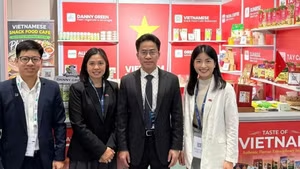
The growing interest of Vietnamese businesses in this market is reflected in the fact that many businesses are proactively participating in major trade fairs and exhibitions such as the AAHAR food and beverage exhibition, Indusfood, and other specialised trade events.
However, according to Trade Counsellor Bui Trung Thuong, Vietnamese businesses should not view India solely as a consumer market. India is emerging as a centre for manufacturing, technology, and innovation. This is precisely the area to which Vietnamese businesses should pay greater attention in the coming period.
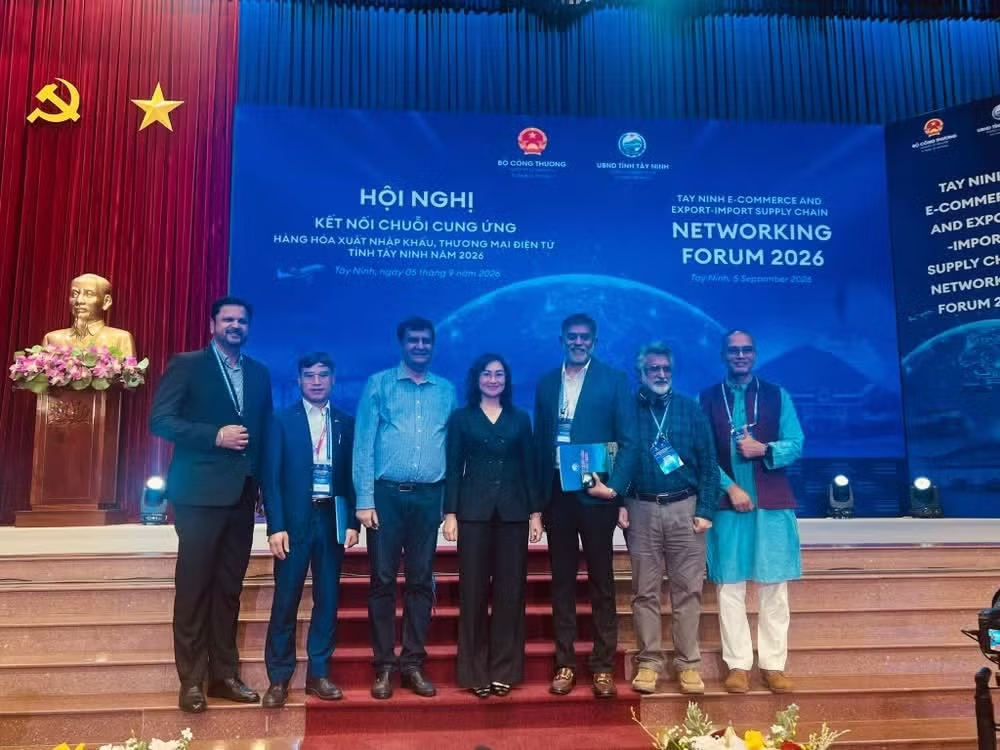
At the same time, India is accelerating the development of electronics, automobiles, pharmaceuticals, energy, logistics, and high-tech industries. This opens opportunities for Vietnamese businesses to participate more deeply in the market by supplying components, raw materials and auxiliary materials, services, technological solutions, and intermediate products.
Conversely, Viet Nam has strengths in electronics manufacturing, hardware, and manufacturing capabilities, while India has notable advantages in software, digital services, artificial intelligence (AI), fintech, and its technology workforce.
“With these advantages, the two sides can complement each other very well. Viet Nam can combine its manufacturing and hardware capabilities with India's strengths in software, AI and digital services to develop cooperation models with higher added value,” Trade Counsellor Bui Trung Thuong said.
Expanding room for cooperation through BRICS
BRICS has now expanded to 11 members, accounting for around 40% of global GDP in purchasing power parity terms and approximately one quarter of international trade. According to data from the United Nations Conference on Trade and Development (UNCTAD), intra-BRICS merchandise trade has increased more than 13-fold since 2003, reaching around 1.17 trillion USD in 2024.
“With Viet Nam becoming a BRICS partner country in June 2025 — the bloc's 10th partner country — we have the conditions to gain deeper access to BRICS policy, business, and expert networks, rather than viewing it merely as a purely diplomatic forum,” Trade Counsellor Bui Trung Thuong emphasised.
Highlighting India's role in BRICS as well as in connecting Viet Nam with BRICS, Trade Counsellor Bui Trung Thuong said that India holds a rather rare position: it is a pole in the ASEAN-Indo-Pacific, a founding member of BRICS and the bloc's rotating Chair in 2026, as well as an important voice of the Global South. At the same time, Viet Nam-India relations were upgraded to an enhanced comprehensive strategic partnership during Party General Secretary and State President To Lam's state visit to India in early May 2026, with the goal of raising bilateral trade turnover to 25 billion USD by 2030.
With these advantages, Trade Counsellor Bui Trung Thuong said that instead of approaching BRICS as a unified market, Viet Nam should adopt a “hub-and-spoke” model: India serving as the connecting hub, other BRICS countries as specialised markets and links, and Viet Nam supplying goods, services, technology, and ASEAN logistics capabilities. India's theme for its 2026 BRICS Chairmanship — “Building for Resilience, Innovation, Cooperation and Sustainability” — is highly relevant to Viet Nam's current development needs, particularly in supply chains, MSMEs (micro, small, and medium-sized enterprises), sustainable finance, and innovation.
To help Viet Nam connect with and expand cooperation with BRICS, Trade Counsellor Bui Trung Thuong proposed an approach based on four pillars. First is expanding trade and market access, focusing on Vietnamese products with advantages such as agricultural and food products, seafood, coffee, cashew nuts, pepper, electronics, textiles and garments, and footwear, while tapping into BRICS demand for raw materials, chemicals, pharmaceuticals, machinery, and energy.
The second is attracting and connecting investment, both by attracting capital from BRICS corporations into Viet Nam in areas such as technology, pharmaceuticals, energy, and food processing, and by supporting Vietnamese businesses in investing in BRICS markets through joint ventures, trade offices, or distribution centres.
Third is deeper participation in supply chains and logistics, leveraging Viet Nam's position as an ASEAN-integrated manufacturing hub in the China-India-ASEAN supply chain, as well as establishing Viet Nam–India–Middle East–Africa and Viet Nam–India–Russia/Eurasia connectivity routes.
“Finally, there is cooperation in science and technology, innovation, and digital transformation, which is a sphere of cooperation that we believe has the greatest potential to create added value,” Trade Counsellor Bui Trung Thuong said.
“I believe the greatest opportunity does not lie in waiting for BRICS to become a free trade area, but in proactively participating now in the substantive integration process taking place within the bloc, as intra-bloc trade grows rapidly, supply chains are being restructured and demand for capital and technology continues to increase.
With its status as a BRICS partner country and its enhanced comprehensive strategic partnership with India, Viet Nam is at a rare and favourable moment to turn India's 2026 BRICS Chairmanship into a springboard for trade and investment promotion, using India as the connecting hub, businesses as the key actors, and trade data as the basis for selecting priority sectors,” Trade Counsellor Bui Trung Thuong said.
Science and technology must become a new pillar
Alongside trade and investment, Trade Counsellor Bui Trung Thuong said that science and technology and innovation need to become more important pillars in Viet Nam-India relations.
India is making strong advances in strategic technology fields such as semiconductors, AI, supercomputing, quantum computing, and digital technology. Viet Nam is also giving high priority to digital transformation, AI, semiconductors, and innovation.
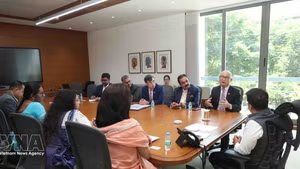
At a working session with officials and staff of the Vietnamese Embassy in India on the afternoon of September 13, Prime Minister Le Minh Hung emphasised that economic diplomacy and technology diplomacy are top priorities, while orienting efforts towards attracting investment in hydrogen, green steel, and aviation infrastructure, prioritising businesses with strong capabilities, core technologies, and technology-transfer capacity.
Trade Counsellor Bui Trung Thuong said that this orientation is in line with the development trend of Viet Nam-India relations. Accordingly, the two sides need to target projects with high technological content that can create added value, train human resources, and facilitate technology transfer. This will be a way for the two countries to develop in-depth economic relations, instead of than relying solely on trade growth.
A representative of the Viet Nam Office of Science and Technology in India also proposed selecting several strategic technology fields for the implementation of large-scale cooperation projects, as the current level of cooperation remains below its potential.
Turning the 25-billion-USD target into concrete projects
To realise the target of 25 billion USD in trade by 2030, Trade Counsellor Bui Trung Thuong said it is necessary to shift strongly from conventional trade promotion towards business and value-chain connectivity.
According to Trade Counsellor Bui Trung Thuong, the first step should be to study the establishment of a Viet Nam-India Business Council, with the participation of ministries and sectors, the Viet Nam Chamber of Commerce and Industry (VCCI), major chambers of commerce and industry in India, and the business communities of the two countries.
In parallel, consideration could be given to establishing investment, trade, and tourism promotion centres in several major Indian states, initially on a pilot basis in the southern region, where many major industrial, technology, and commercial centres are located.
“The Indian market is very large and there are significant differences between states. If promotion efforts are conducted only from New Delhi, it will be difficult to fully tap its potential. We need to have a closer presence with businesses and local authorities, while also considering the use of local personnel to enhance market access,” Trade Counsellor Bui Trung Thuong noted.
Another approach is to encourage Vietnamese businesses to invest in India and establish a number of “leading” enterprises with sufficiently strong brands, technology, and financial capacity to bring along small and medium-sized businesses.
At the same time, logistics, maritime, aviation, and digital connectivity between the two countries should continue to be improved. “If we want trade to grow rapidly, connectivity must take the lead. Market opening needs to be carried out on the principle of reciprocity, while infrastructure connectivity should be strengthened to reduce the costs of trade and expand opportunities for businesses from both countries,” Trade Counsellor Bui Trung Thuong said.
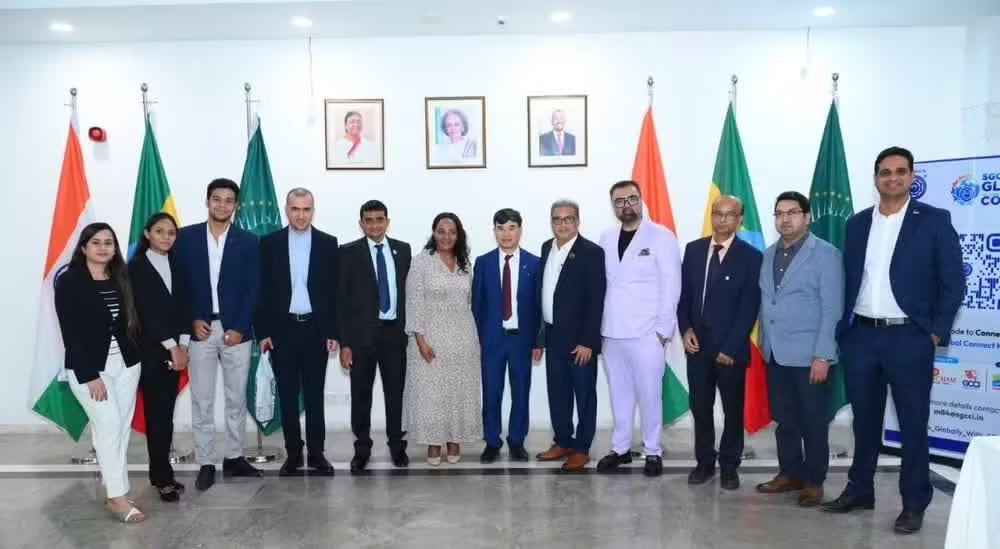
Alongside outlining opportunities to realise the goal of increasing bilateral Viet Nam-India trade turnover in the coming period, Trade Counsellor Bui Trung Thuong also noted that India is a large market but not an easy one to access. Standards and regulations such as BIS, food safety, quarantine, and sector-specific requirements can create significant compliance costs.
In addition, the market is fragmented by state, competition is intense, and challenges related to logistics, payments, market information, and partner due diligence also require thorough preparation from businesses.
“Vietnamese businesses should not approach India in the short term, seeing a large market and simply sending goods there to sell. They need to carefully study each state, each segment, and each distribution system, and build relationships with partners over a sufficiently long period,” Trade Counsellor Bui Trung Thuong recommended.
For the BRICS space, Vietnamese businesses also need to take into account the differences in institutions, standards, geographical distances, payment methods and levels of competition between markets.
Putting businesses at the centre and India at the gateway
At a working session with officials and staff of the Vietnamese Embassy in India on September 13, Prime Minister Le Minh Hung said that the scale of Viet Nam-India trade remains below its potential and that efforts should be made to surpass the 25-billion-USD target. He also asked officials in the country to proactively understand needs, update information, and effectively connect product sectors suited to the Indian market.
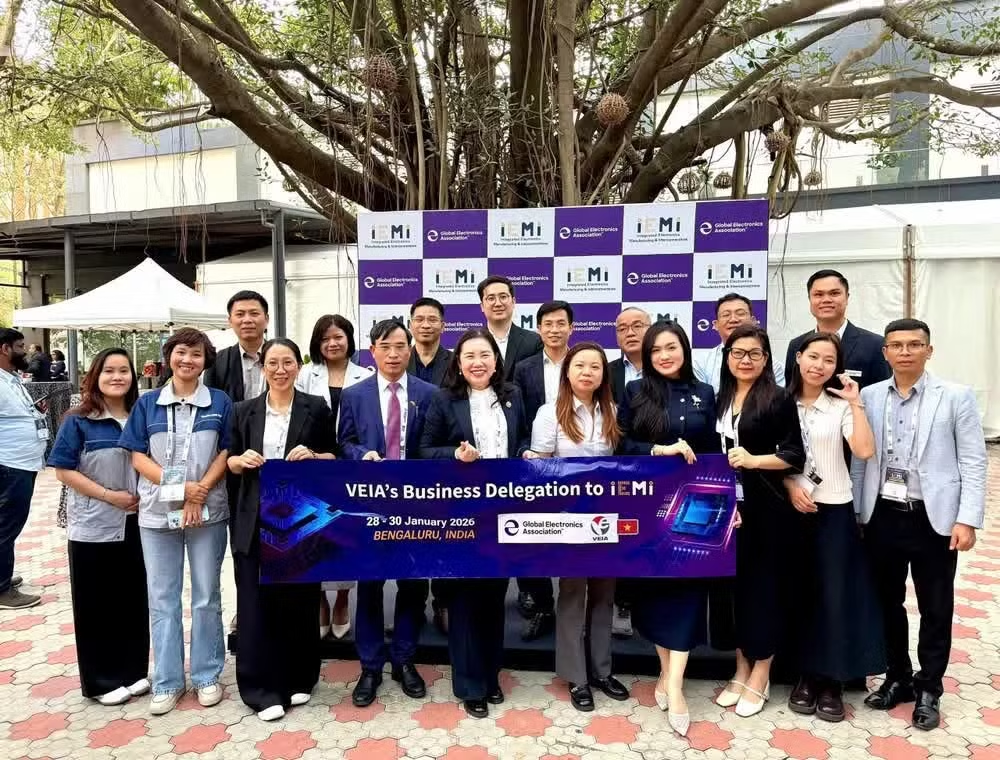
Emphasising that this is an important orientation for trade promotion work in the coming period, Trade Counsellor Bui Trung Thuong said that to take Viet Nam-India economic relations further, Viet Nam must put businesses at the centre, base its approach on actual market needs, use science and technology and value chains as drivers, and make effective use of India's role in BRICS.
Accordingly, the target of 25 billion USD by 2030 should not be viewed merely as a figure for trade turnover. More importantly, it could serve as a driving force for the two countries to build a broader and deeper economic cooperation ecosystem, in which trade, investment, technology, logistics, and innovation support one another.
Trade Counsellor Bui Trung Thuong stated: “If done well, India will not only be a major export market for Viet Nam but could also become a connecting hub helping Vietnamese businesses expand into new market spaces, while making Viet Nam an increasingly important link in regional and global value chains.”