Women strengthen their presence in scientific research
At major research institutes, university laboratories, and leading technology corporations, the proportion of female intellectuals is steadily rising, accompanied by a growing number of scientific publications authored by women. They are boldly venturing into fields once considered austere, such as artificial intelligence (AI), big data, and biotechnology. Prestigious domestic and international science awards bestowed upon Vietnamese female scientists testify to their resilience and creativity.
At the Viet Nam Academy of Science and Technology (VAST) – the nation’s leading agency for natural sciences and technology research – a new generation of young female scientists is emerging with promising potential for future breakthroughs. Among nearly 1,980 scientific staff, 905 are women, including a rapidly increasing number of female PhDs.
Their growing presence is evident in leadership structures, with women holding more than 20% of leadership positions across VAST-run units. Many female scientists at VAST have established reputations through outstanding work, leading research fields, and winning prestigious awards such as the Ta Quang Buu Prize and the Kovalevskaia Award. They have also taken part in important international organisations and committees, contributing to global scientific discourse.
Prof. Dr Chu Hoang Ha, VAST Vice President, affirmed that the Academy’s consistent policy is to ensure gender equality in scientific research, with all scientists evaluated according to the same professional standards. The Academy has also introduced mechanisms to encourage and support young and female scientists in participating in major research programmes, granting them opportunities to fully realise their potential.
At the National Institute of Medicinal Materials under the Ministry of Health, women account for 50% of the scientific staff. Many female researchers have chaired national, ministerial, and provincial science-technology projects, while others hold leadership positions at key centres, departments, and specialised offices. This demonstrates that female scientists are consistently provided with favourable conditions to thrive and assert their role in the workplace.
Women are no longer mere beneficiaries but direct creators of new values. Their presence in leadership positions brings intelligent decisiveness to management, balancing economic development with social welfare.
Assoc. Prof. Dr Vu Van Tich, Deputy Director of the Academy of Science and Technology Strategy
According to Assoc. Prof. Dr Vu Van Tich, Deputy Director of the Academy of Science and Technology Strategy under the Ministry of Science and Technology, in the context of the Fourth Industrial Revolution, women are no longer mere beneficiaries but direct creators of new values. Their presence in leadership positions brings intelligent decisiveness to management, balancing economic development with social welfare.
The wave of women’s empowerment in the tech start-up scene is driving breakthroughs. Female entrepreneurs not only generate profits but also place particular emphasis on sustainable development and community responsibility.
In education and healthcare – two pillars of the knowledge economy – women predominate and play a decisive role in enhancing workforce quality. Their contributions are not merely reflected in growth figures but embody the sustainability and humanity of an economy undergoing profound transformation.
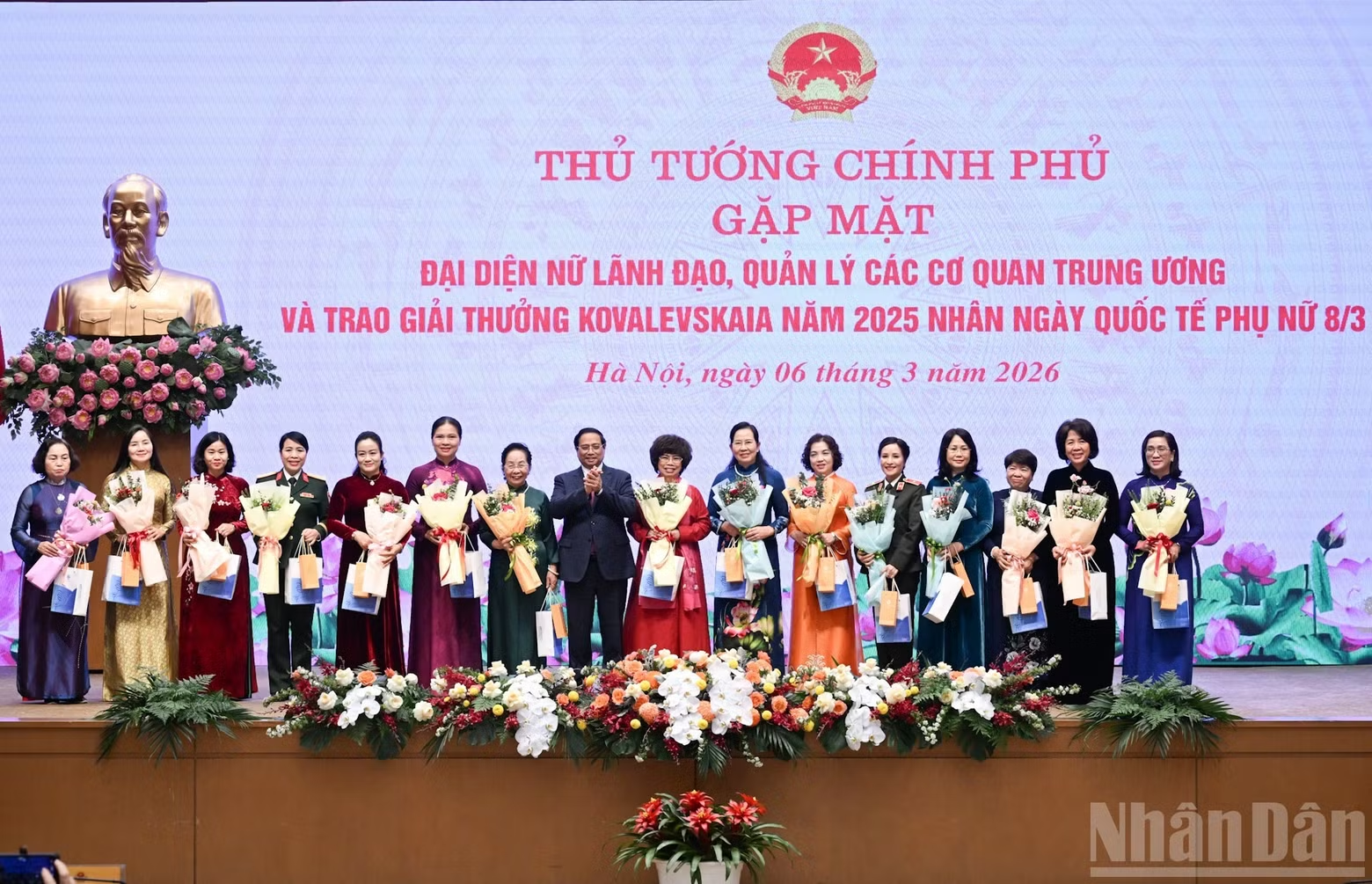
At a meeting in Ha Noi in early March with female leaders and managers from central agencies, Prime Minister Pham Minh Chinh expressed high expectations for the role of female intellectuals in the new development era. He emphasised that science, technology, and innovation are becoming key drivers to achieve double-digit growth and realise strategic national development goals.
The nation is focusing on four fundamental transformations: digital transformation, green transformation, energy transformation, and economic restructuring linked to workforce quality. In this process, he highlighted Vietnamese women as an important endogenous resource, actively participating, leading, and mastering new opportunities.
The Prime Minister called on all levels, sectors, and localities to continue improving institutions and policies, creating favourable conditions for women – especially female intellectuals – to proactively engage in scientific research and innovation, contributing more deeply to strategic national development goals, particularly in science, technology, digital transformation, and green transformation.
Creating a competitive yet humane scientific environment for women researchers
To enable female scientists to contribute more deeply to national strategic development goals, it is essential to foster a scientific environment that is both competitive and humane, taking into account gender-specific factors.
This orientation is being realised in research activities at institutes and universities. The Politburo’s Resolution No. 57-NQ/TW on advancing science, technology, innovation, and national digital transformation has created additional momentum and favourable conditions for scientific researchers, including many women, to engage more deeply in research and development.
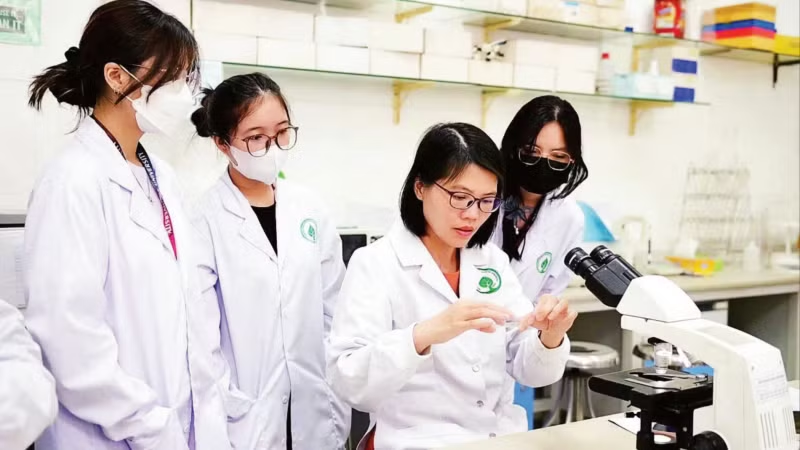
Assoc. Prof. Dr Pham Thanh Huyen, Director of the Centre of Medicinal Material Resources under the Ministry of Health, stated that following Resolution 57-NQ/TW and Resolution 72-NQ/TW on breakthrough measures to strengthen public health protection and improvement, the National Institute of Medicinal Materials is accelerating applied research to develop products serving societal needs.
She noted that many female staff at the Institute have received rigorous training abroad, equipping them with expertise and experience to leverage strengths in conserving and sustainably developing medicinal resources, preserving biodiversity, and advancing green health and green economy goals.
Assoc. Prof. Dr Vu Thu Trang, Deputy Head of the Food Technology Faculty, School of Chemistry and Life Sciences, Ha Noi University of Science and Technology, observed that amid the nation’s push for science-technology development and innovation, the research ecosystem is being systematically invested in, research-transfer mechanisms are being refined, and entrepreneurial innovation is being strongly promoted.
A truly progressive scientific environment does not prioritise men or women but creates conditions for each individual to realise their full potential.
She emphasised that in strategic technology fields, demand for high-quality, interdisciplinary human resources is immense. This presents opportunities for female scientists to leverage strengths in perseverance, meticulousness, and connectivity, thereby participating more deeply in key research groups, national projects, and international cooperation.
With equal opportunities and a supportive environment, female scientists can take leading roles in cutting-edge technologies, making practical contributions to sustainable national development.
The greatest barrier for female scientists today lies in balancing career and family responsibilities, particularly during phases requiring intense focus on international publications, building research teams, and major projects. In certain engineering and technology fields, invisible gender biases persist, compelling women to exert greater effort to affirm professional competence.
Furthermore, many scholarships, key projects, and science awards impose age limits – often under 35 or 40 – disadvantaging women during motherhood. Competition in science frequently relies on annual publication counts and citation indices, placing additional pressure on women during maternity.
According to many scientists, a truly progressive scientific environment does not prioritise men or women but creates conditions for each individual to realise their full potential. In such an environment, female scientists will have the opportunity to contribute more fully to society’s overall development.