Sharp and unpredictable fluctuations in global fuel prices, driven by escalating conflict in the Middle East, are emerging as a new variable with far-reaching impacts on socio-economic sectors and the environment, directly affecting Viet Nam’s goals of controlling inflation and achieving double-digit growth.
Rising pressure on prices of goods and services
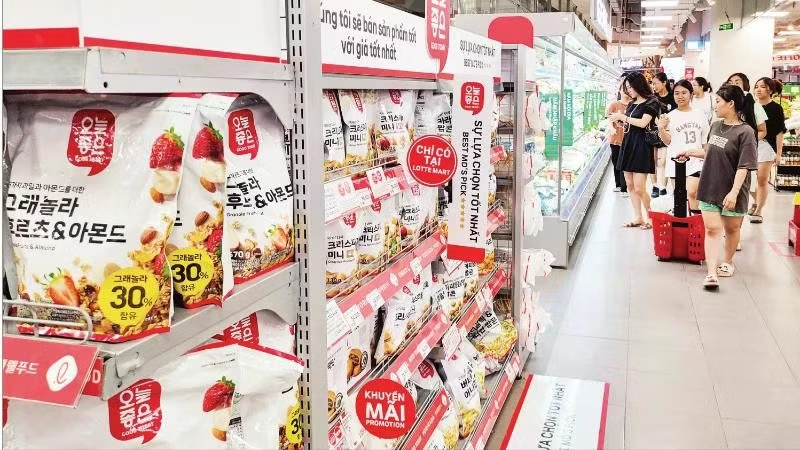
In recent days, at several traditional markets in Ha Noi, prices of food and vegetables have begun to edge up, increasing by around 3,000–5,000 VND per kilogramme, while beef prices have risen by approximately 10,000 VND per kilogramme. Traders attribute the increases to seasonal supply shortages of vegetables, limited beef supply since the beginning of the year, and, notably, the cumulative impact of recent fuel price hikes. Meanwhile, prices in supermarkets have remained relatively stable, as retail systems strive to maintain price stability during the low consumption season.
According to many retailers, most suppliers have proposed raising wholesale prices to offset higher production and logistics costs. Central Retail Viet Nam noted that the majority of its suppliers have requested price adjustments due to rising input costs for essential goods such as fertilisers, animal feed and especially fuel, which has put significant pressure on production and business operations.
Similarly, a representative of WinCommerce stated that around 70–80% of suppliers have requested price increases, with some even temporarily suspending deliveries pending new pricing agreements. While businesses are making efforts to negotiate, if input cost pressures persist, retail prices in supermarket systems could rise by 5–20%, depending on product categories—particularly imported goods and frozen foods that involve longer transportation times.
Rising service costs are also weighing heavily on transport enterprises. Nguyen Van Quyen, Chairman of the Viet Nam Automobile Transport Association, said that although the Government and relevant ministries have implemented flexible measures to stabilise the domestic fuel market, fuel costs account for 30–40% of total road transport expenses. As a result, transport firms are considering fare increases depending on specific operating conditions, especially if current pressures persist and remain unpredictable.
For freight transport businesses operating on a per-trip basis, adjusting rates may be more feasible. However, most cargo transport contracts are signed on a monthly or quarterly basis at fixed prices. Therefore, when fuel prices surge, any adjustment to transport fees must be handled cautiously through negotiations between transport companies and clients to ensure mutual benefits.
In a rapid assessment report on the impact of the conflict in Iran on the global and Vietnamese economies, Dr Can Van Luc and a research team from the BIDV Institute of Economic Research indicated that Viet Nam’s economy has been experiencing significant, wide-ranging impacts, both direct and indirect. The energy sector is among the hardest hit, as inputs such as fuel and gas remain closely tied to global oil and gas supply chains, particularly in the Middle East.
Other heavily affected sectors include energy-intensive industries such as transport, aviation, chemicals, tourism, fertilisers, steel, electronics, automobiles and construction materials. Trade and logistics are also directly impacted by supply chain disruptions and rising transportation and insurance costs. Additionally, the USD/VND exchange rate is under upward pressure amid the strengthening US dollar.
Flexible use of financial tools to proactively control inflation
Based on updated developments in both domestic and international contexts, Dr Can Van Luc and his research team have outlined three inflation scenarios for 2026. Under the baseline scenario—where geopolitical tensions subside within 4–5 weeks—the Consumer Price Index (CPI) is projected to increase by an additional 0.3–0.5 percentage points, bringing the annual average CPI to around 4–4.5%, still within the target set by the National Assembly.
In more adverse scenarios—where conflicts escalate and persist for over four months or throughout 2026—the average CPI could rise to 4.2–4.7% or even 4.5–5%, potentially slowing economic growth.
This reality underscores the need for calm, proactive, and flexible policy management to achieve the highest possible targets. The research team recommends that the Government develop responsive scenarios, diversify import sources, ensure adequate fuel supply, and strengthen inspections to prevent hoarding and unreasonable price hikes.
For the medium and long term, efforts should focus on reinforcing energy security and developing financial markets—particularly stock and commodity trading markets—to establish tools for hedging against energy price volatility and broader market risks.
The Government’s decision to reduce import tariffs on certain petroleum products to 0% and utilise the Petroleum Price Stabilisation Fund through April 30, 2026, is seen as a fundamental measure to control inflation. This approach prevents prolonged price shocks while maintaining relative stability in domestic fuel supply.
Associate Professor Dr Ngo Tri Long,
Economic expert from the Viet Nam Financial Consulting Association (VFCA)
According to Associate Professor Dr Ngo Tri Long, an economic expert from the Viet Nam Financial Consulting Association (VFCA), the Government’s decision to reduce import tariffs on certain petroleum products to 0% and utilise the Petroleum Price Stabilisation Fund through April 30, 2026, is seen as a fundamental measure to control inflation. This approach prevents prolonged price shocks while maintaining relative stability in domestic fuel supply.
He also stressed the importance of transparency in fuel price structures so that businesses and consumers can better understand pricing mechanisms. This would help build market confidence and reduce speculative behaviors such as hoarding. In addition, financial tools should continue to be used flexibly and in coordination with monetary policy. Instruments such as taxes, the price stabilisation fund, exchange rates, and interest rates need to be managed in a synchronised manner to ensure a stable and sustainable fuel market, thereby easing inflationary pressures.
Dr Nguyen Quoc Viet from the University of Economics under Viet Nam National University, Ha Noi, highlighted that the top priority at present is to contain inflation by promptly deploying policy tools to mitigate fuel price shocks affecting both businesses and consumers. Early implementation of such measures can help prevent cost-push inflation from spreading across sectors.
Regarding tax policies, he suggested further consideration of reducing VAT, excise tax, and environmental protection tax on petroleum products to ease domestic fuel prices. At the same time, policies such as tax exemptions, deferrals, or reductions could be applied to support business cash flows and sustain production activities.
However, since different taxes fall under different authorities, any adjustments must follow special procedures to ensure timely responses to rapidly changing market conditions.