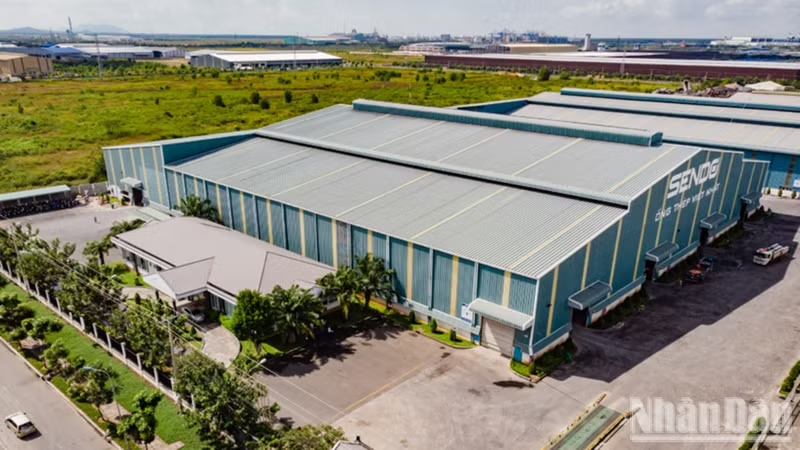
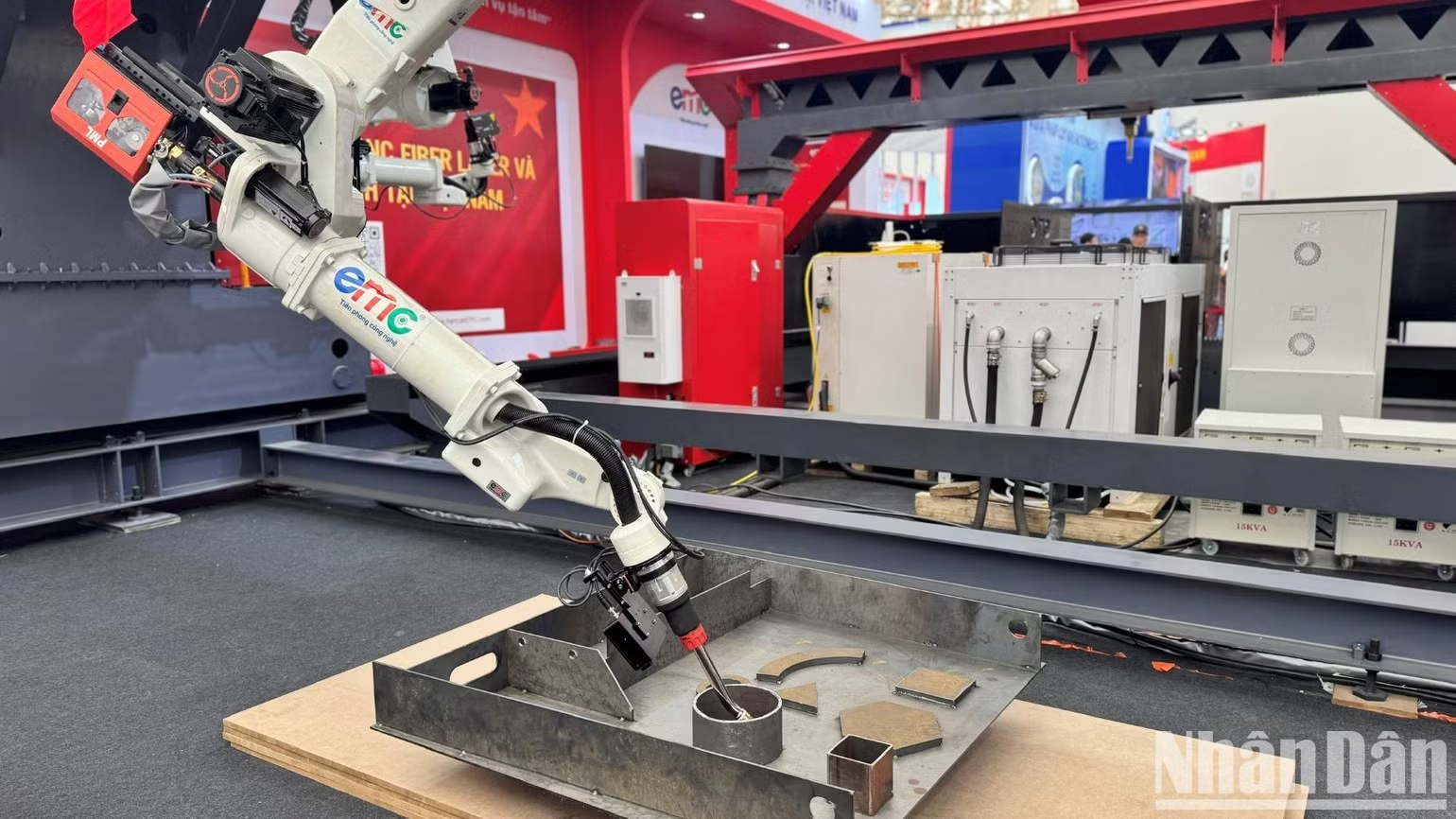
Viet Nam continued to record positive signals in attracting foreign investment in the first half of 2026. Total registered foreign direct investment (FDI) reached approximately 34.7 billion USD, up 61% year on year. Among newly registered FDI, manufacturing continued to lead, attracting approximately 10.8 billion USD, equivalent to 62% of total newly registered capital.
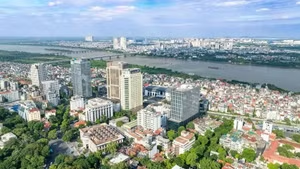
Investment capital also remained positive in the country’s major economic centres. Ha Noi attracted 3.2 billion USD in FDI in the first six months of the year, while newly registered FDI in Ho Chi Minh City reached 6.8 billion USD, up sharply by 114.2% year on year.
Infrastructure expands investment space
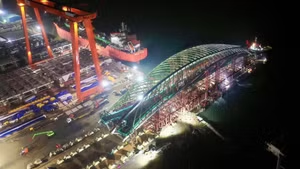
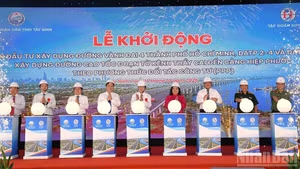
Infrastructure will play an important role in determining how effectively Viet Nam can support the next stage of investment development. According to the Ministry of Construction, by the end of 2025, Viet Nam had put into operation and technically opened to traffic 3,345km of expressways. Continued investment in seaports, airports, railways and logistics networks is improving connectivity between existing economic centres and emerging investment locations.
Neil MacGregor, Managing Director of Savills Viet Nam, said: “Infrastructure is expanding the range of markets that international capital can access in Viet Nam. Improved connectivity is creating additional room for new investment locations, while also creating requirements to ensure that infrastructure, power supply, logistics and supporting services can keep pace as investment continues to grow.”
In northern Viet Nam, key transport projects are strengthening the economic corridor connecting Ha Noi, Hai Phong, Quang Ninh and neighbouring manufacturing centres. Ring Road 4, the expanding expressway network and the deep-water port system in Hai Phong are improving interregional connectivity, while urban railway development plans in Ha Noi are expected to support the formation of new commercial and residential areas, while also strengthening connections with neighbouring growth poles.
A similar trend is also taking place in southern Viet Nam. Long Thanh International Airport, Ring Road 3 and the Cai Mep-Thi Vai port complex are improving access to key industrial and logistics corridors. Ho Chi Minh City is also expanding its urban railway network, with future connections planned to extend to key development areas in the southern economic region.
These projects are expanding the range of locations capable of attracting investment. The impact of this process also extends beyond industrial and logistics real estate as new economic centres emerge and employment increases, with demand potentially spreading to housing, offices, retail, accommodation and other real estate segments.
From growth to implementation capacity
For investors in manufacturing, logistics, technology and infrastructure, the period from capital commitment to the time a project becomes operational can directly affect investment efficiency. Delays in accessing land funds, obtaining project approvals or completing infrastructure can increase costs and affect project feasibility.

Viet Nam continues to improve its legal framework on land, investment and project development, while placing greater emphasis on attracting high-tech and high-value-added industries.
Neil MacGregor said that transparency and the ability to shorten the time needed to bring a project into operation are being carefully considered by international investors in their decision-making processes. A clear legal environment and more efficient approval procedures can provide investors with a stronger basis for forecasting and managing implementation schedules.
Alongside its manufacturing base, position in regional supply chains and increasingly complete infrastructure network, these factors are becoming important conditions in capital allocation decisions. When reinforced by a transparent legal environment and effective project implementation capacity, these advantages will contribute to turning Viet Nam’s growth into long-term investment capital flows.