Le Viet Anh, Secretary General of the Viet Nam Pepper and Spice Association, stated that India continues to be a key export market for Vietnamese spices in 2026. As of the end of April, Viet Nam has exported 4,330 tonnes of star anise, generating export earnings of USD 17.1 million. Of this total, exports to India reached 2,785 tonnes, accounting for 64.3% of total export volume.
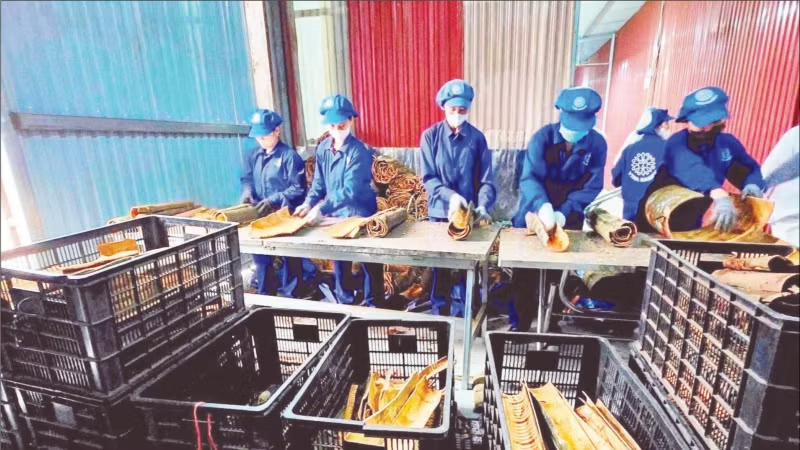
For cinnamon, Viet Nam exported 34,745 tonnes during the first four months of the year, with export revenue reaching USD 89.1 million. India remained the largest market, importing 11,507 tonnes, representing 33.1% of total exports and an increase of 18.1% compared with the same period in 2025.
Although pepper exports showed a downward trend, with exports to India reaching only 3,883 tonnes, down 34.6% year on year, India remains an important market due to its large population and strong demand for spices used in food processing.
In addition to spices, Viet Nam’s rubber exports to India increased significantly in the first quarter of 2026, reaching 16,274 tonnes valued at USD 32.65 million, up 21.1% in volume and 15.4% in value compared with the same period in 2025.
As a result, Viet Nam’s share of India’s total rubber imports rose from 14.6% to 18.2%, making Viet Nam the third-largest supplier of rubber to the Indian market. Given India’s continued heavy reliance on imported rubber, the country is expected to remain a key market for Vietnamese rubber in the coming years.
In the fruit and vegetable sector, Mr Ngo Xuan Nam, Deputy Director of the Viet Nam SPS Notification Authority and Enquiry Point, recently announced that India has notified a draft amendment to its Plant Quarantine Order on imported plants issued in 2003. Under the proposed amendment, fresh durian originating from Viet Nam that is imported for consumption will not be subject to additional declarations on phytosanitary certificates, nor will it be required to comply with special import conditions. This represents a major opportunity for Vietnamese durian to enter the highly promising Indian market.
According to Bui Trung Thuong, Trade Counsellor and Head of the Viet Nam Trade Office in India, from a strategic perspective, India is a vast consumer market and a major global manufacturing and processing hub. The country is currently pursuing an ambitious export strategy aimed at achieving merchandise exports worth USD 2 trillion in the long term. This means that demand for imported raw materials used in processing industries will continue to grow, creating substantial opportunities for Vietnamese agricultural products.
However, to further boost exports to India, Viet Nam must make better use of the ASEAN–India Free Trade Agreement (AIFTA) to strengthen the competitiveness of strategic product groups, while also addressing barriers related to rules of origin and other trade requirements.
Businesses must also meet India’s stringent requirements regarding quarantine, food safety, and quality standards — including the FSSAI standards of the Food Safety and Standards Authority of India and the BIS standards of the Bureau of Indian Standards — in order to expand their presence in the mid-range and premium market segments. Another important solution is to intensify direct trade promotion activities.
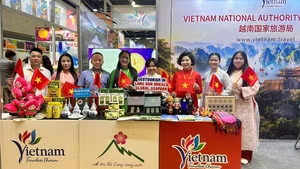
Bui Trung Thuong noted that the Viet Nam Trade Office in India will continue to strengthen support for Vietnamese enterprises participating in reputable international trade fairs and exhibitions in India. These events provide opportunities to engage directly with customers, understand consumer preferences, stay informed about market trends, and expand business networks.
At the beginning of 2026, the India Trade Promotion Organisation (ITPO) introduced the “Partner Country” model for the first time at the AAHAR International Food and Hospitality Fair, creating favourable conditions for participating countries to promote their national image and strengthen business connections.
ITPO invited Viet Nam to participate as a Partner Country, demonstrating India’s high regard for Viet Nam’s position within the global agricultural and food supply chain. This presents an excellent opportunity for Vietnamese enterprises to enhance their market presence, promote their brands, and expand their market share in India.