With the advantage of youth and vitality, young people have always stood as a pioneering force at every stage of the nation’s history. Particularly in the current context of extensive international integration and robust renewal, young people today are better educated and have greater access to advances in science and technology. Their role in the cause of national construction and defence in the new era therefore presents both significant opportunities and considerable challenges.
For young people today, however, one aspiration remains clear: they desire the nation’s traditions to guide them and society to foster the confidence and trust they need to contribute and grow.
A sense of responsibility inspired by everyday stories of history
Quach Dong Chi, a student at the Institute of Journalism and Communication under the Academy of Journalism and Communication in Ha Noi, noted: “I believe history education first and foremost helps young people understand how the values we enjoy today came into being. History is not merely a collection of dates or events to memorise. Behind them are the stories of countless people and generations who lived, fought, and sacrificed. When we encounter history through specific stories and listen to people who experienced the war first-hand recount those years, I believe history becomes much more relatable, rather than simply knowledge confined to the pages of textbooks.”

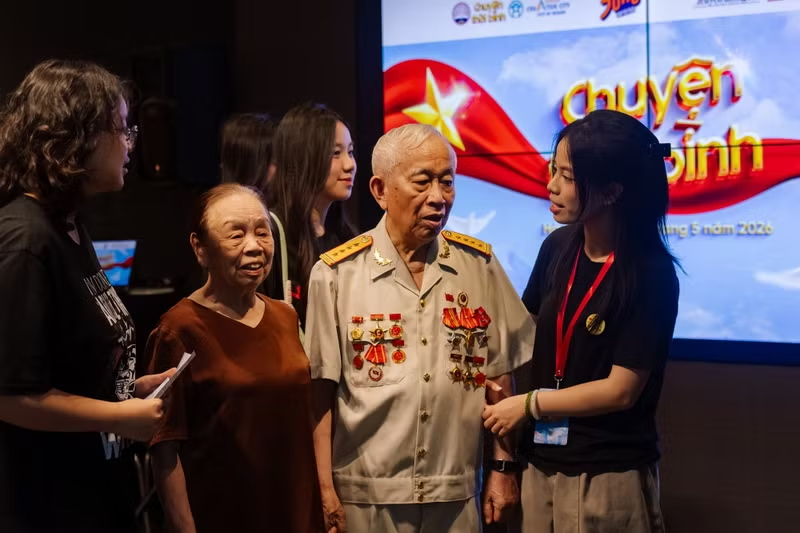
Dong Chi shared his experience participating in the “Stories of Peacetime” project, a communications initiative documenting and sharing the everyday stories of war veterans in the post-war period. Through the project, he had the opportunity to hear stories about military life, the harsh years of war, and the journeys of earlier generations who continued to contribute to the national development after the country entered peacetime.
“Some memories are inextricably linked to the years of fighting, while others are stories about life at centres for wounded veterans, where those who had lived through the war continued rebuilding their lives and contributing to society. What impressed me most was that, through these very ordinary stories, history no longer seemed distant but became connected with real people and real lives,” Dong Chi recalled.
According to Dong Chi, the forthcoming 81st anniversary of the successful August Revolution (August 19, 1945–2026) and the National Day of the Socialist Republic of Viet Nam (September 2, 1945–2026) offers young people an opportunity to look back on important historical milestones and better appreciate the value of the peaceful life they enjoy today.

“We were born when the country was already at peace, so it is difficult for us to fully comprehend the losses caused by war. That is why learning about the past and listening to stories from earlier generations is becoming increasingly important for us. The more we understand what previous generations went through, the more we can appreciate our history and what we have today, and the greater our sense of responsibility for the present and the future,” Dong Chi emphasised.
Echoing this sentiment, Doan Viet Dung, a student at the Faculty of Party Building under the Academy of Journalism and Communication, said education about national history and traditions plays an especially important role in shaping young people’s identity, patriotism, national pride, and sense of responsibility towards their homeland and country. History not only enables younger generations to understand the events, figures, and struggles that have shaped the nation, but also deepens their appreciation of independence and freedom and of the sacrifices made by previous generations. This, in turn, encourages young people to cherish the present and become more conscious of their responsibility to carry forward the nation’s traditions.
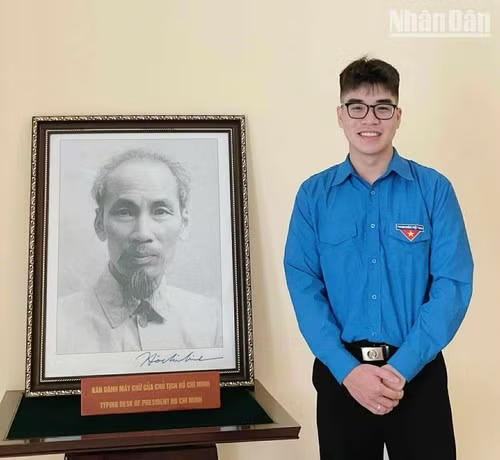
According to Viet Dung, young people’s awareness of national history has undergone positive transformations in recent years. Many proactively learn about history through books and newspapers, films, museums, Youth Union and association activities, and social media platforms. However, some young people remain insufficiently interested in history or consume historical information superficially and without verification.
History education therefore needs to continue modernising both its content and methods of communication, combining school education, experiential activities, and digital media to make history more engaging, vivid, and accessible to young people. More importantly, historical knowledge and national pride should be translated into concrete action. This can be demonstrated through dedication to study and self-improvement, creativity, responsible living, and efforts to spread positive values associated with national history in the digital space.
Dung affirmed that the commemorations of the successful August Revolution (August 19) and National Day (September 2) serve as a vital opportunity for younger generations to revisit the nation’s heroic history, deepen their pride in national traditions, and better understand their responsibilities.
“Loving history is not simply about remembering the past. It also means turning pride into motivation to live a meaningful life, excel academically, and make practical contributions to the country,” Dung said.
A foundation for strengthening confidence and resilience in the new era
Also a student at the Faculty of Party Building, Tong Thanh Dat recalled President Ho Chi Minh’s teaching: “Our people must know our history, so as to fully understand the origins of the Vietnamese nation.” He stressed that this was not only a profound reminder but also a poignant message about the responsibility of every Vietnamese person, especially the younger generation, to preserve, cherish, promote, and carry forward the nation’s historical legacy.
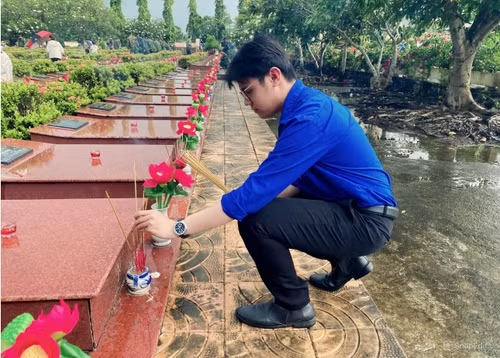
As a Youth Union member studying political theory, Tong Thanh Dat said that amid the accelerated advancement of the scientific and technological revolution, digital transformation, and social media, education about national history and traditions has become more important than ever.
History not only helps younger generations gain a deeper understanding of the nation’s origins, identity, and enduring values, but also nurtures patriotism, a spirit of self-reliance and self-strengthening, and a sense of responsibility towards the country. Particularly amid today’s multidirectional flow of information, including misleading and distorted content, history education provides an important foundation for young people to fortify their confidence and resilience and to appreciate the sacrifices and contributions made by previous generations.
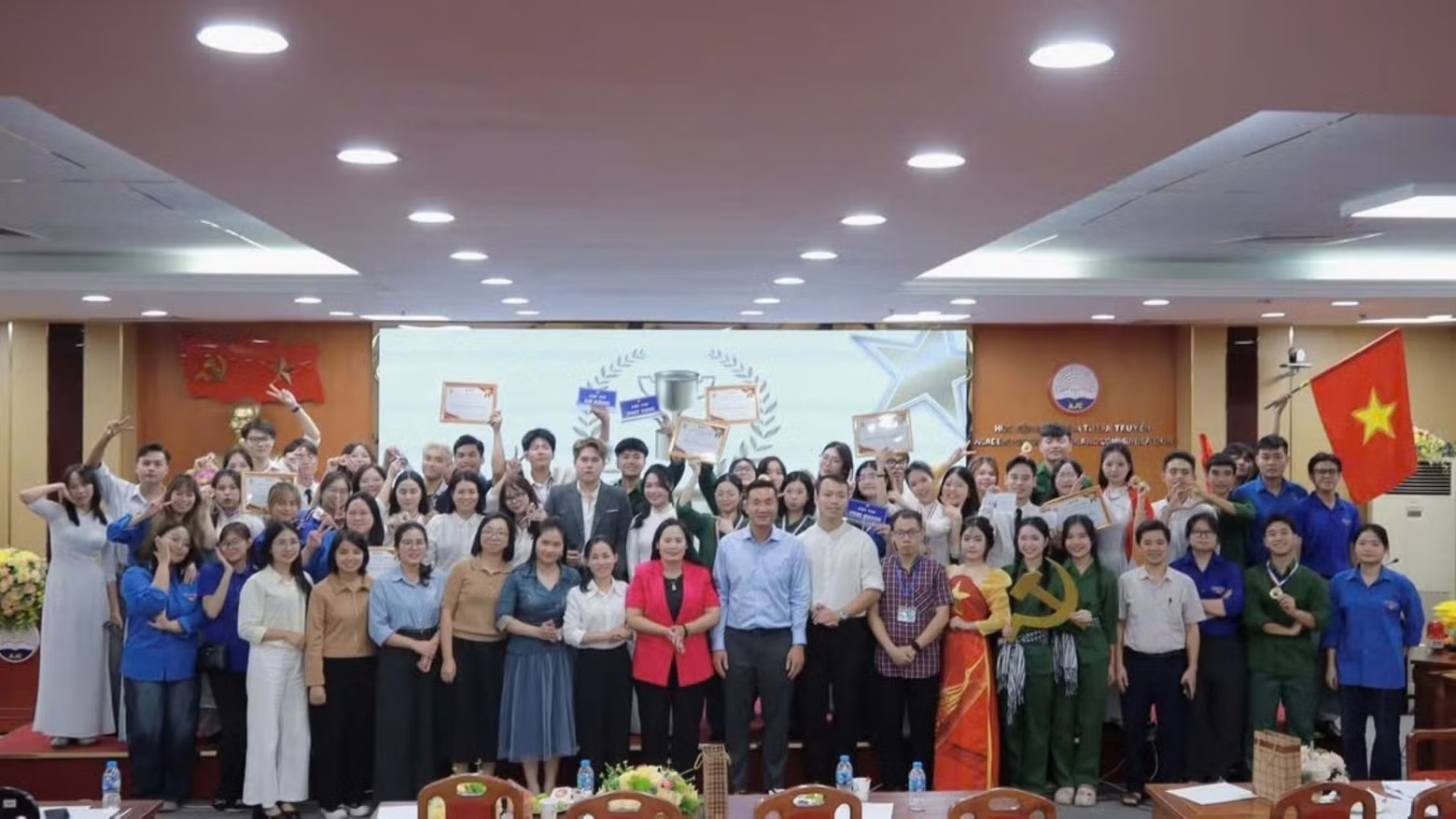
Dat noted that, in educating younger generations about the nation’s heroic history, the August Revolution of 1945 bears particular significance as the crystallisation of patriotism, the aspiration for independence, and the strength of great national unity. Guided by the spirit of “relying on our own strength to liberate ourselves”, and under the Party’s leadership, the Vietnamese people rose up as one to launch the General Uprising, seize power for the people, put an end to colonial, fascist, and feudal rule, and establish the Democratic Republic of Viet Nam, ushering in a new era of national independence and freedom.
“We believe that, carrying forward the immortal spirit of the August Revolution (August 19) and National Day (September 2), generations of Vietnamese people have continued to author glorious chapters in the nation’s history over the past 81 years. Today, in a new era where opportunities and challenges are intertwined, young people need more than ever to cherish the past, take pride in the nation’s traditions, strengthen their confidence and sense of responsibility, and uphold the spirit of self-reliance and self-strengthening. In doing so, we can join the country in advancing into a new era of development — an era of robust national rise for the Vietnamese nation,” Tong Thanh Dat said.
Innovating communication methods to spread traditional values
Hoang Thi Quynh Trang, a student at the Faculty of International Relations under the Academy of Journalism and Communication, asserted that history education is not simply about imparting knowledge. More importantly, it helps young people understand their roots and develop a sense of responsibility towards the country. In practice, when history is presented in an accessible and visual manner and connected with everyday life, young people tend to engage with it more positively. The vibrant series of activities, concerts, songs, and special television programmes marking the 80th anniversary of the August Revolution (August 19) and National Day (September 2) in 2025 provided a clear example.
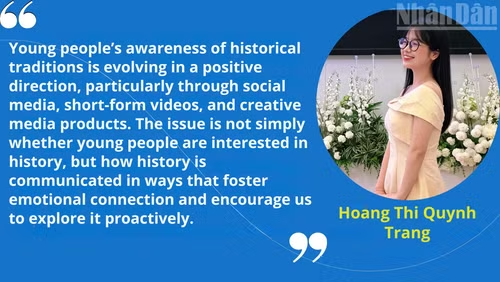
“I believe young people’s awareness of historical traditions is evolving in a positive direction, particularly through social media, short-form videos, and creative media products. However, some young people still approach history quite passively, may misremember facts, or focus only on entertaining content. Therefore, the issue is not simply whether young people are interested in history, but how history is communicated in ways that foster emotional connection and encourage us to explore it proactively,” Hoang Thi Quynh Trang said.
As a young person herself, Quynh Trang believes that the most important task is to connect history with the present and the future. Young people study history not only to learn what previous generations accomplished, but also to understand what they themselves should do for the country today. When every young person realises that their own actions are helping to write the next chapter of Viet Nam’s story, education about national traditions can truly become a source of inspiration and motivation for the new generation. Special commemorative occasions such as August 19 and September 2 should therefore not merely be opportunities to recall historical milestones, but also occasions for young people to explore, share, and spread those values in the language of their own generation.
Meanwhile, student Do Thi Ngoc Minh from the Faculty of Party Building reaffirmed that history is a nation's memory, while history education is the means by which that memory is passed down through generations.
“In my view, history education does not simply help young people know what happened. More importantly, it helps them understand why those events matter to the present and the future. Comprehending the arduous years of struggle and the sacrifices made by previous generations enables young people today to appreciate even more deeply the values of peace, independence, and freedom, while becoming more conscious of their responsibilities towards the Fatherland. Understanding history also helps each person recognise where they stand in the nation’s historical journey and what they need to do to be worthy of the achievements built by previous generations,” Ngoc Minh said.
For Ngoc Minh, a love of history remains very much alive among today’s younger generation, albeit expressed in distinctive new ways. Films, stories told by historical witnesses, images of heritage sites and museums, creative products, and content shared on digital platforms are all helping to bridge the past with contemporary life.
History, therefore, no longer needs to be confined to dry and distant textbook pages. It can become a collection of vivid, relatable, and emotionally engaging stories. When history is told in a language suited to the way young people consume information, traditional values have a greater chance of touching their hearts, sparking curiosity, and nurturing national pride.

As the country commemorates the 81st anniversary of the August Revolution (August 19) and National Day (September 2), this is an opportunity for every young person to reflect on their roots and gain a deeper appreciation of the value of independence and freedom, as well as the immense sacrifices made by previous generations. Yet remembering history should not stop at pride or recollections of the past; it needs to be translated into responsibility and action in the present.
Young people can begin with highly practical actions: studying diligently, strengthening their resilience, living responsibly, preserving cultural identity, and contributing their knowledge and youthful energy to their communities and the country.
These historic commemorations not only inspire national pride but also nurture aspirations to contribute and foster a spirit of self-reliance and self-strengthening. When history is understood, felt, and carried forward through action, tradition does not remain in the past. Instead, it becomes a source of spiritual strength that empowers today’s younger generation to advance confidently into the future and join the nation in writing new chapters of history with intellect, resilience, and the aspiration to rise.