The country's trade performance in the first six months of 2026 delivered encouraging results, with export turnover rising by more than 20%, surpassing the full-year growth target. However, the strong increase in imports resulted in a trade deficit of nearly 17 billion USD, reversing the trade surplus recorded during the same period last year.
The figures indicate that global demand is gradually recovering, creating favourable conditions for Vietnamese exports. At the same time, the sharp rise in imports of raw materials, machinery and production equipment has increased pressure on the trade balance and the country's economic growth targets.
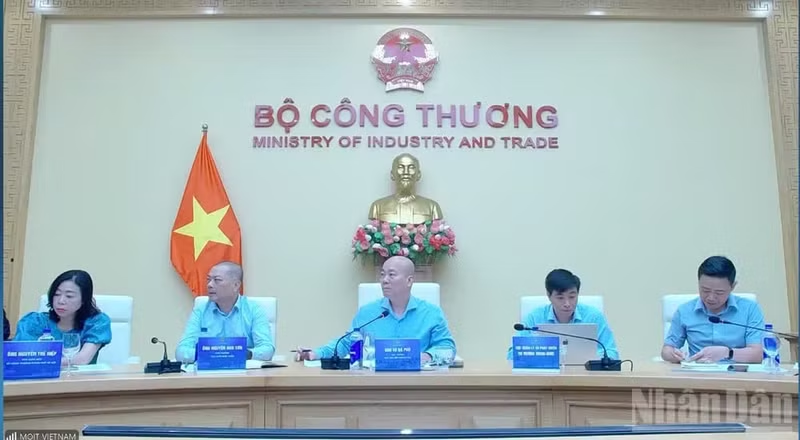
According to participants at the second-quarter 2026 conference of Viet Nam's overseas trade office network, achieving this year's growth objectives will require more than simply boosting exports. Viet Nam must also effectively manage its trade deficit, diversify export markets and increase the value added of Vietnamese products.
Businesses must rethink their competitive strategy
One of the conference's key messages was the Ministry of Industry and Trade's new approach to trade promotion. Instead of focusing primarily on sending business delegations abroad or participating in international trade fairs, the ministry plans to invite global purchasing groups, major retailers and importers to Viet Nam to assess manufacturers' capabilities, inspect production facilities and visit raw material areas.

According to Vu Ba Phu, Director of the Trade Promotion Agency, this approach will enable Vietnamese businesses to engage more proactively with international buyers. It will also improve the effectiveness of business matching by allowing overseas buyers to directly evaluate production capacity, product quality and compliance with international standards.
Meanwhile, the ministry is continuing to develop the Digital Ecosystem for Trade Promotion (DECOS), which aims to establish an integrated data platform linking government agencies, local authorities, industry associations, businesses and Viet Nam's overseas trade offices.
The digitalisation of trade data is expected to provide businesses with faster and more accurate market information while strengthening connections with international partners through digital platforms. The initiative represents a shift from traditional trade promotion towards a model driven by data and digital technology.
Previously, import tariffs were considered the biggest obstacle facing exporters. Today, however, businesses must comply with far more demanding requirements as international markets increasingly impose higher standards on products and supply chains.
Information provided by Viet Nam's overseas trade offices shows that major export markets are simultaneously tightening requirements on sustainable development, product traceability, carbon emissions, labour standards and corporate social responsibility.
In the US, the risk of anti-dumping and anti-subsidy investigations continues to rise as Viet Nam maintains a substantial trade surplus with the country. Exporters are also facing increasingly stringent regulations concerning forced labour, intellectual property rights and supply-chain compliance.
Meanwhile, the European Union is placing greater emphasis on environmental and sustainability requirements, including the Carbon Border Adjustment Mechanism (CBAM), regulations aimed at preventing deforestation, stricter limits on chemical residues and enhanced supply-chain transparency. Even cross-border e-commerce is coming under tighter scrutiny through new tax and product-labelling rules.
In the Middle East, despite new opportunities created by the Comprehensive Economic Partnership Agreement (CEPA), Vietnamese exporters must fully comply with Halal certification requirements and green packaging standards if they are to expand their market share.
Conference participants agreed that international competition is no longer determined primarily by price. Instead, success increasingly depends on a company's ability to meet evolving regulatory requirements and adapt quickly to the specific standards of each market.
Against this backdrop, the role of Viet Nam's overseas trade offices is also changing. Rather than simply providing market information, they are expected to serve as early warning centres, helping businesses identify emerging risks and prepare appropriate responses to new trade regulations and commercial challenges.
Industry associations stressed that businesses themselves must also embrace change to remain competitive.
According to Tran Chi Dung, a member of the Viet Nam Logistics Business Association (VLA), green logistics and digital transformation have become essential elements of global supply chains. Greater adoption of technology, digital supply-chain management and data sharing will help businesses reduce costs while strengthening their resilience against geopolitical uncertainties.
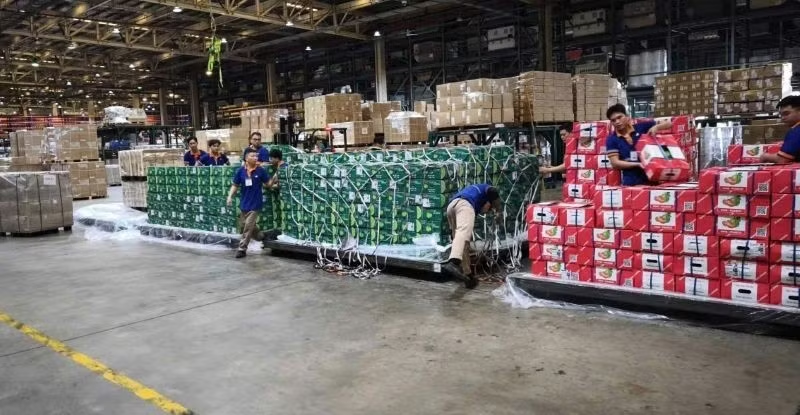
In the supporting industries sector, Pham Hai Phong, Vice Chairman of the Viet Nam Association for Supporting Industries (VASI), said that while traditional trade promotion through international trade fairs remains effective, it is costly and limited in frequency.
To address this, VASI is developing an artificial intelligence (AI)-powered business matching platform that will enable international buyers to explore the production capabilities of Vietnamese manufacturers through videos, 3D models and digital data. The platform is expected to facilitate year-round trade promotion rather than limiting business connections to a handful of trade fairs each year.
Representatives of the timber industry noted that the long-standing growth model based on low-cost labour and contract manufacturing has reached its limits. To increase export value, Vietnamese companies must shift towards product design, brand development, product innovation and deeper participation in global distribution networks.
Meanwhile, the textile and garment industry continues to face mounting challenges, including trade defence investigations, growing pressure to adopt greener production methods and persistent labour shortages. These developments require businesses not only to comply with increasingly demanding market requirements but also to improve productivity, modernise technology and diversify export destinations.
Towards a modern trade promotion model
Participants agreed that, amid rapid changes in the global economy, Viet Nam's network of overseas trade offices must play a stronger role as a bridge between international markets and domestic businesses.
Industry associations called on the trade offices to provide more in-depth market intelligence, including updates on consumer trends, trade policies and early warnings of trade defence investigations. They also urged greater support in verifying business partners, connecting Vietnamese firms with major international distributors and promoting domestic enterprises through digital platforms.
Several participants proposed establishing a regular coordination mechanism among overseas trade offices, industry associations and businesses to facilitate data sharing, address emerging issues promptly and enhance the effectiveness of trade promotion.
According to Vu Ba Phu, industry associations should take a more proactive role in developing comprehensive business databases, which will serve as an important resource for connecting Vietnamese companies with overseas partners. For trade promotion to be effective, he said, data must be "accurate, comprehensive, clean and up to date", providing a true reflection of the capabilities of individual enterprises and industries.
"Export growth in the new era can no longer rely solely on low production costs or expanding output," Vu Ba Phu stressed.
Participants agreed that, to penetrate demanding overseas markets and sustain long-term export growth, Viet Nam must accelerate the transition to a modern trade promotion model built on data, digital technology, direct engagement with international buyers and robust market intelligence and early warning systems.
Alongside the proactive role of Viet Nam's overseas trade offices, stronger engagement by industry associations and a shift in business mindsets will be crucial to helping Vietnamese products not only expand their presence in global markets but also move further up the global value chain.