Experts from the United Nations Food and Agriculture Organization (FAO) and the World Meteorological Organization (WMO) predict that food supplies in many global regions face depletion due to the increasing frequency and intensity of terrestrial and marine heatwaves.
According to forecasts, from now until the end of the year, the El Nino phenomenon will cause national temperatures in Viet Nam to exceed the multi-year average, bringing more hot days than in 2025 to surpass the average climate threshold. In June alone, two to three more extreme heatwaves will bring temperatures commonly ranging from 37–39 degrees Celsius, surpassing 40 degrees Celsius in numerous localities.
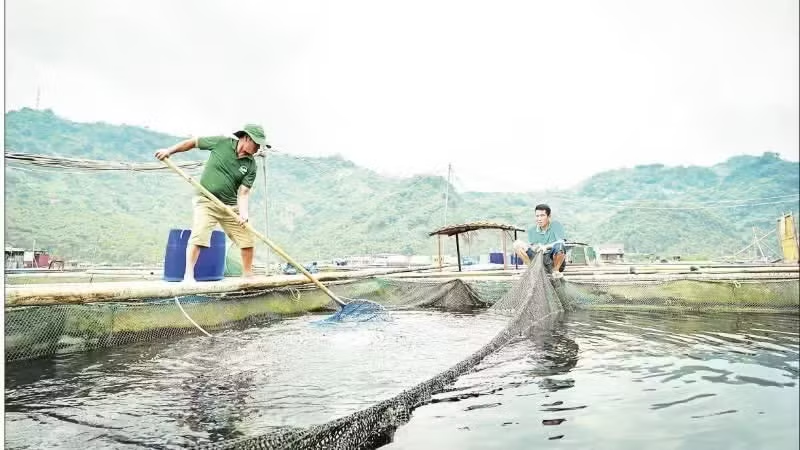
Prolonged periods of intense heat, coupled with heavy rainfall, have severely compromised the growth and development of farmed aquatic animals. Substantial diurnal temperature fluctuations make aquatic animals vulnerable to heat shock, leading to disease outbreaks and mass mortality.
Typically, farmed aquatic animals thrive in temperatures between 25–32°C. Elevated temperatures deplete the energy of fish and shrimp, increase the volume of waste discharged into the environment, and lead to nocturnal oxygen depletion in ponds, enabling bacteria to multiply rapidly.
For coastal areas utilising high-tech intensive and super-intensive farming models, the extreme heat creates favourablee conditions for disease outbreaks. Viet Nam’s aquaculture system exhibits growing vulnerability to climate shocks.
When extreme and unfavourable weather occurs, the aquaculture industry must implement strategic long-term adjustments, such as cultivating a diverse range of aquatic species with greater resilience, rather than remaining dependent on a limited number of species.
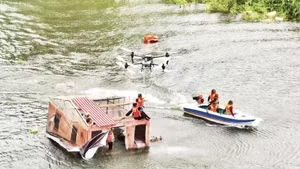
Given that heatwaves are frequently forecast in advance, early warning measures can help the aquaculture industry minimise losses. Utilising weather forecasting systems and proactive communication channels serves as a critical mechanism to alert farmers and fishermen to extreme weather events.
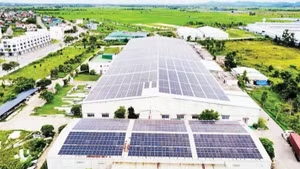
In tandem with immediate responses to extreme weather, long-term and sustainable adaptation strategies in aquaculture must be deployed concurrently, such as transitioning to renewable energy and investing heavily in digital transformation.
The application of artificial intelligence (AI) in aquaculture, including underwater AI cameras, facilitates the monitoring of the health of shrimp and fish, analyses behaviour and environmental data to adjust temperature and feed levels, and detects risks early, obviating the need for conventional manual inspections.
In the current context, proactive adaptation is pivotal to ensuring the long-term viability of the aquaculture sector. Investing in scientific and technical solutions and optimising management practices are vital to safeguarding farmed aquatic products and minimising losses. In the long term, a transition toward high-tech, closed-loop environmental control models remains imperative to bolstering the sustainability of the aquaculture industry.

![[In Pictures] Bridge columns and underpasses in Ha Noi begin to turn green](https://en-cdn.nhandan.vn/images/nyM650OGFWrOVWc-xajqN-rTZ68Rlmc1fiGJOhBRYHH_N-Xs0TE8Psnfce7ORTs-KVfoJaEblqjNufFrgeF3e2xFkGtLQVaXm04VcmMKBEkANUyiOkpz4zAuIKgydVrrfBxmGez0E_YJIag0u_Uil0E7jpuJXsIxeMmGjoY1-W4/1791863309074-2994714492692222878-2994714492692222878-adb9ff3f4175c70066ed8bb80cfbead9.jpg.avif)