Development yet to match potential
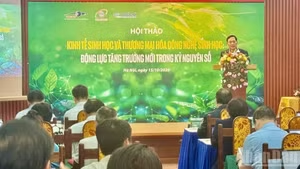
According to Prof, Dr Chu Hoang Ha, Vice President of the Viet Nam Academy of Science and Technology, biotechnology is one of the strategic technology sectors receiving special attention from the Party and the state. Numerous important policies and guidelines have been issued to promote the development of science and technology, and especially biotechnology, including Resolution No. 36-NQ/TW and Resolution No. 57-NQ/TW, along with the legal framework on science and technology, technology transfer, and intellectual property, as well as government mechanisms and policies for the development of strategic technologies.
However, implementation has revealed many difficulties and obstacles, with Viet Nam’s biotechnology sector currently facing several bottlenecks. Among them, the legal framework and management mechanisms have yet to keep pace with technological advances. Many emerging fields, such as gene editing, cell therapy, immunotherapy, biopharmaceuticals, and synthetic biology, still lack specific regulations for research and commercialisation.
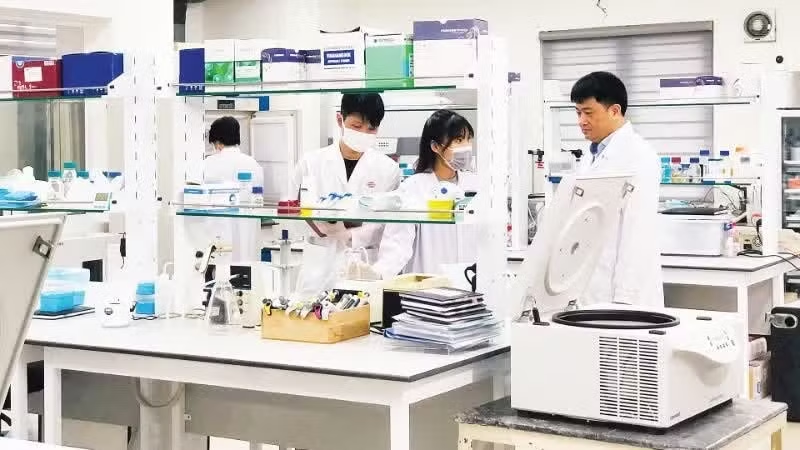
In addition, research and production infrastructure meeting international standards remains limited, particularly pre-clinical centres, GLP-standard laboratories, and GMP-standard production facilities serving the development of medicines, vaccines, and high-tech products.
The supply of highly qualified human resources in this field also remains limited, while domestic enterprises have yet to master core technologies, resulting in many research outcomes not being translated into commercially valuable products. Notably, the significant gap between Viet Nam’s biotechnology market and the global market clearly reflects disparities in scientific and technological capabilities, commercialisation capacity, and investment levels.
At present, the global biotechnology market in 2025 is estimated to be worth around 1.8 trillion USD, with most of the value concentrated in high-tech sectors such as biopharmaceuticals, diagnostic biological products, and precision medicine, as well as advanced technologies including gene therapy, cell therapy, and regenerative medicine — fields with extremely high scientific content and added value.
Leading countries such as the United States, China, European nations, Japan, and the Republic of Korea have been investing systematically for decades to build comprehensive ecosystems spanning from research to commercialisation, thereby securing dominant positions in the global market.
Meanwhile, Viet Nam’s biotechnology market is valued at only around 1.5 billion USD, accounting for a very small proportion both globally and within the country’s gross domestic product.
Turning biotechnology into a growth driver
With favourable policies and mechanisms and significant potential, Viet Nam could make a breakthrough in biotechnology if it adopts a well-structured, long-term development roadmap closely aligned with market demand.
Prof, Dr Chu Hoang Ha noted that, with a population of more than 100 million people and a large number of international visitors, Viet Nam’s biotechnology sector could become a strategic economic industry within the next 10 to 20 years, not only meeting domestic demand but also expanding into regional tourism, healthcare, and biomedical services.
To achieve this goal, priority should be given to synchronised investment in internationally standardised research infrastructure and the establishment of centres capable of carrying out the entire process from research to commercialisation.
At the same time, high-quality human resources should be developed through an interdisciplinary approach, enabling them to master core technologies and participate in global value chains.
Another important direction is to focus on areas where Viet Nam holds advantages, such as medicinal materials, tropical agricultural biotechnology, vaccines, microbiology, and biomedicine, thereby creating products with distinctive identities and international competitiveness.
Viet Nam also needs to improve sufficiently robust mechanisms and policies to encourage enterprise investment and foster an innovation ecosystem, while promptly building a flexible legal framework aligned with international standards.
This should include pilot mechanisms for new technologies to both manage risks and promote research and commercialisation.
International cooperation should be strengthened in the direction of acquiring and mastering technologies, gradually developing biotechnology products and enterprises bearing Vietnamese brands capable of competing regionally and globally.
To maximise resources, the Viet Nam Academy of Science and Technology has identified biotechnology fields with strong potential for generating high added value and meeting the country’s practical needs and strategic technology trends as key priorities. These include biological microbial products, next-generation vaccines, diagnostic biological products, and biomedical products serving public healthcare.
Core technologies such as omics technologies, systems biology, artificial intelligence in biology, gene editing, cell therapy, synthetic biology, and precision medicine will receive long-term investment aimed at creating breakthroughs in research capacity and mastery of core technologies.
Strong investment will also be directed towards modern research centres, internationally accredited laboratory systems, pre-clinical and clinical research facilities, and biological data infrastructure and genomic databases of Vietnamese people.
In reality, Viet Nam possesses enormous advantages in biodiversity and indigenous medicinal resources. Therefore, alongside basic research, emphasis should also be placed on developing an innovation ecosystem and strengthening links between training, research, and enterprises in line with international standards to promote the commercialisation of research outcomes.
Combined closely with local needs, these efforts will help ensure biotechnology truly becomes a driving force for socio-economic development in the years ahead.