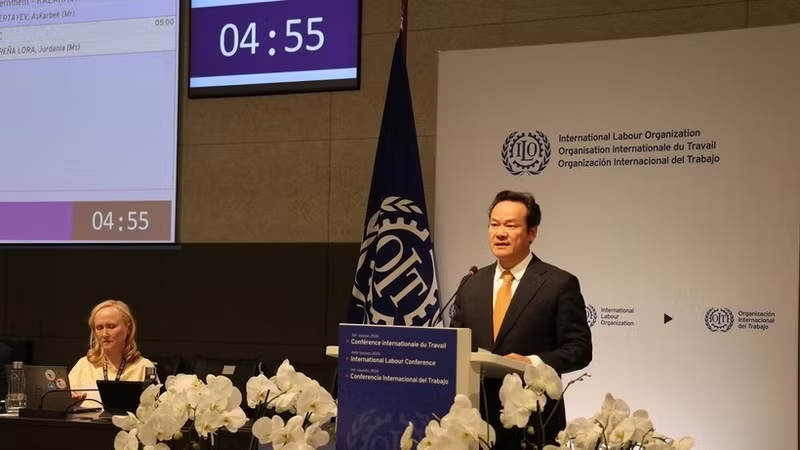
The ambassador welcomed the ILO Director-General’s report, titled “A moment of choice: Harnessing AI for decent work”.
According to the diplomat, AI is reshaping labour markets, production models and social governance. While it offers significant opportunities to boost productivity, drive innovation, improve public services and support human resources development, it also presents unprecedented challenges related to employment, skills, social inequality, personal data protection and workers’ rights.
Dung noted that throughout nearly four decades of Doi Moi (Renewal), Viet Nam has consistently pursued a people-centred development model, viewing people as the goal, driving force and central actor of development. From a low-income country, Viet Nam has emerged as a middle-income developing economy with steadily improving living standards.
Entering a new development phase, Viet Nam regards science and technology, innovation, digital transformation and international integration as key drivers of rapid and sustainable growth, he said.
Dung highlighted Politburo Resolution No. 57-NQ/TW on breakthroughs in science, technology, innovation and national digital transformation, and Resolution No. 59-NQ/TW on international integration in the new context, as evidence of the country’s determination to proactively harness emerging global trends, including AI.
The ambassador proposed three priorities to ensure AI supports decent work - investing in human resources and digital skills development; linking digital transformation with decent employment and comprehensive social welfare systems; and building AI governance frameworks based on social dialogue, transparency, accountability and international labour standards.
He also reaffirmed Viet Nam's commitment to the ILO’s fundamental values, multilateralism and a people-centred future of work, while expressing the country’s readiness to strengthen cooperation with the ILO and member states to maximise AI’s potential for decent jobs, social advancement and common prosperity.
![[In Pictures] General Secretary and President To Lam and his spouse visit and present books to Royal Library of Belgium](https://en-cdn.nhandan.vn/images/3NY4Z6Du1Md1PrS_s0ZZOrwc5xDfq4rRua69depr-TBkwatGjBcD9lagzrI2BmGDo4nKYA9qjKDjuB3-yYloL_1KbNBr00klMZQFyHQxQ6Jq6GzFfAiY0m5agKw6jNtArN4QnVntX8RQeUmD7pdCq7nwvn3e235v3kufpokBN_s/1-tong-bi-thu-chu-tich-nuoc-va-phu-nhan-tham-tang-sach-cho-thu-vien-hoang-gia-bi.jpg.avif)