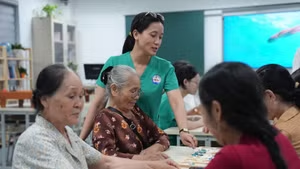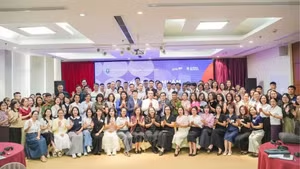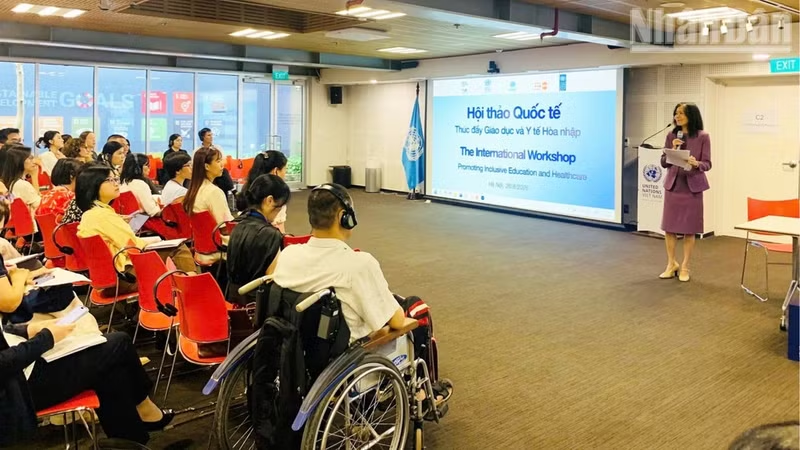
Some 160 delegates, including 100 attending in person and 60 online, gathered in Ha Noi on August 26 for an international workshop on promoting inclusive education and healthcare for people with disabilities.
The event brought together representatives from Government agencies, organisations of people with disabilities, United Nations agencies, development partners, research institutions, educational and healthcare establishments, and the private sector.
The workshop provided a platform for sharing international experience and practical solutions, with a focus on translating policy commitments into sustainable systems that enable people with disabilities to fully exercise their rights and participate equally in society.
Addressing the opening session, UN Resident Coordinator in Viet Nam Pauline Tamesis underscored the core principle of the UN Joint Programme on Disability Inclusive Development, jointly implemented by UNDP, UNFPA and UNICEF: disability inclusion is not charity or the creation of parallel services, but recognising people with disabilities as rights-holders, equal citizens and essential partners in shaping the systems and communities where they live.
She called for stronger cooperation among the UN, the Government, organisations of people with disabilities and other stakeholders to scale up proven initiatives into sustainable systems and deliver lasting change.
Ta Ngoc Tri, Deputy Director of the Department of General Education under the Ministry of Education and Training, highlighted the UN’s long-standing partnership with the ministry in improving education for people with disabilities, particularly inclusive education.
Through the UN Joint Programme on Disability Inclusive Development, 25 organisations of people with disabilities have been directly engaged, while more than 1,000 people have participated in 40 training courses to strengthen the capacity of disability organisations, education and healthcare officials, service providers and other stakeholders.
Pilot models in Ha Noi, Da Nang and Can Tho have demonstrated practical approaches to making education and healthcare services more accessible, relevant and responsive to the needs of people with disabilities.
Delegates reaffirmed their shared goal of turning tested solutions into sustainable systems, strengthening national ownership and ensuring people with disabilities can exercise their rights and participate fully in Viet Nam’s development.