Enforcing CITES to protect wildlife is a common concern of many countries around the world, of which Vietnam and China are CITES members. Wildlife crime is not limited to the region but also crosses transnational lines.
Along with 181 members, Vietnam and China are facing huge challenges from illegal trafficking of wild fauna and flora species with the increasingly sophisticated tactics of transnational organised crime.
In particular, Vietnam and China are now being recognised as hot spots in both the feeder lines and consumer markets of wild products. The efforts of any one individual country will not thoroughly deal with this crime, requiring inter-regional and transnational co-operation.
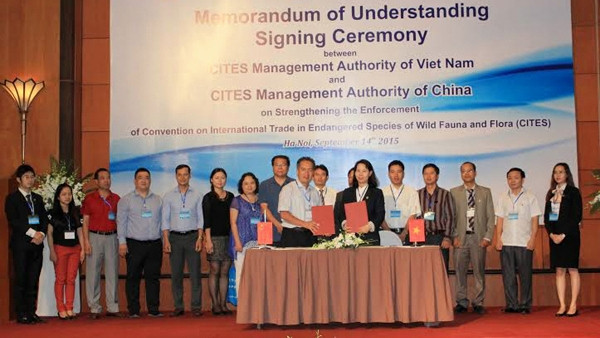
Speaking at Hanoi’s signing ceremony, Deputy Head of Vietnam Administration of Forestry (under the Ministry of Agriculture and Rural Development) Cao Chi Cong said that the signing of the MoU marks a positive and effective change in strengthening co-operation between the two countries in the field of CITES and further solidifying co-operation commitments reached by the two countries’ senior leaders, contributing to both nations’ development.
General Director of the CITES Management Authority of China Meng Xianlin said that the MoU offers an opportunity for both sides to discuss nature conservation, implementation of CITES, and experiences in resolving issues of mutual interest such as information sharing, law enforcement, border control, and raising awareness of wildlife conservation.
Under the MoU, the two CITES management authorities will enhance experience sharing and the exchange of information on illegal trafficking of wild animals and plants; relevant laws and regulations controlling wildlife trade at borders; experiences from captive breeding of CITES species; and enhancing public awareness and capacity for related management and enforcement staff.