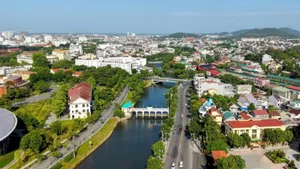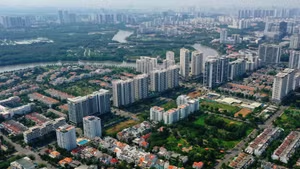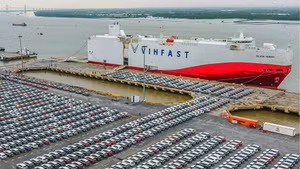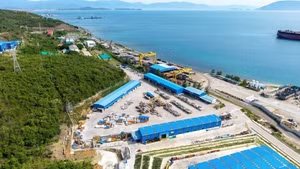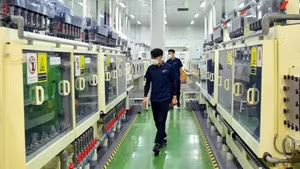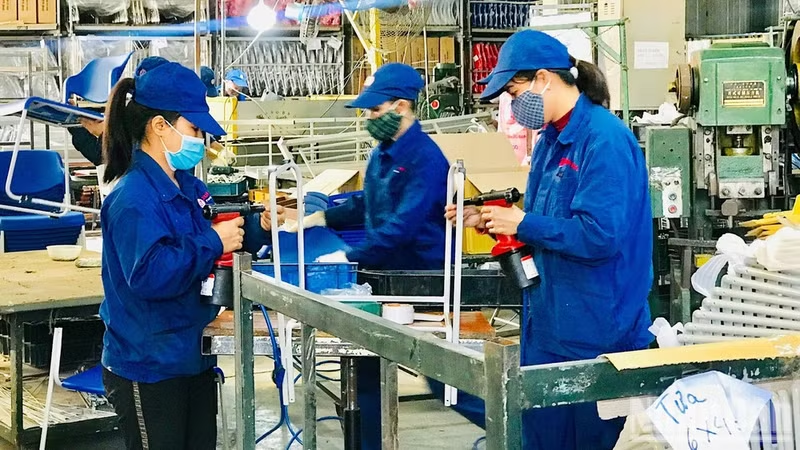
Viet Nam has many advantages for embracing the restructuring of global supply chains. Its growing trade volume, favourable geographical location, extensive network of free trade agreements, and stable political environment are creating a foundation for Viet Nam to become a destination for international capital flows and production activities. Total import-export turnover in the first eight months of 2026 reached approximately 770 billion USD, up 21% year-on-year. This trade volume reflects the Vietnamese economy's increasingly deep integration into the global market.
Major opportunities, but enterprises cannot remain merely a “factory”
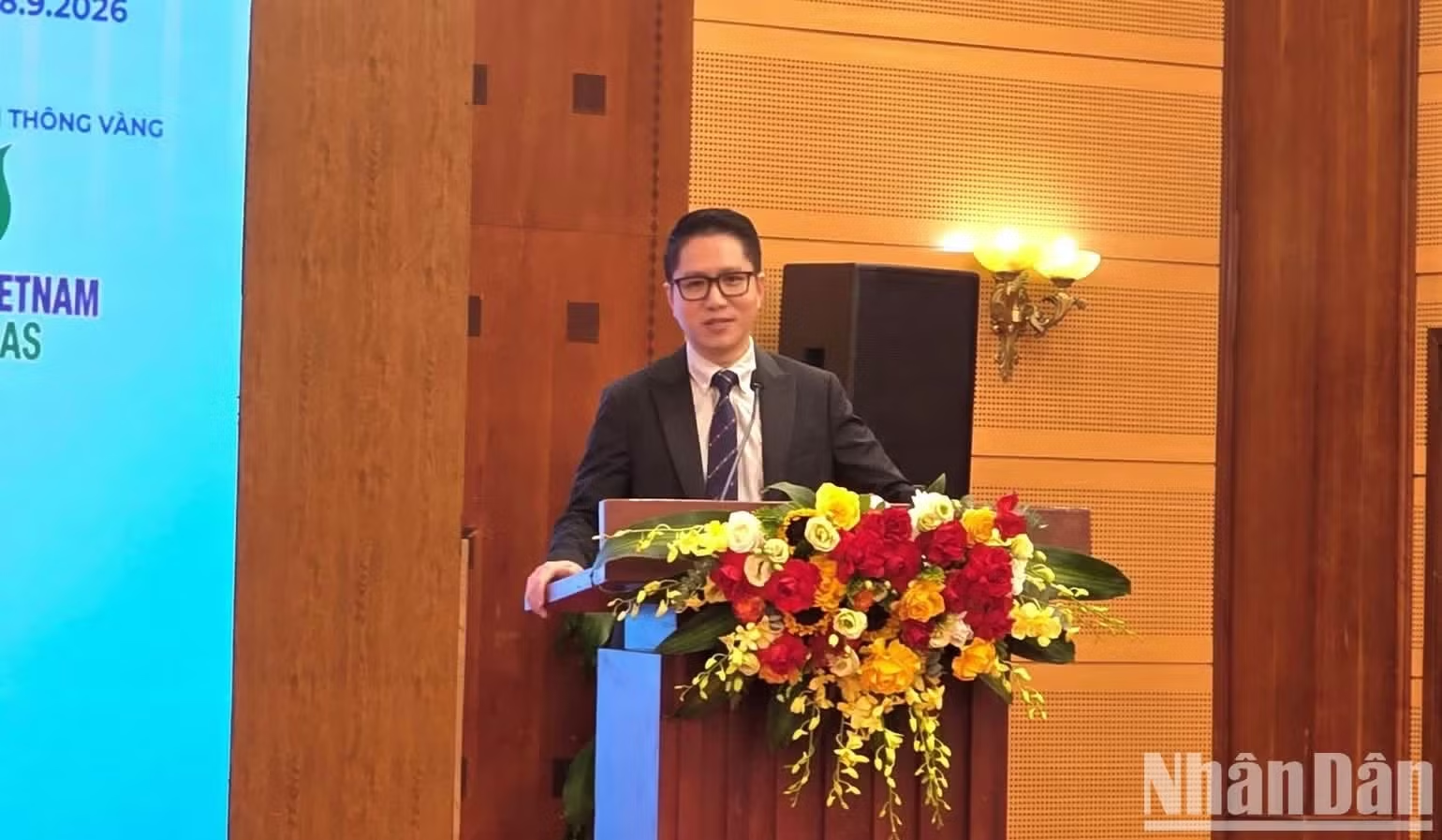
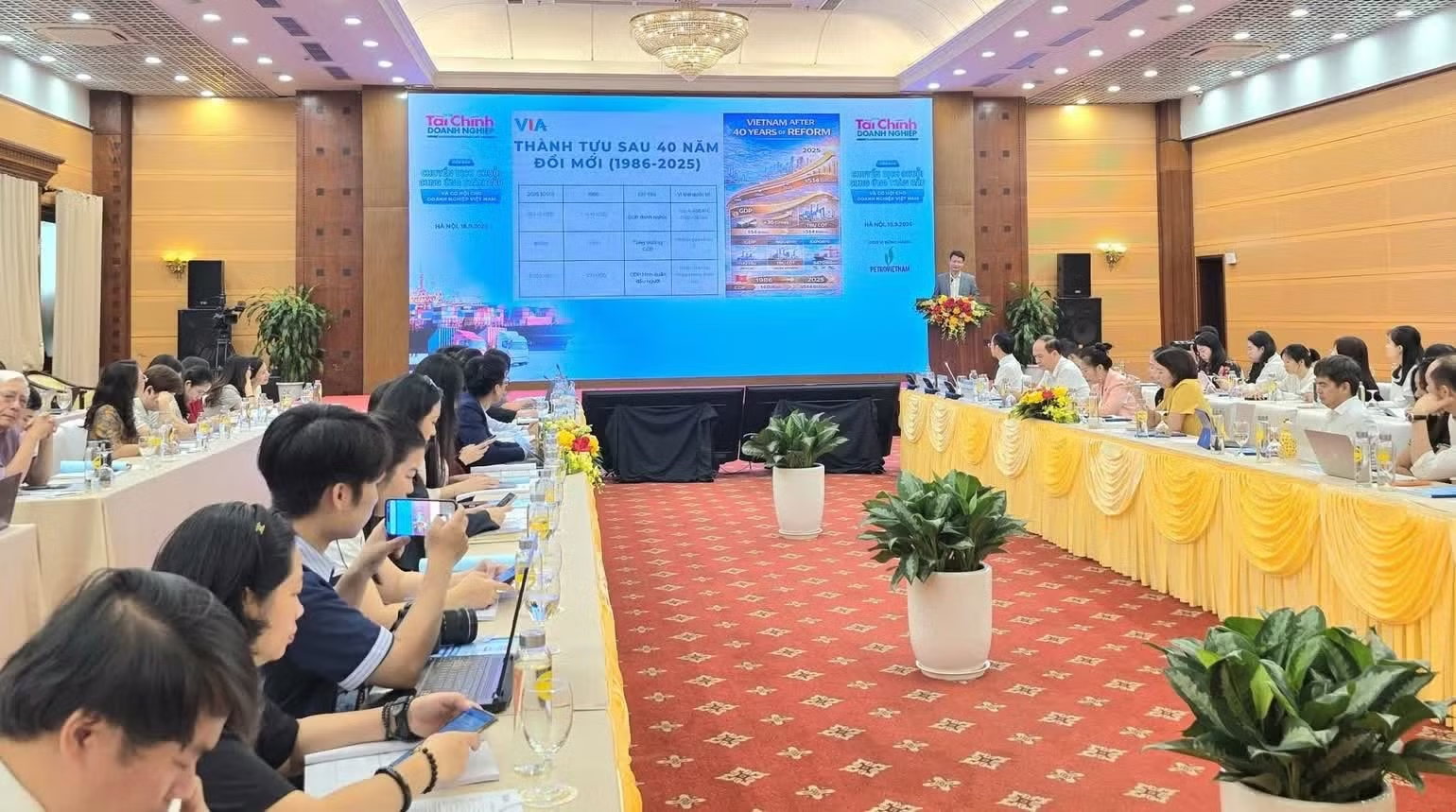
Speaking at the Global Supply Chain Shifts and Opportunities for Vietnamese Enterprises Forum, organised recently by the Corporate Finance Magazine, Nguyen Tuan Viet, General Director of VIETGO Export Promotion Company Limited, said this is one of the important advantages enabling Vietnamese goods to access major markets. In addition, the network of 17 implemented free trade agreements has created more room for goods produced in Viet Nam to access international markets.
These advantages are reflected in the growing presence of international corporations in Viet Nam. However, behind the picture of strong trade growth lies a paradox: the participation of domestic enterprises in global supply chains remains limited, with the proportion of small and medium-sized enterprises participating in supply chains falling from 35% in 2009 to 18% in 2023. Meanwhile, the share of the FDI sector in exports remains high.
This raises questions not only about the ability to attract investment, but more importantly about the capacity of the domestic business sector to connect with and absorb these opportunities. If Vietnamese enterprises only supply simple products and components or undertake low-value-added stages, the shift in supply chains, despite creating more orders and jobs, will still be insufficient to bring about a qualitative transformation of the economy.
One of the current major bottlenecks lies in the gap between the increasingly high requirements of global supply chains and the actual capacity of Vietnamese enterprises. Dr. Do Dieu Huong, Deputy Director of the Centre for Strategy and Policy under the Institute of Viet Nam and World Economics, said enterprises are facing multiple layers of standards, ranging from traditional requirements for price and quality to new standards related to ESG, carbon, and data.
Among these, the green transition is becoming an increasingly clear requirement. Some 48.7% of the enterprises mentioned are aware of the green transition, but as many as 64% are not fully prepared for the process.
According to Dr. Do Dieu Huong, if the gap between awareness and action is not narrowed, it will become a barrier to Vietnamese enterprises' participation in global supply chains. In a cross-border production chain, enterprises need to do more than produce goods at competitive prices. They must also meet increasingly stringent requirements for quality, the environment, data, governance, and traceability.
Practical experience from the electronics industry shows that when given opportunities to connect with major corporations, Vietnamese enterprises are fully capable of gradually upgrading their capacity. Do Thi Thuy Huong, Vice President and General Secretary of the Viet Nam Electronics Industries Association (VEIA), cited the progress made by Vietnamese enterprises in Samsung's supply chain, which has more than 300 domestic suppliers.
Some enterprises have gradually moved from stages such as packaging production to designing, researching, and developing more complex components. This shift shows that participating in a supply chain is not the ultimate destination. Greater value lies in the ability to gradually move towards stages with higher levels of technology, knowledge, and value added.
Alongside production capacity, another issue raised is Vietnamese enterprises' approach to trade. According to Nguyen Tuan Viet, General Director of VIETGO Export Promotion Company Limited, Singapore's experience shows that an economy does not necessarily need to possess large-scale production capacity to build trade strength. The key is to develop a business force capable of identifying market demand, connecting supply and demand, and bringing goods to the world.
From this perspective, trading enterprises can play the role of pioneering forces that lead production. Unlike factories that have to invest in machinery and equipment and need a long time to change production lines, trading enterprises can respond more quickly to changes in market demand. When a new trend emerges in the market, enterprises can quickly seek suitable sources of supply, connect with manufacturers, and bring products to the market.
This also provides a basis for a “niche market” approach. Instead of focusing only on markets with high standards and fierce competition, small and medium-sized enterprises can seek opportunities in markets with large populations, such as India, the Middle East, Africa, and ASEAN.
Some groups of goods identified as having potential include coffee, spices, construction materials, textiles and garments, and consumer goods such as plastics, paper, and wooden products. Notably, experts believe coffee could become a product group with significant room for growth, while products such as cinnamon, star anise, and cardamom could gain access to populous markets in India and the Middle East.
The key lies not in choosing a particular market or product, but in changing the way enterprises approach markets, starting with customer demand and then organising supply and production accordingly. This approach helps enterprises reduce their dependence on a single product or fixed production line, while increasing their ability to adapt to rapid changes in global trade.
Creating a “track” for Vietnamese enterprises to move deeper into supply chains
If supply chains are shifting towards greater sustainability, digitalisation, and higher technological requirements, human resources will determine how far Vietnamese enterprises can go. The rapid development of automation and robotics is also creating new requirements for the workforce. Simple, repetitive jobs are increasingly at risk of being replaced by machines. This requires workers to be prepared for career transitions and to adapt to new fields.
According to Prof. Dr. Hoang Van Cuong, former member of the National Assembly's Finance and Budget Committee, Viet Nam should not focus solely on competing in hardware production stages where other countries already have advantages. Instead, it should prioritise training and investment in areas that create high added value, such as artificial intelligence, control software, and system design.
This represents an important shift in the approach to human resource development, from training people to “be used” to training them to “absorb” and master technology. Human resources therefore cannot be trained solely through existing programmes, but need to be aligned with the practical needs of key industries and changes in the labour market.
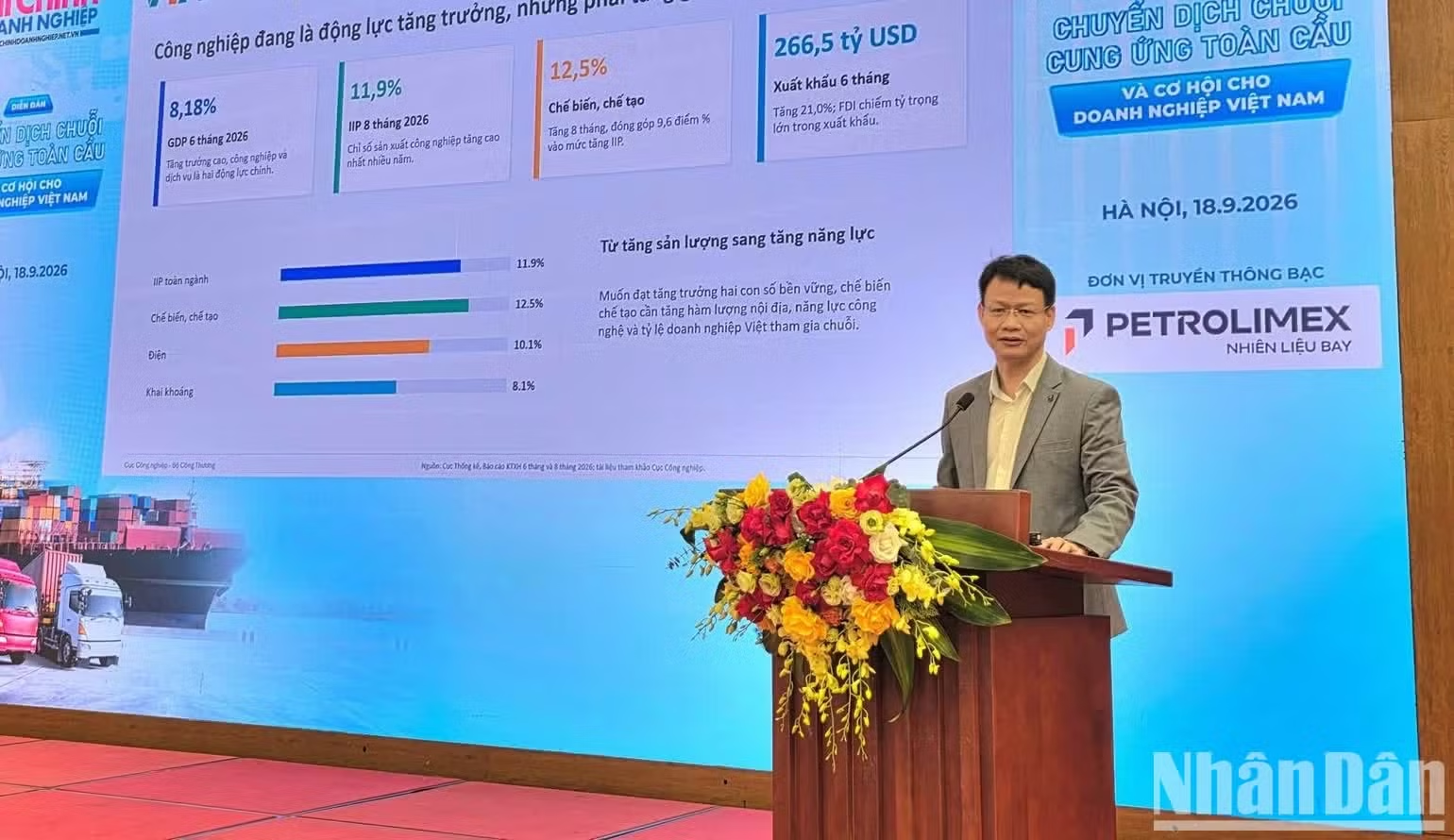
From the perspective of industrial policy, Pham Van Quan of the Industrial Department under the Ministry of Industry and Trade said that the Ministry is drafting a Law on Key Industries with new mechanisms, including a proposal for a “Sandbox”. One example mentioned is allowing the pilot production of 500kV transformers, thereby creating opportunities for domestic enterprises to test and improve high-tech products in practice.
Alongside this is the idea of a “minimum market” mechanism, which would provide a certain level of market demand so that enterprises have a basis for making long-term investments in technology. This is a new approach: instead of simply requiring enterprises to improve their own capacity, policies should create an environment in which enterprises can experiment, develop, and gradually compete.
Accordingly, Prof. Dr. Hoang Van Cuong proposed a “single point of contact” model for attracting investment, with sufficient authority to handle matters related to procedures, land, and the environment in a coordinated manner. For large-scale projects, the speed and consistency of policy implementation are particularly important. An effective coordination mechanism would not only help attract investment but also facilitate connections between major projects and domestic enterprises.
The shifting global supply chains are creating a “window of opportunity” for Viet Nam to upgrade its position in the global economy. But this window will not remain open indefinitely, and advantages in geography, trade integration, and the presence of international corporations are only initial conditions. The decisive factor remains the endogenous capacity of Vietnamese enterprises.
From production capacity, technology, green standards, and a highly skilled technical workforce to the ability to seek out and conquer international markets, every link needs to be strengthened. In particular, the links between FDI enterprises and domestic enterprises need to shift from simple supply relationships towards deeper cooperation in technology, design, research, and development.
In addition, building a “digital supply chain map” could become a tool for connecting the requirements of FDI enterprises with the capabilities of domestic small and medium-sized enterprises, thereby reducing search costs and increasing the potential for direct connections. The ultimate goal is not merely to attract more new capital flows, but to turn the presence of international corporations into opportunities for Vietnamese enterprises to learn, upgrade their capabilities, and grow.
From an economy participating in supply chains, Viet Nam needs to move towards an economy capable of creating and leading higher-value links in those chains. Therefore, amid the reshaping of global supply chains, the most important question is no longer how many projects Viet Nam can attract, but how far Vietnamese enterprises can go in the value chains now taking shape.