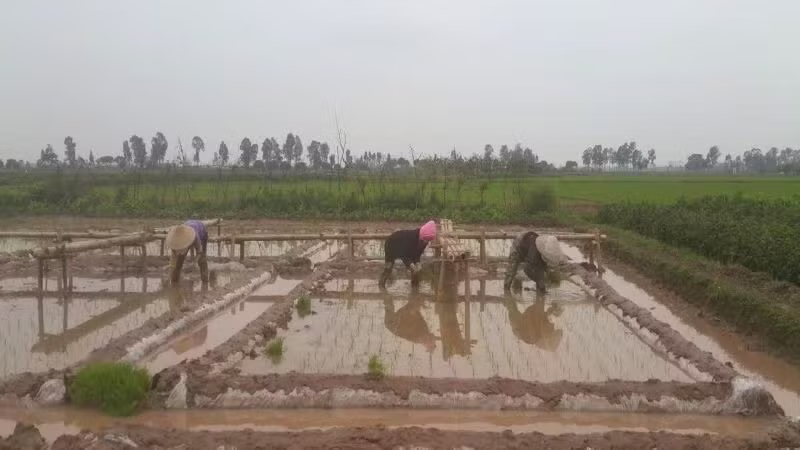
In April, agricultural activity centred on tending winter–spring crops in the north, while southern provinces focused on harvesting the same crop and preparing for the summer–autumn rice season, particularly in the Mekong Delta.
As of April 20, the total winter–spring rice cultivation area reached 2.93 million hectares, down 36,800 hectares year on year. The decline was attributed mainly to the conversion of less efficient rice land to higher-value crops, aquaculture and infrastructure development.
In the north, sowing has been completed, with crops developing well across growth stages. Authorities have urged close monitoring of irrigation and pests to safeguard yields.
In the south, 1.49 million hectares—78.4% of the planted area—had been harvested, equivalent to 92.2% of the same period in 2025. However, progress in sowing the summer–autumn crop has lagged behind schedule, reaching just over 355,000 hectares. Delayed harvesting, localised heatwaves and a late rainy season linked to El Nino have disrupted planting timelines.
Livestock production showed mixed trends. Poultry and pig farming continued to expand, supported by large-scale, biosecure operations, while cattle and buffalo numbers declined due to lower economic returns. African swine fever remains present in 21 localities, though other major outbreaks have largely been contained.
Forestry output saw modest gains, with timber production rising 1.5% in April thanks to favourable weather, although new plantation areas declined slightly. Over the four-month period, timber output increased 2.4%.
Aquaculture performed strongly, driven by favourable conditions, while marine fishing rose marginally as the southern fishing season began and fuel costs fell. Total fisheries output for the January–April period reached an estimated 3.04 million tonnes, up 3.1% year on year.