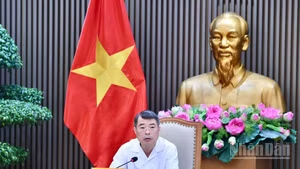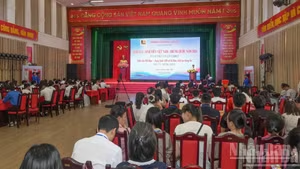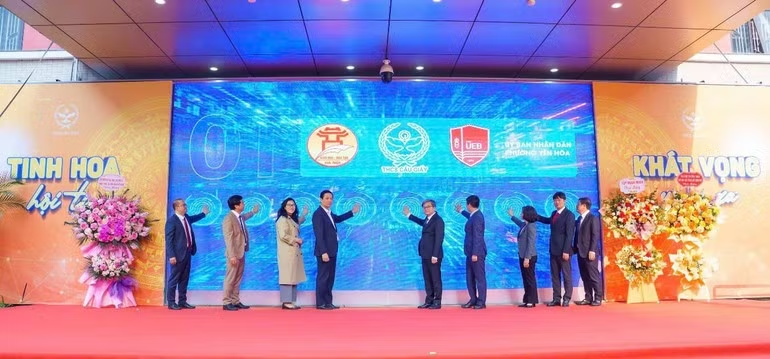
In the context of implementing the Politburo’s Resolution No. 57-NQ/TW dated December 22, 2024, on orientations for the development of science and technology, innovation, and national digital transformation, many localities and units are strengthening the application of technology in management and administration.
Recently, the University of Economics (Viet Nam National University, Ha Noi) piloted the transfer of a Digital School Management System developed by the university at Cau Giay Secondary School (Ha Noi). This pilot activity is considered a concrete step contributing to bringing the policy of digital transformation into practical education governance at the grassroots level.
Digital transformation in education, especially at the grassroots level, is associated with the requirement to standardise management processes, reduce dependence on manual operations, and improve the capacity to collect and exploit data for management and administration. Therefore, the deployment of digital governance platforms needs to be designed in line with the operating conditions of schools and the management requirements of localities.
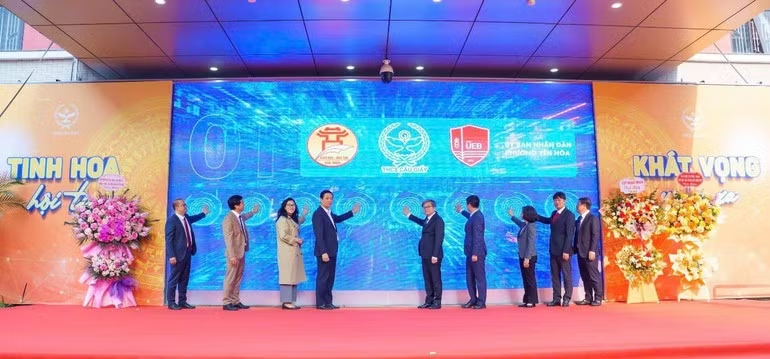
According to the implemented content, the system aims to standardise school management processes in a digital environment; integrate and exploit data to support management and administration; support data-based decision-making; and improve transparency and efficiency in education management. Through the digital platform, schools have additional tools to manage information on students, classes, professional activities, and administrative tasks in a unified manner.
In addition to supporting management work, the system also helps strengthen coordination between families and schools through the standardisation and digitisation of students’ learning and training data, helping parents to access information in a timely and consistent way.
The piloting of the Digital School Management System at several general education institutions is identified as a basis for relevant stakeholders to assess its suitability, operational effectiveness, and the necessary conditions before considering wider deployment. Based on the implementation results, the cooperating units will continue to review and complete processes, and standardise data and operating methods to serve school governance in the coming period.
Within the framework of the programme, the University of Economics (Viet Nam National University, Ha Noi) and Cau Giay Secondary School signed a Memorandum of Understanding on cooperation, providing a basis for trial operation, monitoring, and evaluation of the implementation process.