Strengthening infrastructure and technical standards
The readiness of charging infrastructure and a comprehensive system of technical standards forms the foundational pillar for the development of the electric vehicle (EV) market in Viet Nam.
In recent years, regulatory authorities have made efforts to establish a transparent legal framework to encourage business investment in this emerging sector. A significant advance has been the development of a synchronised set of technical standards for EV charging equipment and batteries.
By the end of 2025, Viet Nam had issued a total of 28 standards and technical regulations directly related to EV charging stations, charging points and batteries. The completion of the regulatory framework not only ensures user safety but also reinforces public confidence in next-generation transport solutions.
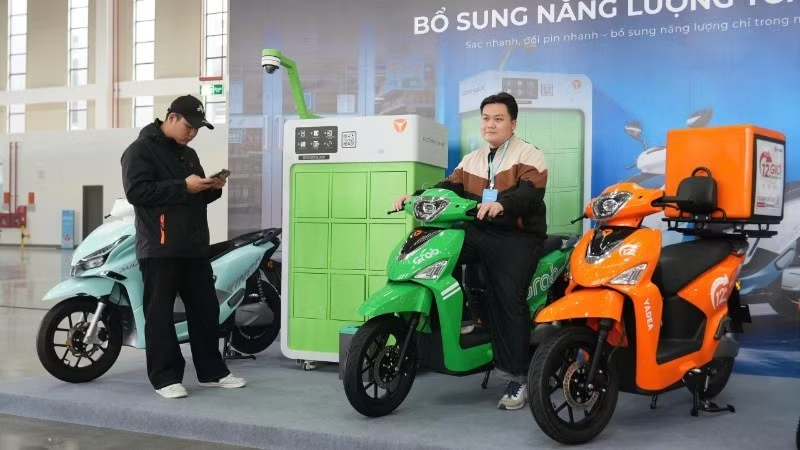
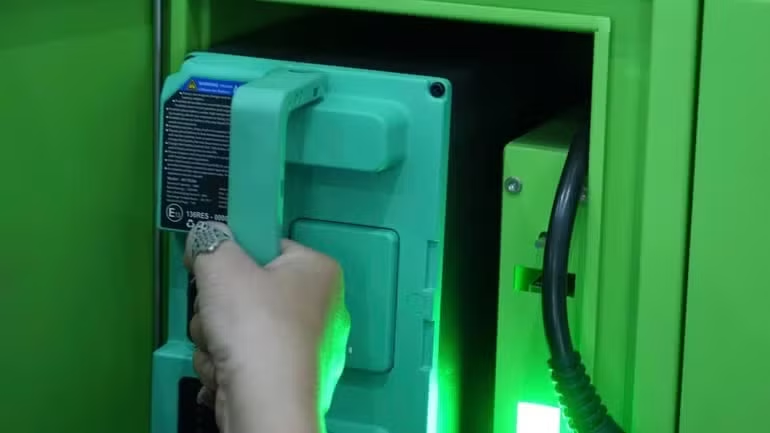
Alongside regulatory improvements, the nationwide expansion of charging infrastructure has recorded notable progress. At present, the charging network installed by VinFast and its partners has reached approximately 150,000 charging points for both electric cars and motorbikes, equivalent to 15 charging points per 10,000 people. In parallel, VinFast deployed 50,000 battery-swapping stations for electric motorbikes nationwide in 2025.
In 2026, the company continues to cooperate with Vikki Digital Bank Limited to further develop charging and battery-swapping infrastructure, expanding the EV ecosystem.
Phan Thi Tram Anh, Deputy Chief Executive Officer of Vikki Digital Bank Limited stated that the partnership aims to provide integrated digital financial services while supporting the development of a comprehensive ecosystem for EV users, contributing to a sustainable model where digital finance and green energy operate in tandem.
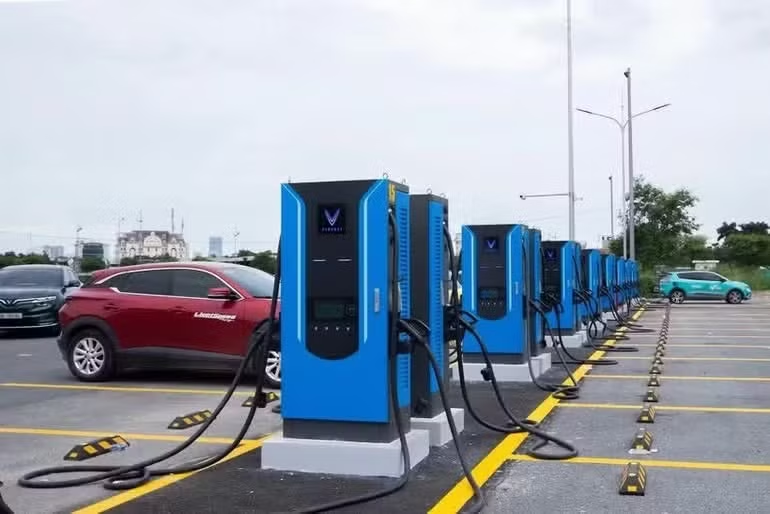
V-Green, a subsidiary of Vingroup, has also announced an investment of 10 trillion VND (380 million USD) to deploy 99 ultra-fast charging hubs nationwide in 2026. Each station is expected to be equipped with 100 chargers of 150kW capacity, capable of serving a large volume of VinFast EVs along major national and provincial highways.
Investment in infrastructure is accelerating with the participation of multiple major enterprises. At its 2025 annual general meeting of shareholders, TMT Motors, the distributor of Wuling EVs, announced its largest-ever investment plans to build at least 30,000 charging stations over the next five years.
Many other enterprises are also actively entering the market. Among them, Charge+ targets the deployment of 5,000 charging points by 2030 and has partnered with Porsche to develop 17 high-capacity DC charging stations along a 1,700km corridor in Viet Nam, enhancing fast-charging convenience.
EVG has also expanded its public charging network nationwide, offering fast-charging solutions compatible with multiple vehicle models and integrated smart identification technologies.
In parallel with charging technologies, EV battery systems have achieved a high level of maturity, with significantly improved durability. Pham Van Quan, Deputy Director General of the Industrial Agency under the Ministry of Industry and Trade noted that electric vehicles are not merely a technological product, but a new industry that requires comprehensive preparation in terms of infrastructure, institutions and the production ecosystem. He also said EV batteries can now have a lifespan of between 10 and 20 years, depending on operating conditions.
However, infrastructure investment still faces constraints related to urban planning and grid connection procedures. The Ministry of Industry and Trade has been coordinating with relevant agencies to address these bottlenecks, thereby facilitating enterprise participation in charging infrastructure development. This is a critical step towards enhancing economic self-reliance and ensuring energy security amid volatile global fuel markets.
Support mechanisms and sustainable development roadmap
In major urban centres such as Ha Noi, the transition towards green transport has been being accelerated through a combination of regulatory measures and substantive financial support mechanisms.
The municipal authorities have identified the gradual reduction of fossil fuel-powered vehicles in inner-city areas as an urgent solution to improve environmental quality. Proposals to restrict petrol-powered vehicles within Ring Road 1 have significantly influenced consumer behaviour, making EVs a preferred option due to lower operating costs and strong policy support.
Data indicate that the transition is progressing rapidly in the public transport segment. Currently, around 60% of taxis in the capital city—equivalent to approximately 8,600 out of 14,000 licensed vehicles—have switched to electric operation.
To achieve the target of 100% green taxis by 2030, the city is developing support packages, including preferential loan interest rates and reduced parking fees.
Nguyen Quang Huy, Deputy Head of the Transport Management Division under the Ha Noi Municipal Department of Construction noted that support policies has been formulated to facilitate transport enterprises, covering financial incentives, cost reductions and the expansion of charging infrastructure, with a clear roadmap towards full electrification of the taxi fleet by 2030.
In addition to government efforts, proactive measures by manufacturers play a critical role in lowering initial investment barriers. Notably, the exemption of 100% registration fees for EVs has provided a strong stimulus to market demand.
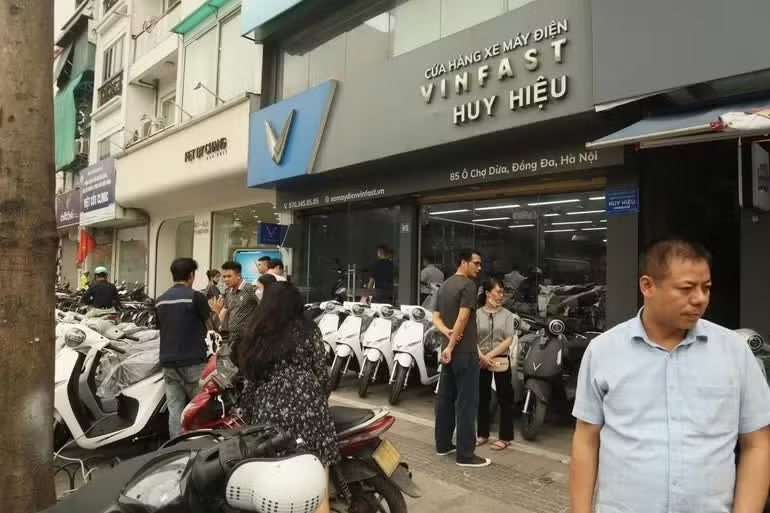
Hoang Ha, CEO of VinFast's electric motorbike business in Viet Nam stated that consumers currently benefit from multiple incentives, including price support, zero initial payment financing schemes, discounts for switching from petrol to electric vehicles, and free charging or battery-swapping services within specified periods.
However, experts emphasise that for green transport to be truly sustainable, it must be aligned with the national power structure. EVs only deliver full environmental benefits when the electricity used for charging is generated from renewable sources such as wind and solar power.
Therefore, EV development strategies must go hand in hand with the expansion of clean energy projects and improvements in transmission efficiency. Dr Vo Tri Thanh, President of the Institute for Brand Strategy and Competitiveness stressed the need for a comprehensive policy framework encompassing legal, financial and market dimensions.
In this context, flexible policy mechanisms, including pilot frameworks for new models, are considered essential to keep pace with rapid technological changes, while ensuring transparency and social consensus.
Ultimately, the transition to green transport extends beyond environmental considerations to become a key component of national energy security strategy. Amid complex geopolitical developments, particularly tensions in the Middle East that pose risks to global energy supply and price stability, reducing dependence on imported fossil fuels is an inevitable direction for Viet Nam.
The development of green infrastructure and the acceleration of EV adoption represent critical elements in enhancing energy efficiency, contributing to the country’s goal of achieving net-zero emissions by 2050.
![[Infographic] GRDP growth scenarios for 34 provinces and cities in fourth quarter of 2026](https://en-cdn.nhandan.vn/images/nyM650OGFWrOVWc-xajqN-rTZ68Rlmc1fiGJOhBRYHFSa4DhrHNDxEFdnz313Vk5dNJuxdkHglPA3rLeaPeiaUheNuCI723k2lNssd-YLJuKR58epWq7s21lV5WjM-HR2-Qpbi4MwAzqt9wRjL4WjGkfEz7RO9qhcwg8o8LQFK8/grdp-growth-scenarios-for-34-provinces-and-cities-in-q42026-anh-dai-dien.jpg.avif)