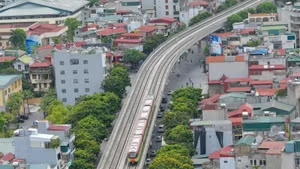
According to Dao Duy Phong, Deputy Director of the Ha Noi Department of Construction, the integrated electronic ticketing system has been deployed across all 128 bus routes and the city’s two metro lines.
Using either a smart card or a mobile application, passengers can travel seamlessly across different modes of public transport. No longer reliant on cash or paper tickets, they can make flexible payments using transport cards, virtual (non-physical) cards, bank cards or QR codes linked to e-wallets.
Ticketing services have been fully digitised. From registering for a new card and purchasing tickets to renewing passes, passengers can complete all transactions online via a mobile application or website anytime and anywhere, eliminating the need to queue at ticket offices.
Single fares are calculated according to the actual distance travelled, meaning those travelling shorter distances pay less while longer journeys cost more. Passengers can also choose from a range of flexible ticket options, including daily, weekly and monthly passes.
For transport operators, this is the first time that all service providers have operated on a shared digital platform, marking a major step forward in the sector’s digital transformation.
The entire operational process, from service planning, ticket issuance and work allocation to personnel management, revenue reconciliation and internal verification, previously relied on multiple layers of paperwork and manpower, but is now handled automatically through a single system.
This enables operators to streamline their organisational structures and significantly reduce staffing pressures in day-to-day operations. Every ticket transaction is automatically recorded, creating a centralised and transparent database that provides operators with an up-to-date financial overview and supports timely decision-making.
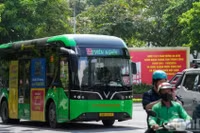
According to leaders of the Ha Noi Department of Construction, the introduction of the system will not only improve the passenger experience but also strengthen the capacity of state management agencies to monitor operations and utilise data for traffic management, transport planning and the future development of public transport services.
Notably, the system supports the city’s policy of providing free bus travel within Ring Road 1 from July 2026 to June 2027, as part of efforts to encourage greater use of public transport, reduce reliance on private vehicles and support the rollout of the Low Emission Zone.
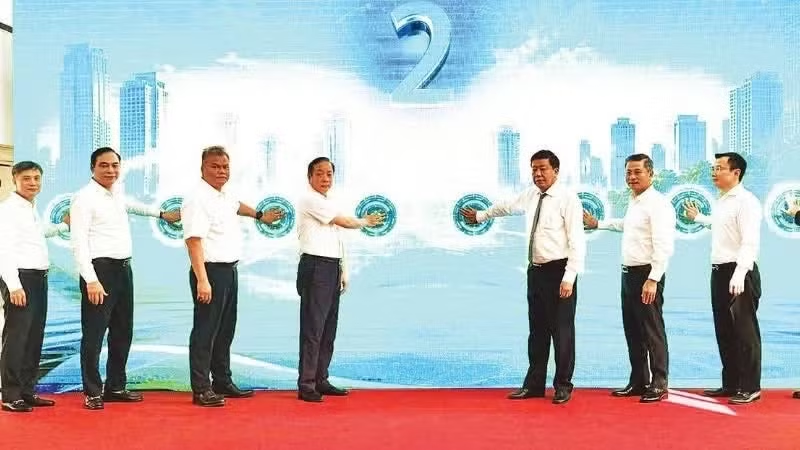
Duong Duc Tuan, Vice Chairman of the Ha Noi People's Committee, stressed that the launch of the integrated electronic ticketing system represents an important step in implementing the policies on digital transformation, scientific and technological development, innovation and the modernisation of public transport management.
The integrated electronic ticketing system is more than simply a technological solution; it forms a key foundation for building the capital’s smart transport ecosystem. Through the system, residents will be able to use a single account or unified payment method to access existing and future public transport services.
To maximise the system’s effectiveness, city leaders have instructed the Department of Construction, the Ha Noi Traffic Management and Operations Centre, and operating units to continue refining technical procedures to ensure stable, safe and uninterrupted operations. They have also called for stronger public communication and guidance to help residents adopt and make full use of the new services.
In addition, Ha Noi will continue exploring greater connectivity between different forms of public transport and supporting transport services, while making effective use of data generated by the system to enhance transport management, operations and policymaking.
Under the city’s long-term development strategy, the next phase will expand the electronic ticketing system to integrate with urban rail, public bicycles, taxis, ride-hailing services, conventional railways and aviation, creating a seamless, convenient and fully interconnected transport ecosystem for residents.