Capital for production
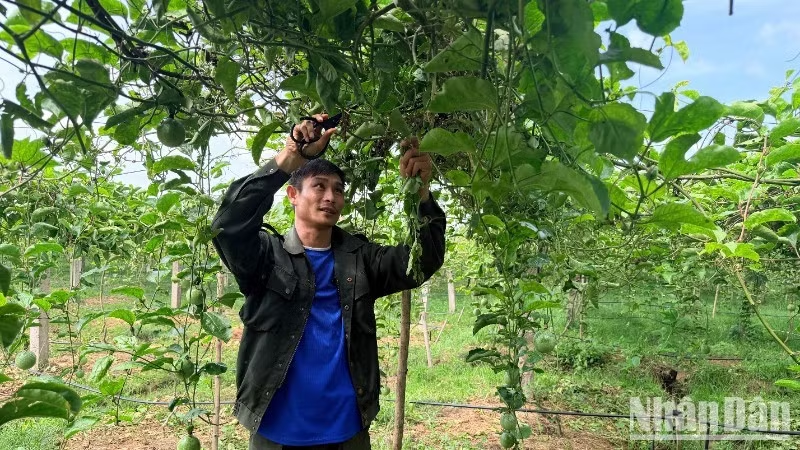
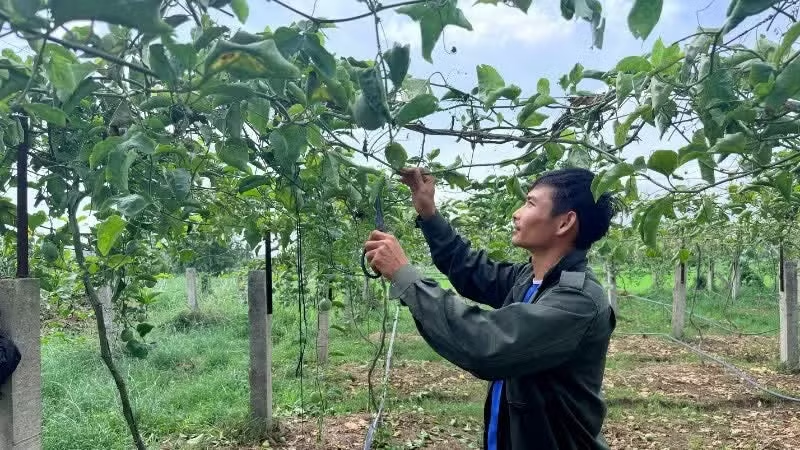
Amid dragon fruit plantations and rice fields in Ninh Thuan Hamlet, Ham Liem Commune, lies a lush green passion fruit garden filled with ripe yellow fruit. Having just completed a harvest, farm owner Bui Quoc Huy (born in 1997) said the approximately 8,000-square-metre garden has been equipped with a high-tech irrigation system. Yellow-skinned passion fruit is currently selling on the market for between 20,000 VND and 50,000 VND per kilogramme.
Farmer Bui Quoc Huy recounted: “After completing my military service, I worked as a labourer at a passion fruit processing factory in Dak Lak Province. During many trips to purchase harvested produce directly from farms, local farmers taught me how to grow passion fruit.
After learning the production techniques, I returned to my hometown to start a business growing yellow-skinned passion fruit. Thanks to the savings I accumulated while working at the factory, together with additional financial support from my family, I was able to invest in the garden.
At the same time, the hamlet head introduced me to a 50-million-VND loan package from the Viet Nam Bank for Social Policies, which supports job creation and the maintenance and expansion of production. I am currently expanding the cultivation area by another 5,000sq.m. I hope that in the future, yellow-skinned passion fruit will contribute another agricultural production model that local people can replicate.”
Not far away, Nguyen Tan Tho (born in 1980), also from Ham Liem Commune, said that policy credit loans had helped his family overcome many difficulties. As he did not own agricultural land, he leased more than six hectares from local residents to cultivate rice. With support from local authorities, he obtained loans for production and for purchasing a house.
After experiencing failure in livestock farming, Tran Son Tay of Tan Hoi Commune dismantled livestock facilities covering more than 1.7 hectares in 2012 and switched to growing chillies and tomatoes. At that time, he was included in the National Target Programme on New Rural Development and received support covering 40% of the cost of constructing greenhouses.
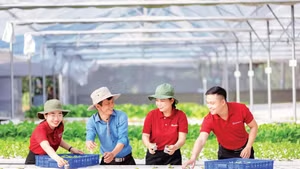
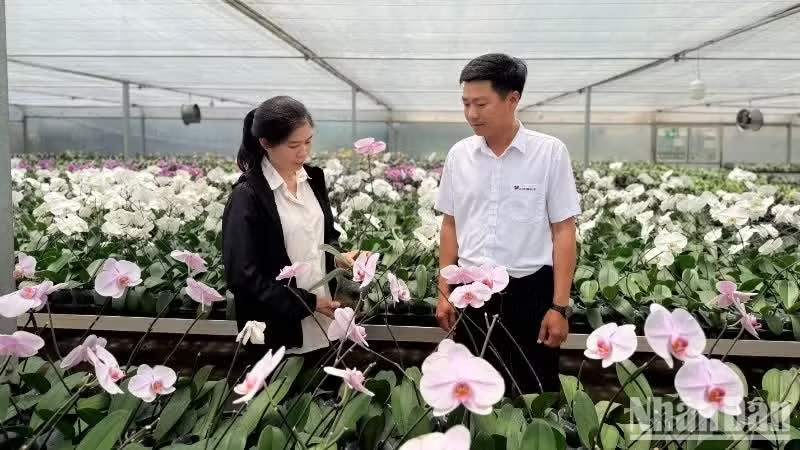
At the same time, the farm shifted from direct cultivation in soil to substrate-based cultivation, applying modern scientific and technological solutions such as drip irrigation, with all management and operations conducted through a smartphone application.
In addition, no plant protection chemicals are used in the greenhouse; instead, beneficial insects are purchased and released into the garden. Average annual revenue is approximately 1.2 billion VND.
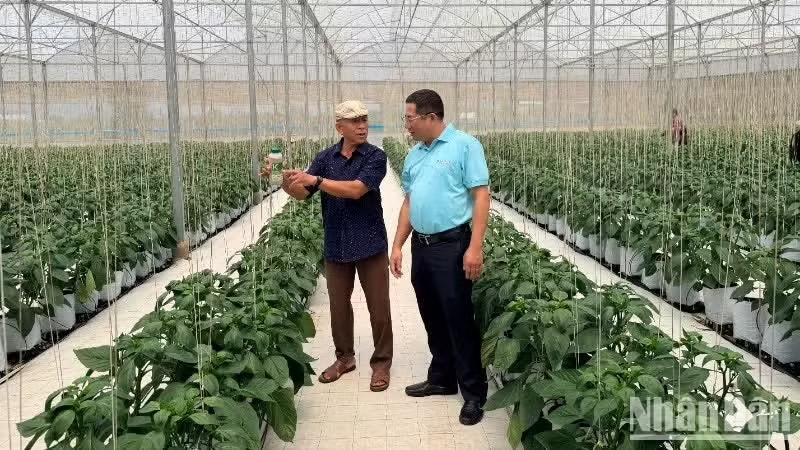
At that time, investing in around 1,000sq.m of high-tech agricultural production required approximately 650 million VND, an amount beyond the reach of many farmers. Tran Son Tay said that for more than 20 years, the state and the Lam Dong II Branch of the Viet Nam Bank for Agriculture and Rural Development (Agribank) have acted as a lever enabling farmers to access investment capital and transform their production models. Specifically, short-term loans serving production costs have been offered at highly preferential interest rates.
Supporting farmers
Tran Dinh Thinh, Head of Binh Lam Hamlet in Ham Liem Commune, said that flooding at the end of 2025 swept away substantial property and crops in the area. Following the storms and floods, Agribank exempted farmers from paying interest for one month.
To expand access to credit for production households in remote and isolated areas, the hamlet coordinated with Agribank to implement lending through credit groups, cooperative groups, and local mass organisations.
This has proven to be an effective solution for bringing bank credit closer to local people while improving the management and use of loan capital and helping curb the growing trend of illegal lending. In addition, many farmers in flood-prone areas of Ham Thang Ward have also received policy loans to restore production.
Nguyen Huu Phung, Deputy Director of Agribank’s Lam Dong II Branch, said the bank has always regarded the implementation of credit programmes serving agricultural and rural development as a central and long-term task in its business operations.
These programmes constitute the bank’s key lending activity, accounting for a large proportion of total outstanding loans and serving as a core component of its mission to invest in agricultural and rural development across the locality. Accordingly, the bank has concentrated resources and prioritised capital allocation to fully and promptly meet the borrowing needs of residents and businesses engaged in production and business activities.
As of May 31, outstanding loans for agricultural and rural development have reached 26.539 trillion VND, accounting for 97.43% of the total outstanding loans of Agribank’s Lam Dong II Branch, with 27,057 customers still carrying loan balances.
Outstanding green credit loans exceeded 21 billion VND for two customers, mainly in vegetable, flower, and fruit cultivation, as well as sustainable food production and processing.
For high-tech agriculture, outstanding loans reached 8.251 trillion VND for 9,971 customers, an increase of 1.255 trillion VND and 84 customers compared with the beginning of the year, representing growth of 15.76%.
The branch is currently managing 331 credit groups with 4,087 members and total outstanding loans of 659 billion VND.
Through credit financing, many farmers have boldly invested in technological innovation and expanded production scales while gradually shifting from traditional production methods to more modern and efficient models, thereby improving product quality, reducing production costs, and enhancing competitiveness.
The development of high-tech agricultural models has also contributed to restructuring the local agricultural economy towards sustainability, increasing incomes, and improving living standards for local residents.