
High demand
For Nguyen Thi Sinh, the 20 years since she moved from Hai Phong to Ho Chi Minh City to seek a better livelihood have also been 20 years of renting accommodation. She works as a garment worker, while her husband drives for a food company. Their monthly income is just enough to cover the family’s daily expenses.
“Besides my regular salary and overtime pay, I take home clothes from outside to do alterations. My husband also asks his company for extra work loading and unloading goods. We dare not spend money on anything beyond rent and food, trying to save a little each month in the hope of eventually buying a small house where our children can live with less hardship. However, after we had children, our expenses increased. Unexpected costs arose when they fell ill or needed money for their education, and some months we could not save anything as planned. Moreover, property prices rise every year. As a result, the dream of owning a home in the city has grown increasingly out of reach,” Sinh said.
A few months ago, her landlord informed her that the house would be reclaimed and rebuilt for the landlord’s children to live in. Sinh said her family had rented the single-storey house for more than a decade. The landlord had been kind and, understanding the family’s financial difficulties, had kept the rent unchanged at 2.5 million VND a month, compared with around 3.5–4 million VND for similar accommodation elsewhere. Believing that working as a factory worker would offer similar prospects wherever they lived, and that rent would be higher if they found another place, Sinh and her husband decided to return to their hometown.
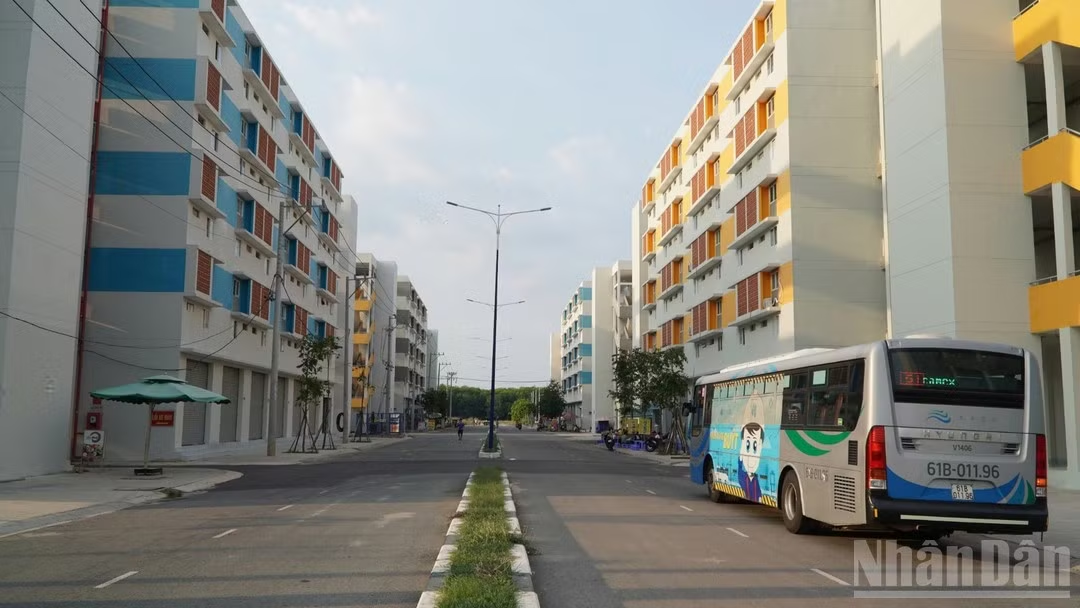
Tran Thanh Thao, Deputy Chief of Office of the Ho Chi Minh City Labour Federation, said preliminary survey results showed that around 3,181 union members in the city wanted to rent homes, while 30,339 wanted to buy social housing. Most workers currently rent accommodation in spontaneously developed residential areas, where living space, safety, fire prevention and fighting, and social infrastructure remain inadequate.
Limited supply
In practice, workers must simultaneously cover rent or housing instalments, daily living expenses, childcare, transport, education and other unexpected costs. To help them access social housing through rental, rent-to-own or purchase arrangements, the city’s Labour Federation believes housing policies should focus on providing homes that workers can afford, rather than simply increasing the number of apartments.
According to Pham Quoc Huy, Deputy Head of the Technical Infrastructure Division under the Ho Chi Minh City Department of Construction, existing policies are not attractive enough to encourage businesses to invest in social housing. To mobilise private-sector capital for housing projects for workers and social housing, the city therefore needs to develop new incentive mechanisms to make investment more appealing.
The Department of Construction is reviewing available land and completing investment procedures. It is also reviewing land managed by the State to propose social housing and rental housing projects financed by the State budget or to select investors through investor-designation mechanisms.
In addition, the city is applying the Law on Urban Development to designate investors for social housing projects on State-managed land or other plots that comply with planning requirements, or that competent authorities determine to be suitable for social housing development. For projects where land-use rights have already been secured, procedures for approval of investment policies and investor designation can be shortened to 37 days. For land directly managed by the State, the procedures take 52 days.
Huy expects these policies to attract more businesses to participate in social housing development.
The city’s Labour Federation has also proposed several solutions to address workers’ housing needs. One proposal is to convert 953 unused resettlement apartments in the Vinh Loc B Residential Area into rental housing for workers.
For new projects, the municipal People’s Committee is also urged to study a coordinated mechanism linking departments, sectors and local authorities from the outset of land identification, planning, investment procedures and construction. Processing progress should be made public so businesses can plan and implement projects proactively. Particular emphasis is placed on continuing to implement the “green channel” mechanism effectively, prioritising the removal of administrative obstacles to social housing projects.
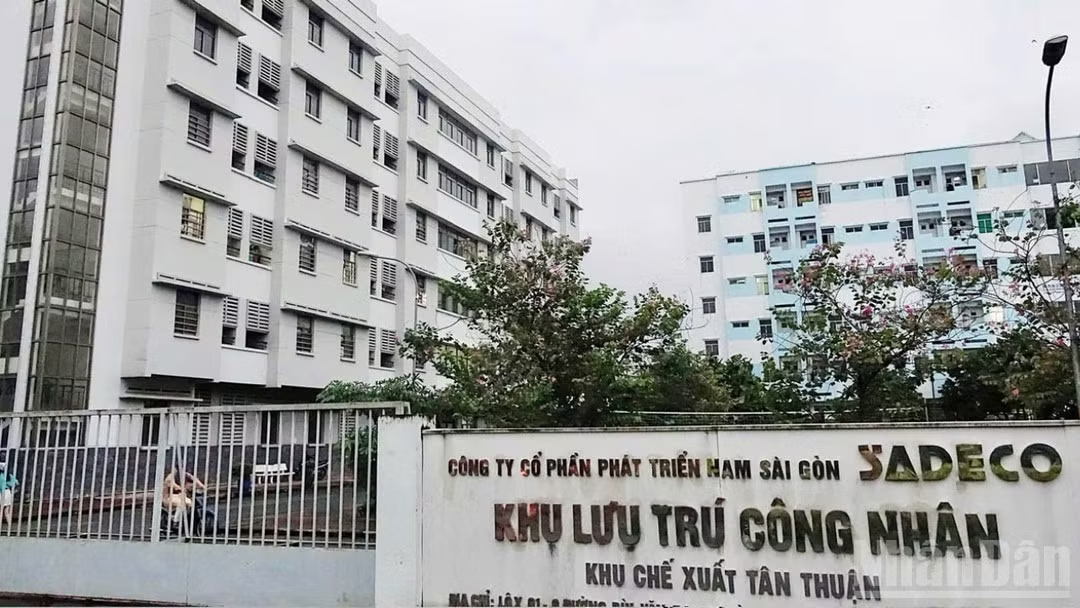
The city’s Labour Federation maintains that housing for workers should be more than just an apartment; it should provide a living environment that meets the essential needs of workers and their families.
To accelerate social housing projects, trade unions are shifting from simply “connecting and signing agreements” with businesses to a more active approach of “connecting, monitoring, resolving obstacles and supervising progress”. They are also implementing a three-party partnership model involving trade unions, housing developers, and employers and workers. Under this model, trade unions act as coordinators and facilitators; developers are responsible for implementing projects in accordance with the law; and employers work with the relevant parties to verify workers’ housing needs and explore ways to help them access suitable homes.