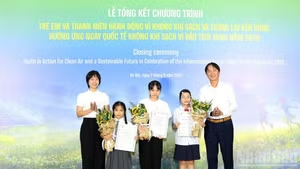
The event was attended by representatives from the Lang Son Provincial People’s Committee, ministries, departments, units under the Ministry of Agriculture and Environment, international organisations, research institutions, training facilities, businesses, and a large number of officials, lecturers, students, and local people.
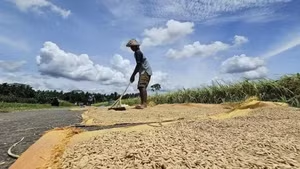
In 2026, the Secretariat of the United Nations Convention to Combat Desertification selected the theme “Rangelands: Recognize. Respect. Restore,” which Viet Nam responded with the message “Identify land resources. Respect green nature. Restore ecosystems.” The theme emphasised the role of land, forests, water resources, and natural ecosystems in ecological security, food security, people's livelihoods, and sustainable development.
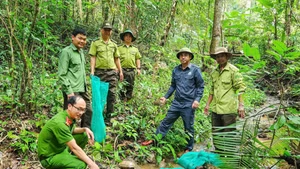
According to the Forestry and Forest Protection Department, from 37% in 2005, Viet Nam’s forest cover rate increased to 42.03% in 2025, contributing to reducing erosion, increasing water retention capacity, and limiting the risk of land degradation. However, the area of land subject to various forms of degradation still accounts for more than one-third of the territory, requiring stronger solutions in forest protection, ecosystem restoration, and sustainable use of natural resources.
Speaking at the ceremony, Tran Quang Bao, Director of the Department of Forestry and Forest Protection emphasised that combating desertification should be considered a core aspect of national security, requiring the participation of the entire society, from management agencies, scientists, businesses to individual citizens.
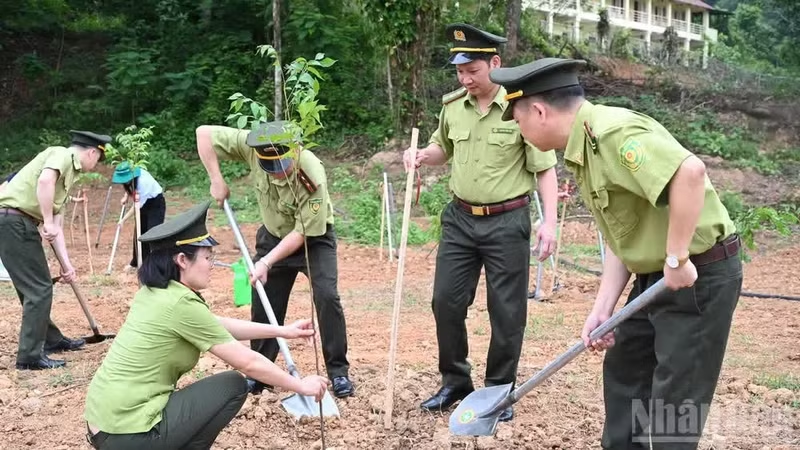
On the same day, the Department of Forestry and Forest Protection and C.P. Viet am signed a Memorandum of Understanding to implement the “C.P. Viet Nam – Journey for a Green Viet Nam” programme for the 2026-2030 period.
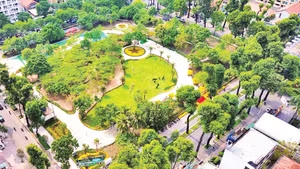
According to the agreement, the two sides will cooperate in planting 1.5 million new trees nationwide with a total estimated cost of approximately 35 billion VND. The programme will prioritise implementation in provinces in the north, central, and south, while also expanding to areas with a need for forest restoration and the development of scattered green spaces.