Value from ancient steles
In the closing days of the year, although restoration work is under way, several clusters within the Pho Hien Special National Relic Site continue to attract large numbers of visitors. Spread across Hien Nam, Lam Son, Quang Trung, Hong Chau, and Le Loi wards, as well as Hong Nam commune, the relic system offers a journey through a landscape of pagodas, temples, and shrines, alongside ancient educational structures bearing the imprint of centuries. With its outstanding values, the Pho Hien relic complex was recognised as a Special National Historical, Cultural, and Architectural Site in 2014.
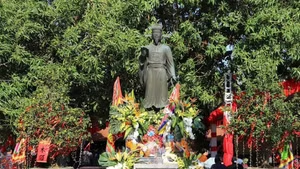
Exploring Pho Hien is made all the more compelling by its system of 41 steles inscribed in Chinese characters and Nom script, created by local Vietnamese people and the Chinese community from the first half of the 17th century to the 1940s. Located across various monuments, these are original documents preserved in situ, with clear texts and decorative motifs that vividly reflect notable historical, cultural, and artistic values.
The inscriptions contain a rich variety of poems, prose, and commemorative texts, while their refined carving techniques portray religious life, economic and social activities, and the cultural exchange between Vietnamese and Chinese communities. The steles also record the formation of the port city, the contributions of the Chinese community, and successive restoration works, forming a valuable historical archive of the development of the once-renowned trading port, known as “Little Trang An”.
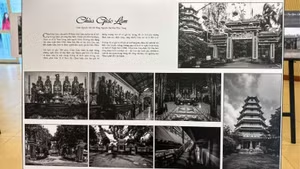
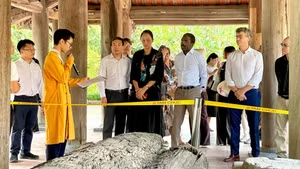
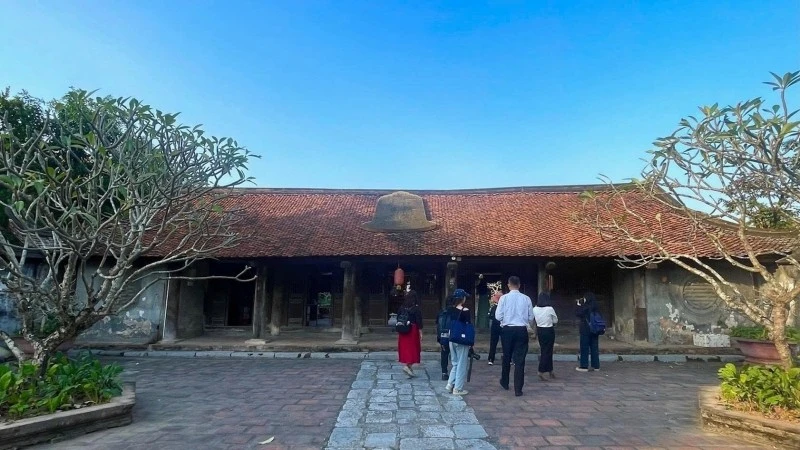
At the ancient setting of Chuong Pagoda, tour guide Nguyen Hai Yen, an official from the Hung Yen Provincial Relic Management Board, explained that Chuong Pagoda, honoured as “the foremost scenic site of Pho Hien”, holds exceptional historical value. Among its many precious antiquities is the stele titled Kim Chung Tu Thach Bi Ky, erected in the Year of Tan Mao, the seventh year of the Vinh Thinh reign under King Le Du Tong (1711). The reverse side, entitled Nhan Duc Xa Co Tich Truyen, records the formation of Pho Hien during its prosperous period, when it comprised more than 20 wards and markets. Both sides together contain over 2,000 characters, mainly in Chinese with interspersed Nom script. Beyond Chuong Pagoda, stone steles can also be found at numerous other sites such as Xich Dang Confucian Temple, Hien communal house and pagoda, and Thien Hau Temple.
Nguyen Thi Thu Huong, Director of the Hung Yen Provincial Relic Management Board, said that the province has completed the scientific dossier for the documentary heritage “The System of Pho Hien Stone Steles, Hung Yen” and submitted it to UNESCO for consideration for inclusion in the Memory of the World Register for Asia and the Pacific. The dossier has passed the preliminary review and is eligible for formal consideration at the regional meeting in 2026. This year, experts on documentary heritage under UNESCO’s Memory of the World Programme from Denmark and the US conducted surveys and provided consultancy on the nomination. They recommended strengthening the conservation and promotion of the steles, including relocating some outdoor steles and building protective shelters to mitigate environmental impacts. The relic management board has implemented protective measures at Tran Temple and Mau Temple and arranged appropriate exhibition spaces to facilitate access for visitors and researchers.
Relics creating new appeal
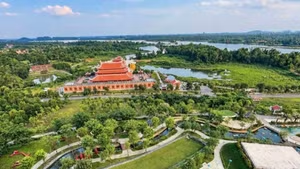
Each monument preserved over centuries connects to form a distinctive space that underpins the outstanding value of the Pho Hien complex. From the central heritage axis comprising Chuong Pagoda, Mau Temple, Tran Temple, and Xich Dang Confucian Temple, the site reflects the unique cultural identity of the northern Red River Delta.
The Pho Hien Special National Relic Site (Hung Yen Province) is a space where distinctive cultural, architectural, and historical values converge, featuring 17 representative monuments. The policy of planning and harnessing this ancient heritage urban area has helped position Pho Hien as a cultural and tourism destination rich in the identity of the Red River Delta.
Many monuments honour eminent figures and national heroes, such as May Temple dedicated to General Pham Bach Ho; Kim Dang Temple worshipping General Dinh Dien and his wife; and Tran Temple venerating Grand Lord Hung Dao, Tran Quoc Tuan. Ancient pagodas such as Pho Pagoda, Hien communal house and pagoda, and Ne Chau Pagoda preserve architectural and artistic imprints from different periods, creating attractive highlights along spiritual tourism routes. The Pho Hien heritage landscape also bears witness to international trade, evident in riverbank tour routes along the Red River, with alluvial flats, waterside scenery, and locations once used for commerce by merchants from China, Japan, and the Netherlands.
The Pho Hien Special National Relic Site (Hung Yen Province) brings together distinctive cultural, architectural, and historical values across 17 representative monuments. The policy of planning and exploiting this ancient heritage urban area helps establish Pho Hien as a cultural tourism destination rich in the identity of the Red River Delta.
Clusters such as Pho Pagoda, Dong Do Quang Hoi Thien Hau Palace, and Vo Temple contribute to recreating a vivid picture of the flourishing era of a trading port that was once among the busiest in northern Viet Nam. In addition, many precious artefacts, including stone steles, bells, chimes, royal decrees, lacquered boards, and worship statues, preserved at sites such as An Vu communal house, Ba Chua Kho Temple, Cuu Thien Huyen Nu Temple and Tra Temple, enrich the heritage tapestry of Pho Hien. According to Bui Thi Luong, Deputy Director of the Hung Yen Department of Culture, Sports and Tourism, together with Keo Pagoda, Da Hoa–Da Trach Temple, and Phu Ung Temple, sites of special value such as the Pho Hien relic complex are helping to build the province’s tourism brand.
Recently, Hung Yen Province broke ground on a project to construct a road linking cultural heritage sites, tourism, and economic development along the Red River. The project opens up new development space, forming urban, service, and tourism areas along the heritage route. This will provide Hung Yen with a stronger foundation to develop distinctive tourism products, allowing the heritage stories of the ancient trading port region to resonate more widely.