The Party and State’s perspective on digital transformation is to harness technology to safeguard the vitality of the cultures of different ethnic groups, enhance their transmission and strengthen connections between generations, while also creating conditions for each individual and community to take ownership of and benefit from cultural values.
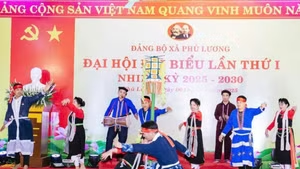
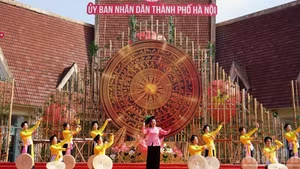
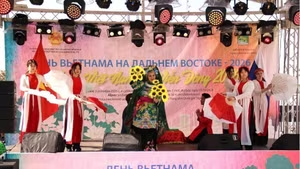
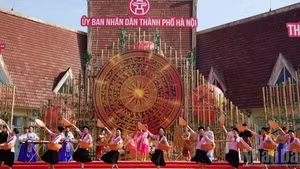
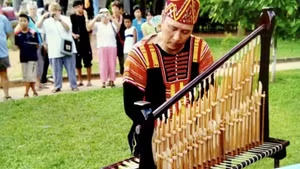
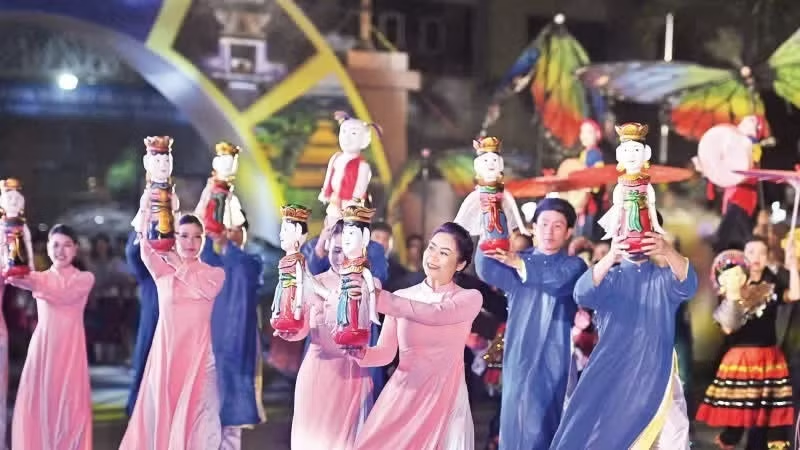
Ethnic culture is not confined to artefacts displayed in museums; it also encompasses languages, scripts, folk songs, dances, rituals, handicrafts, performing arts, production practices, cuisine and knowledge passed down from one generation to the next. Regarding intangible culture, the survival of heritage depends first and foremost on the community that practises it.
UNESCO emphasises that neither preservation nor protection should be understood as freezing heritage in some lifeless, unchanging form; because intangible heritage is always being created and recreated, freezing its form is undesirable and may mean it is no longer considered intangible heritage.
Ethnic culture is not confined to artefacts displayed in museums; it also encompasses languages, scripts, folk songs, dances, rituals, handicrafts, performing arts, production practices, cuisine and knowledge passed down from one generation to the next.
Digital transformation makes it possible to expand the spaces in which ethnic cultures exist. A folk song or handicraft technique once known only within a small community can now be disseminated widely to schoolchildren, researchers, tourists and others. Digitisation also helps create new methods of teaching and transmission, rather than relying solely on traditional approaches through artisans, village elders and community leaders.
Short videos, digital libraries, cultural maps, online museums, ethnic-language learning applications and virtual-reality technology are becoming tools that enable more people to access and learn about the cultures of different ethnic groups.
The beauty of heritage, engagingly retold in the digital environment, can be transformed into livelihoods for ethnic minority people through the introduction and sale of handicrafts, local agricultural products and other goods. This, in turn, creates an incentive for people to continue practising their culture and developing new cultural values.
However, the digitisation of ethnic cultural heritage is revealing a number of shortcomings. The first is the risk of separating culture from its bearers. If a ritual or folk song is uploaded to the digital space without the participation of the community — the creator and bearer of that culture — it may be misinterpreted or used for undesirable purposes.
Under the influence of digital platforms, content that is visually appealing, easy to sell or easy to perform may receive attention, while profound content that is difficult to commercialise may be overlooked. In the long term, this could alter the original values of heritage, with highly damaging consequences.
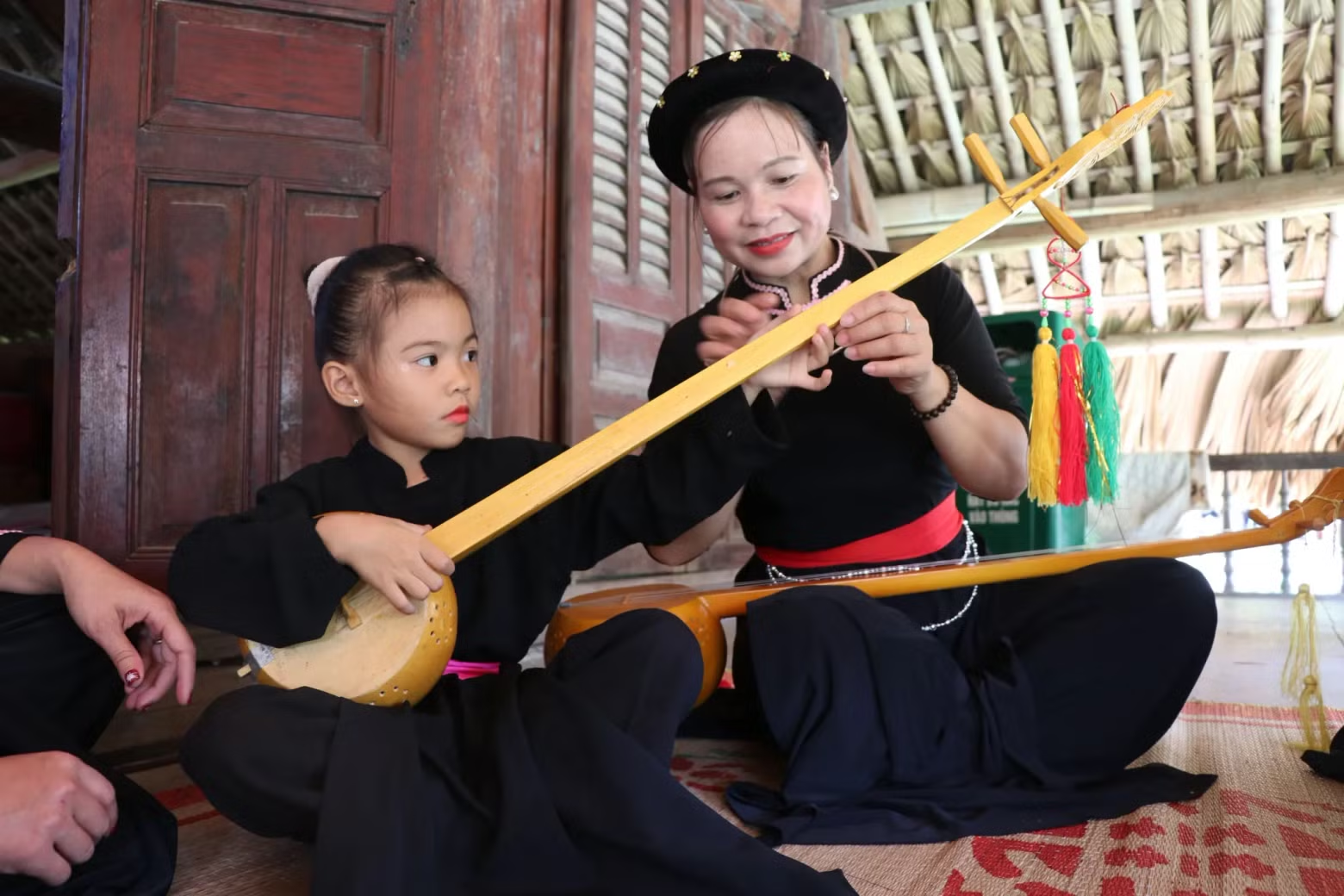
In particular, with the rapid development of artificial intelligence (AI), issues surrounding rights to cultural data are becoming increasingly complex, leaving ethnic cultures vulnerable to harm caused by the irresponsible exploitation of such data by some members of the community.
The Ministry of Culture, Sports and Tourism has introduced a platform to manage the national database on cultural heritage. However, ethnic cultures have their own distinctive characteristics and require investment in specialised infrastructure and management methods. Experts have recommended that the digitisation of ethnic cultural values should empower cultural bearers.
Accordingly, each digitisation project must involve artisans, village elders, respected individuals and the entire community directly from the stages of selecting content, documenting and interpreting it to deciding which content should be made public and which should be stored internally.
With the rapid development of artificial intelligence (AI), issues surrounding rights to cultural data are becoming increasingly complex, leaving ethnic cultures vulnerable to harm caused by the irresponsible exploitation of such data by some members of the community.
In terms of legal and policy frameworks, mechanisms should be developed and perfected to protect copyright and the benefits arising from ethnic cultural data. These mechanisms should clearly identify who has the right to utilise such data and stipulate how cultural bearers, including artisans and communities, will benefit when the data is used for commercial purposes.
Relevant organisations should pay greater attention to digital cultural education for the younger generation, particularly ethnic minority adolescents and young people. They are both recipients of culture and creators of digital cultural content.
Providing local young people with training in filming, sound recording, digital storytelling, data storage and the responsible use of AI will help create a new generation of people to carry on the work of preserving and developing culture. This will enable cultural heritage to become a resource for economic development and contribute to the country’s overall development.