A payment mechanism that reflects the true value of traditional medicine is needed.
In recent years, the system of medical examination and treatment in traditional medicine in Viet Nam has continued to be strengthened. Currently, the country has 5 traditional medicine hospitals under the Ministry of Health and other ministries and sectors; 61 traditional medicine hospitals in provinces and cities, along with 10 specialised private hospitals.
In 2025, the whole country recorded approximately 7 million visits for medical examinations and treatments using traditional medicine, accounting for about 3.3% of the total number of medical examinations and treatments.
The rate of examinations and treatments using traditional medicine at the provincial level reached 11.1%, and at the commune level reached 24.4%. This shows that traditional medicine still holds an important position in the community and at the grassroots level, especially for the elderly and those with chronic diseases.
However, looking at the payment structure from the Health Insurance Fund reveals a different reality. According to Tran Thi Trang, Director of Health Insurance, the Ministry of Health, modern medicine still accounts for the largest proportion of total health insurance expenditure, with over 31% of total medical examination and treatment costs.
Meanwhile, the proportion allocated to traditional medicine is only about 5.42%, equivalent to over 3.1 trillion VND.
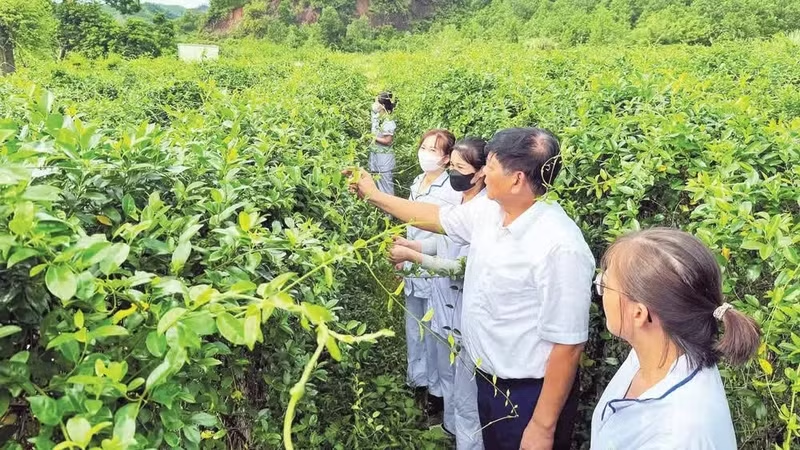
The list of traditional medicine drugs covered by the new health insurance scheme includes 229 traditional medicines and herbal remedies, and 349 traditional medicinal ingredients. This number has remained almost unchanged for many years, significantly lower than the target set in Decision No. 1893/QD-TTg dated December 25, 2019, of the Prime Minister on the development of traditional medicine and the integration of traditional and modern medicine by 2030.
According to this Decision, the proportion of traditional medicine covered by the Health Insurance Fund must reach at least 20% of total drug costs (by 2025) and 30% (by 2030). The significant gap between the target and reality reflects a paradox: while domestic medicinal resources are abundant and the demand for traditional medicine treatment is increasing, the financial mechanisms to promote the development of this field have not kept pace.
According to the head of the Health Insurance Department, many businesses have now researched and developed new herbal medicines, and many products have undergone thorough clinical trials with evidence of therapeutic effectiveness. Therefore, traditional medicines cannot be considered as cheap products, but need a payment mechanism that reflects their true value and therapeutic effectiveness.
Not only is the reimbursement rate low, but the list of traditional medicine drugs covered by health insurance also reveals many limitations, especially since the current list was issued in 2015. Over the past ten years, many new products have emerged but have not been updated to have access to the Health Insurance Fund.
Removing policy bottlenecks
Besides the issue of the drug list, many shortcomings in the health insurance examination and treatment mechanism are limiting people’s access to services.
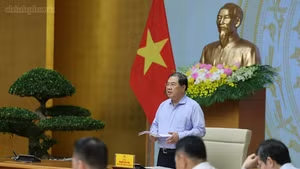
At a recent workshop on “Improving the Quality of Health Insurance-Covered Medical Examination and Treatment in the Field of Traditional Medicine” organised by the Ministry of Health, many solutions were proposed to address bottlenecks. Delegates argued that regulations regarding initial registration for examination and treatment, referrals, and inter-hospital transfers in the field of traditional medicine still have many shortcomings in practice. Many traditional medicine hospitals have good professional capabilities but face difficulties in accepting patients registering for initial health insurance-covered examinations and treatments.
Meanwhile, many elderly patients, those with chronic diseases, or those requiring rehabilitation have to go through many referral procedures before they can fully receive their health insurance benefits. This is a group with a very high demand for traditional medicine.
Associate Professor, Dr. Le Manh Cuong, Director of Tue Tinh Hospital, stated: A separate policy is needed for traditional medicine. It is necessary to clearly define that traditional medicine must be accessible to the people; therefore, people should be able to register for medical examination and treatment under health insurance at the hospital closest to them.
The leadership of the Military Traditional Medicine Hospital analysed: The elderly, post-stroke patients, and those with chronic diseases are groups with a great need for treatment and rehabilitation using traditional medicine. However, having to travel multiple times to complete initial registration procedures or referrals is both costly and reduces access to treatment, especially for people in remote areas.
In reality, in some cases, the cost of travel and accommodation to higher-level hospitals for examinations is even higher than the cost of medication covered by health insurance.
Based on this reality, many opinions suggest removing obstacles in the referral mechanism, allowing patients in certain specific disease groups to directly access specialised traditional medicine facilities; and simultaneously implementing preferential policies for the elderly and patients requiring long-term rehabilitation.
According to the Permanent Deputy Minister of Health, Vu Manh Ha, the health sector will focus on revising regulations related to health insurance-covered medical examinations and treatments in the field of traditional medicine and pharmaceuticals in the coming period.
Currently, the Ministry of Health is reviewing proposals to add 94 new drugs and 5 new types of medicinal herbs to the list of drugs covered by health insurance. The selection will be based on criteria such as treatment effectiveness, safety, and reasonable cost.
This direction is supported by many experts, prioritising traditional medicines and herbal medicines that have undergone thorough research; have clinical trials, standardised quality, and are produced using modern technology. This is an important basis for enhancing public trust and ensuring the effective use of the Health Insurance Fund.
In addition, many new solutions such as: expanding daytime treatment, providing long-term medication for people with chronic diseases, promoting electronic prescribing, and piloting the receipt of health insurance-covered medications at affiliated pharmacies will be implemented.
The ultimate goal is not just to expand the list of available medications or increase reimbursement rates, but to facilitate easier access to traditional medicine services for the people, especially at the grassroots level.