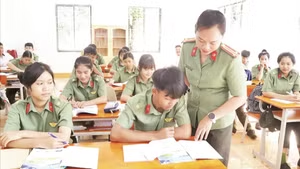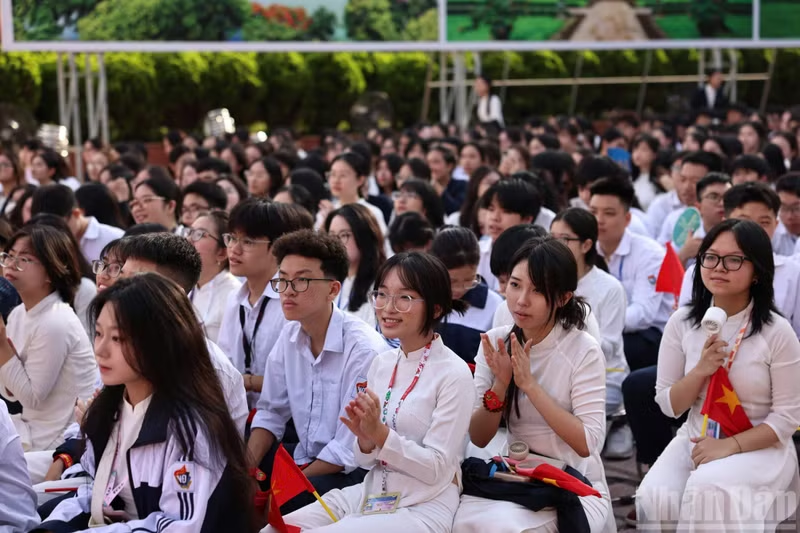
1. The Politburo issues Resolution No. 71-NQ/TW on breakthroughs in education and training development, affirming education and training as the decisive factor for the nation’s future and the key driving force for the country’s breakthrough development
On August 22, 2025, the Politburo issued Resolution No. 71-NQ/TW on breakthroughs in education and training development. The resolution continues to affirm the viewpoint that education and training are the top national policy and is the first Party resolution to affirm that education and training are a decisive factor for the future of the nation and a key driving force for the country’s breakthrough development.
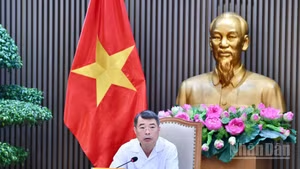
At the national conference to disseminate and implement central resolutions, including Resolution No. 71-NQ/TW, Party General Secretary To Lam affirmed that investment in education is investment in nurturing and enhancing the “national vitality”, and investment in the future of the nation. This is the key sector of all key sectors, the fundamental driving force for productivity growth, breakthroughs in national competitiveness, and the nurturing of development aspirations.
Previously, over more than 10 years of implementing Resolution No. 29-NQ/TW on fundamental and comprehensive reform of education and training, Viet Nam achieved many important results, creating a foundation for breakthroughs in education and training development in the spirit of Resolution No. 71-NQ/TW.
2. The Party and the State demonstrates a special attention to education through many major guidelines and policy decisions
Alongside Resolution No. 71-NQ/TW, the Politburo agreed on many strategic guidelines and decisions on education and training, including the decision to exempt all tuition fees for students from preschool to the end of public upper secondary education nationwide; an agreement on the policy to build a National Target Programme on modernising and improving the quality of education and training for the 2026–2035 period; and an agreement on the policy to invest in building 248 boarding general education schools at primary and lower secondary levels in mainland border communes, including completing 100 schools in 2026.
Based on reports from the Party Committee of the Ministry of Education and Training and opinions from relevant agencies, Party General Secretary To Lam concluded and agreed on the policy of organising two-session-per-day teaching at primary and lower secondary schools (depending on local conditions), and on State support for lunch meals for primary and lower secondary students in border communes.
These guidelines reflect the Party’s special attention to education and training and serve as an important political basis for the National Assembly and the Government to issue, within their authority, a series of legal normative documents to institutionalise and implement them.
3. Breakthroughs in building the education institutional framework, with the largest number of laws, resolutions, decrees and circulars issued in a single year to date
The year 2025 is considered a breakthrough year in building the education institutional framework, with 99 laws, resolutions, decrees, and circulars issued or submitted for issuance, demonstrating the great efforts and determination of the Ministry of Education and Training.
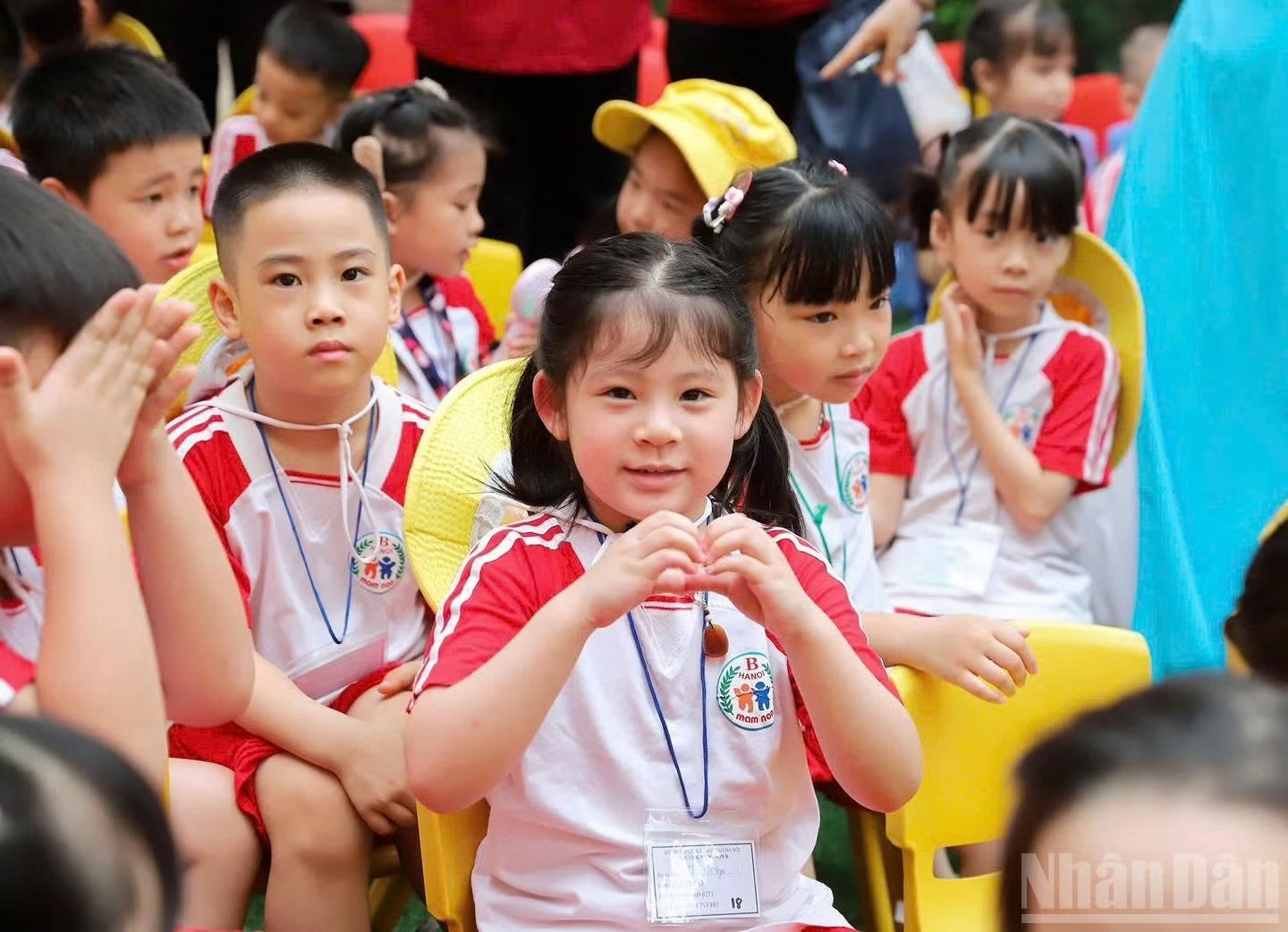
Four draft laws in the education and training sector were passed by the National Assembly this year, including: the Law on Teachers, a law amending and supplementing a number of articles of the Law on Education, the revised Law on Higher Education; and the revised Law on Vocational Education.
In the same year, the Ministry of Education and Training took the lead in developing and submitting four resolutions for National Assembly promulgation, including a resolution on universalising preschool education for children aged 3–5; a resolution on tuition fee exemptions and support for preschool children, general education students and learners in general education programmes within the national education system; a resolution on a number of special and exceptional mechanisms and policies to implement breakthroughs in education and training development; and a resolution on the investment policy for the National Target Programme on modernising and improving the quality of education and training for the 2026–2035 period.
These constitute important and comprehensive legal foundations for operating a modern, synchronised, and effective education system in the coming period.
In 2025, the Ministry of Education and Training also completed 31 documents under the authority of the Government and the Prime Minister, and 60 documents under the authority of the minister. Many new policies were issued, many bottlenecks were removed, and the education institutional framework was not only further refined but also closely aligned with practical realities, creating momentum for education and training development.
4. The first Party Congress of the Party Committee of the Ministry of Education and Training, term 2025–2030, opens a new development phase with new stature, strength and opportunities
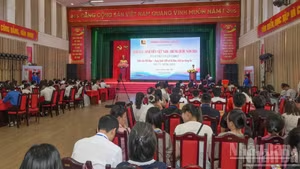
On August 21, the first Party Congress of the Party Committee of the Ministry of Education and Training for the 2025–2030 term was held in the context of the country achieving many great accomplishments, affirming increasingly strong national stature, potential, position, and international prestige.
The congress holds special significance, setting strategic directions for the education and training sector to continue innovating and improving quality, meeting the requirements for developing high-quality human resources, and contributing to the realisation of the country’s socio-economic development goals for the 2025–2030 term.
5. Successful organisation of a series of important and meaningful events marking the 80th anniversary of the education sector’s traditional day
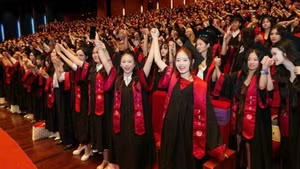
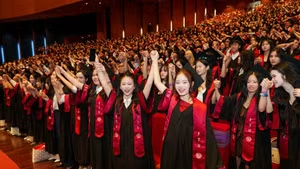
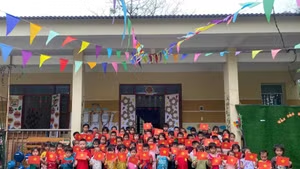
The ceremony commemorating the 80th anniversary of the education sector’s tradition was held together with the opening ceremony of the new academic year on the morning of September 5, with the participation of Party and state leaders, leaders of provinces and cities, approximately 26 million pupils and students, and 1.6 million teachers working and studying at more than 50,000 educational institutions nationwide. This was not only an occasion to review the proud achievements of the education sector over the past 80 years of nation-building, but also an opportunity to demonstrate the special attention of Party and state leaders and society as a whole to the cause of nurturing human resources.
Earlier, from August 28, within the framework of the Exhibition on National Achievements themed “80 Years – The Journey of Independence, Freedom and Happiness”, the Ministry of Education and Training organised the exhibition “80 Years of Education for National Development”. The exhibition honoured outstanding achievements of the education sector, affirmed the key role and historic mission of education in nation-building, national defence, and international integration, and spread the spirit of respect for teachers while inspiring generations of pupils and students to follow in the footsteps of previous generations in building a prosperous, civilised, and happy country.
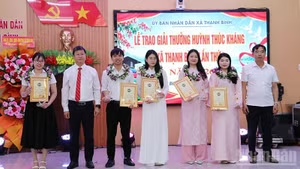
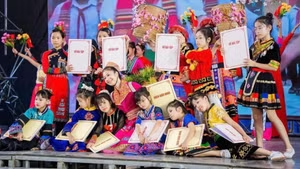
In 2025, the 8th Patriotic Emulation Congress of the education sector (2020–2025) was held together with celebrations of Viet Nam Teachers’ Day on November 20. The congress honoured more than 300 exemplary collectives and individuals from educational institutions, encouraging morale and inspiring confidence, pride, aspiration, and determination among teachers, staff, pupils, and students.
6. The Ministry of Education and Training streamlines its organisational structure, implementing the two-tier local government model nationwide
In 2025, implementing the plan of the steering committee for reviewing the implementation of Resolution No. 18-NQ/TW on streamlining the organisational apparatus of the political system for effectiveness and efficiency, the Ministry of Education and Training submitted Decree No. 37/2025/ND-CP (dated February 26, 2025) to the Government, aiming to regulate the functions, tasks, powers, and organisational structure of the ministry.
Accordingly, the ministry’s organisational structure comprises 18 units, with the reduction of one general department to a department and the cutting of six departments. The ministry also completed the transfer of state management functions over vocational education from the Ministry of Labour, Invalids and Social Affairs, and reorganised the Ministry’s Inspectorate under the Government Inspectorate.
Implementing the two-tier local government model, the ministry advised and issued, within its authority, two decrees, and six circulars on decentralisation and delegation of authority (delegating 87 out of 181 tasks to localities, equivalent to 46.5%); established six inspection teams; issued numerous documents to address difficulties; and organised online training for 50,000 commune-level officials and general school principals at 3,343 connection points.
7. Completion of the reform cycle for general education curricula and textbooks; organisation of the first upper secondary graduation examination under the 2018 General Education Programme
The year 2025 marked the completion of a full cycle of implementing general education curricula and textbooks from grade 1 to grade 12, achieving results in both breadth and depth and meeting the objectives of comprehensive reform at the general education level. The 2018 General Education Programme introduced many differences, requiring a strong shift from knowledge transmission to developing learners’ qualities and competencies. Textbooks were transformed from “knowledge packages” into open learning materials, enabling teachers to guide students in developing competencies.
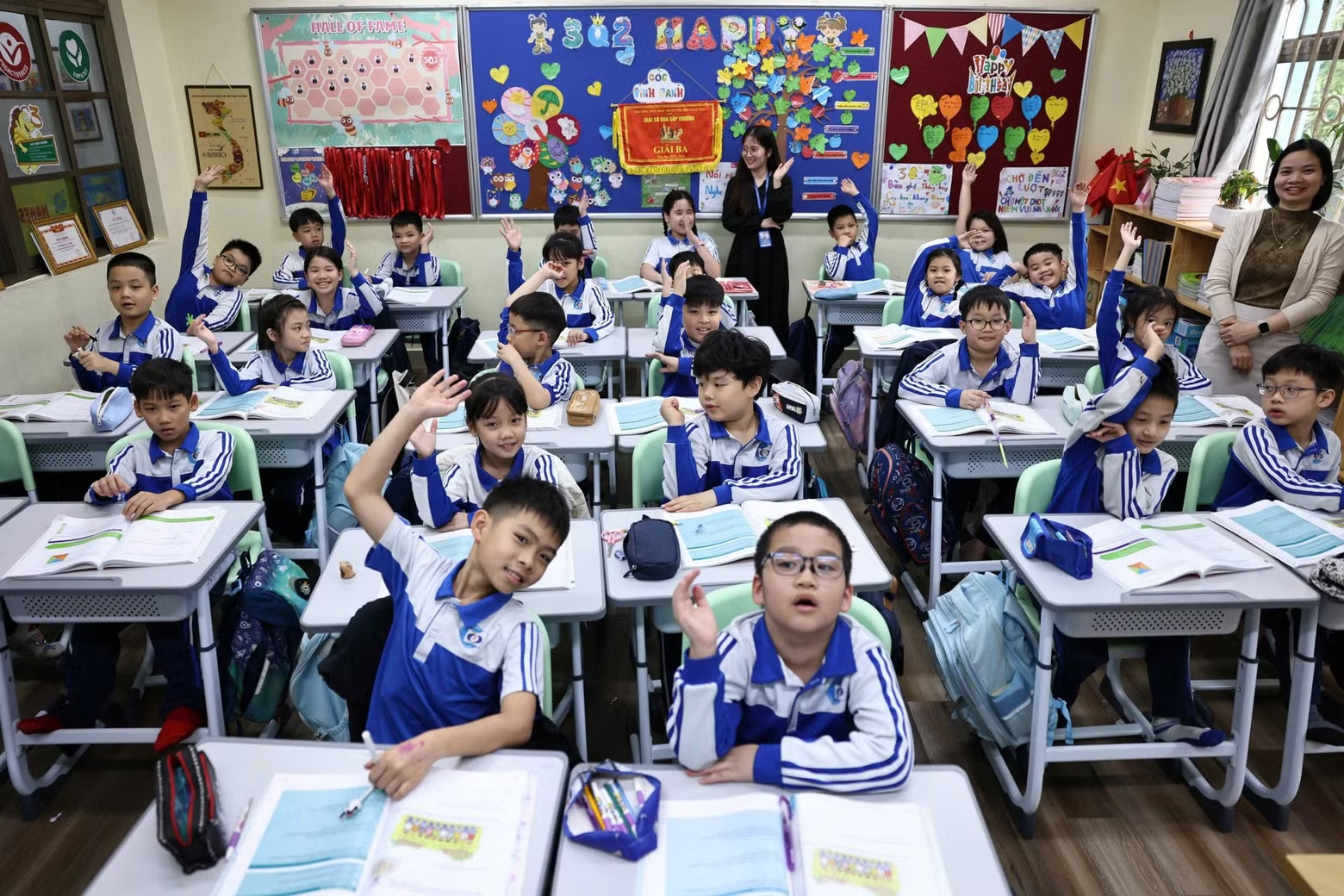
In 2025, the ministry also implemented the policy of using a single unified textbook nationwide from the 2026–2027 academic year, and providing free textbooks to all pupils by 2030 in accordance with Politburo’s Resolution No. 71-NQ/TW and the National Assembly’s resolution on special and exceptional mechanisms and policies to implement breakthroughs in education and training development.
The 2025 upper secondary graduation examination was the first for students under the 2018 General Education Programme, while still ensuring examination organisation for students under the 2006 programme. The examination recorded the largest number of candidates ever, with over 1.1 million registered candidates. It was organised in the context of restructuring the inspection system at all levels and terminating district-level public security operations. Examination organisation was conducted under the three-tier local government model while marking and result announcement were conducted under the two-tier model.
This was also the first year of applying new regulations for the upper secondary graduation examination aimed at reducing pressure, ensuring fairness, and increasing security, such as reducing the number of compulsory subjects, lowering the weighting of academic records, abolishing bonus points for vocational certificates, disallowing conversion of foreign language certificates into scores, and transporting examination papers via the secure system of the Viet Nam Information Security Commission.
The Prime Minister chaired a national conference on preparation for the examination and, at the end-of-year education conference for the 2024–2025 academic year, assessed the 2025 graduation examination as professional.
8. Elite education continues to be strengthened, achieving many proud results
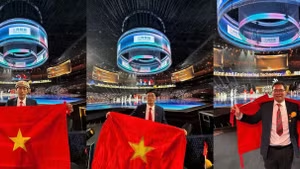
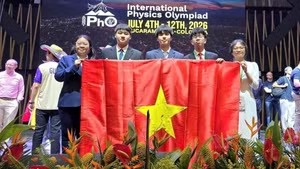
In 2025, Viet Nam sent seven delegations with 37 students to international and regional Olympiads. All contestants won prizes, including 13 gold medals, 16 silver medals, and eight bronze medals — marking an increase of one gold and one silver compared with 2024, the highest result in many years.
In their first participation, all eight members of Viet Nam’s national team at the International Artificial Intelligence Olympiad 2025 won prizes, including three gold medals, one silver medal, three bronze medals, and one certificate of merit, placing Viet Nam fourth out of 60 participating countries.
Vietnamese students also achieved outstanding results at the 2nd International Mathematics Olympiad in Turkmenistan; the 9th European Physics Olympiad in Bulgaria; the Mendeleev International Chemistry Olympiad; the Abu Rayhan-Beruni International Chemistry Olympiad; and the Artificial Intelligence Olympiad in China.
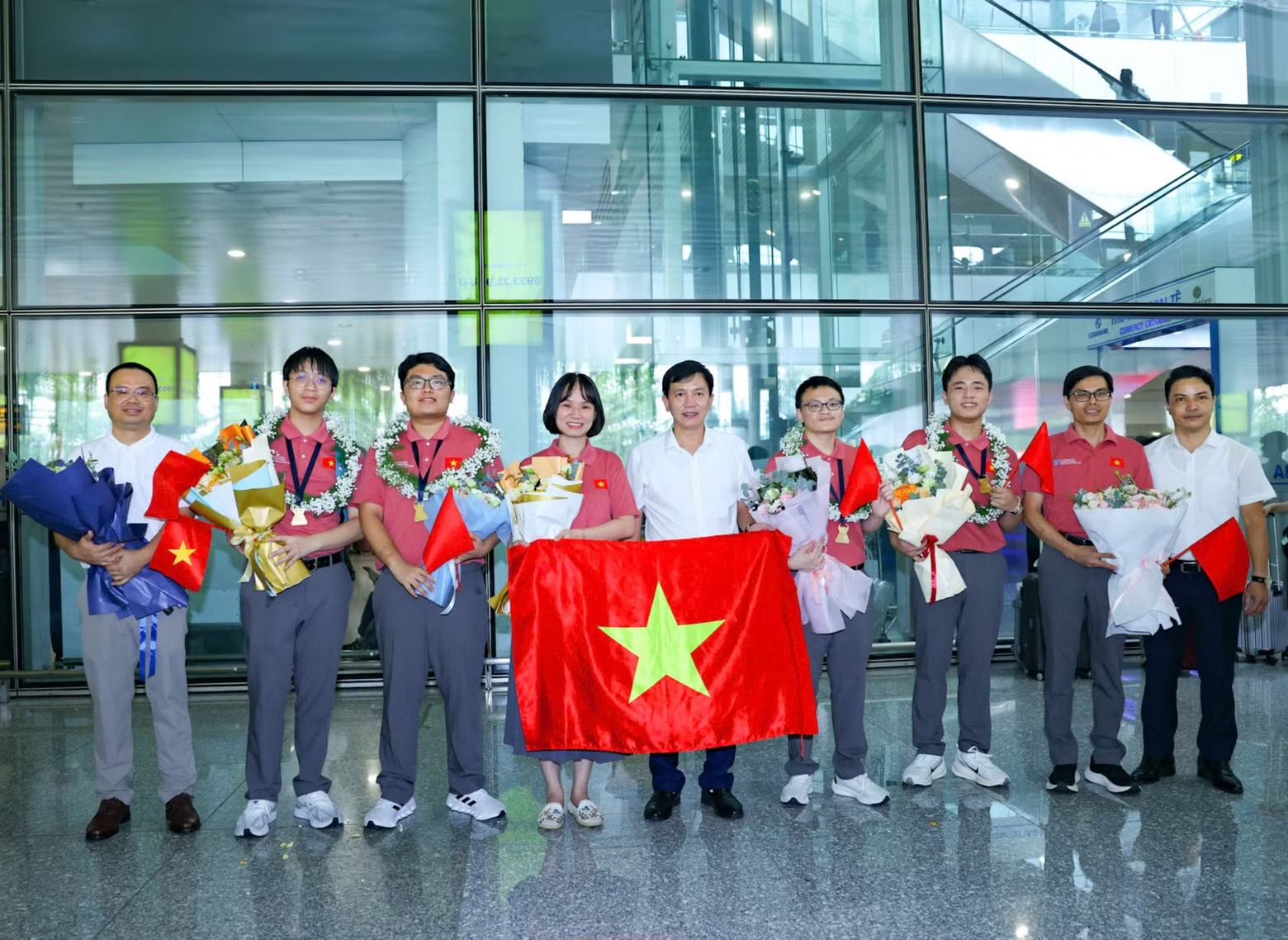
Notably, 2025 marked the first time the Vietnamese delegation achieved its highest-ever results at the International Science and Engineering Fair (ISEF) in the US, winning two second prizes, one third prize, three fourth prizes, and four special awards from sponsors — the best performance since Viet Nam first participated in the ISEF in 2013.
These outstanding achievements further affirm Viet Nam’s position in the region and globally, reflecting remarkable progress in general education.
9. Higher education achieved breakthroughs, enhancing national standing and developing key resources for the country’s future
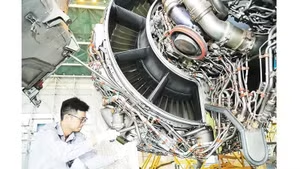
In 2025, the Ministry of Education and Training submitted and implemented many key projects on developing science and technology, innovation, and high-tech human resources. Higher education institutions proactively expanded and improved quality, systematising training standards in key fields such as the semiconductor industry, artificial intelligence, Industry 4.0 technologies, high-speed rail, and other strategic technology sectors.
Higher education recorded a clear breakthrough as 16 Vietnamese higher education institutions entered the Times Higher Education (THE) Impact Rankings for the first time. Enrolment in STEM fields increased sharply, with first-choice registrations rising by 10.5%. Higher entry scores for teacher training, strategic technology fields, science and engineering, and semiconductor training reflected renewed social confidence and attractiveness of these disciplines.
The proportion of lecturers who are professors, associate professors and doctorate holders exceeded 35%, accompanied by increases in scientific publications and technological development across the university system, leading to a sharp rise in international scientific publications compared with previous periods.
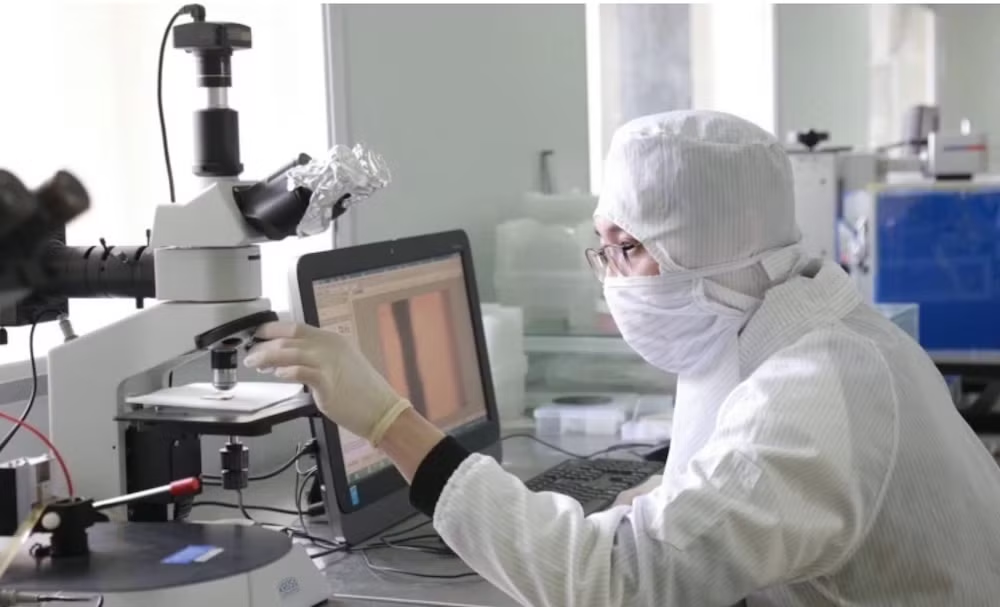
The tripartite cooperation model — university, state, and enterprise — began to be implemented widely and has gradually proved effective, particularly in foundational technology fields such as artificial intelligence, big data, robotics, and automated systems in production and transport. University–enterprise cooperation forums have served as bridges enabling students to access professional working environments early and increasing employment rates in their fields of study after graduation.
10. Strong digital transformation achievements in education, implementation of English as a second language in schools, and training of high-quality human resources
In 2025, digital transformation in the education sector continued to record major milestones. The education sector database system was basically completed, with 24.55 million records connected to the national database. The online examination registration and admissions system on the National Public Service Portal was completed at a “full-process” level, allowing 100% of candidates to register for the upper secondary graduation examination and apply for university and college admission entirely online.
In 2025, over 10 million academic records and more than 1.5 million upper secondary graduation certificates were issued in digital form, completing the digitisation process and synchronising with the ministry’s centralised database and the national database and VNeID e-wallet. Learners can look up academic records and certificates on VNeID.
In the 2025–2026 academic year, the ministry will implement nationwide digital academic records at all education levels and digital certificates from upper secondary to postgraduate levels, while digitising data for certificates previously issued.
Implementing the Politburo’s Conclusion No. 91-KL/TW (dated August 12, 2024) on continuing the implementation of Resolution No. 29-NQ/TW on fundamental and comprehensive reform of education and training, in 2025, the ministry developed and submitted Decision No. 2371/QD-TTg (dated October 27, 2025) to the Prime Minister, approving the scheme on “Making English the second language in schools for the 2025–2035 period, with a vision to 2045.”
The ministry has developed an implementation plan for this decision to improve English proficiency among children, pupils, and students, contributing to human development in the era of science and technology and the digital age, and strengthening international integration.
Implementing the policy of introducing artificial intelligence (AI) into education and training programmes, the ministry plans to pilot AI education content in selected general education institutions and pilot the application of AI in management, lesson planning support for teachers, and innovation in assessment and evaluation methods.