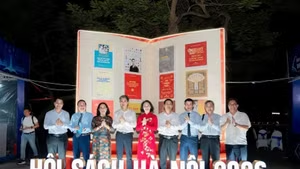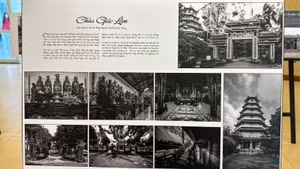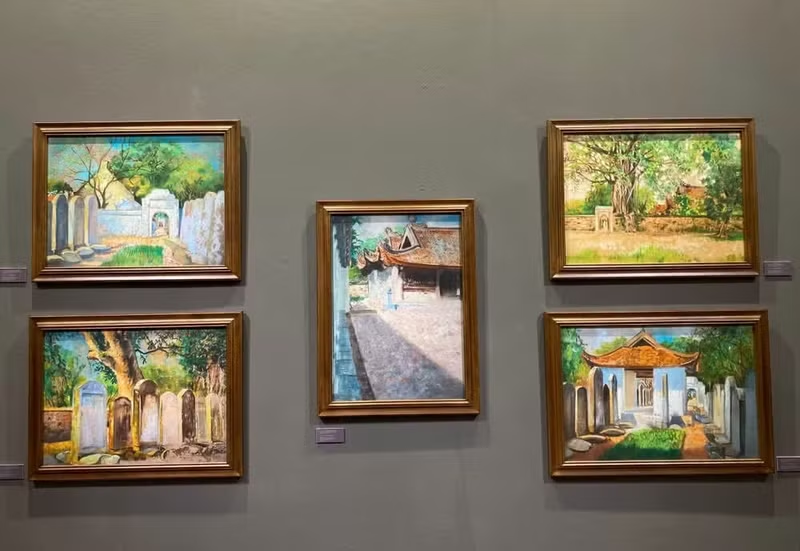
Designed with an open layout, the exhibition space creates a harmonious connection between history, art and the visitor experience. More than simply presenting works of art, the exhibition offers a journey through a century of images of Temple of Literature as seen through the diverse perspectives of painters, architects and photographers from different generations.
The exhibition creates an impressive meeting point between heritage and art by bringing together more than 60 works by 36 artists. It builds a bridge between renowned figures such as the late painter Trinh Huu Ngoc and the late painter To Ngoc Van, and today's younger generation of contemporary artists.
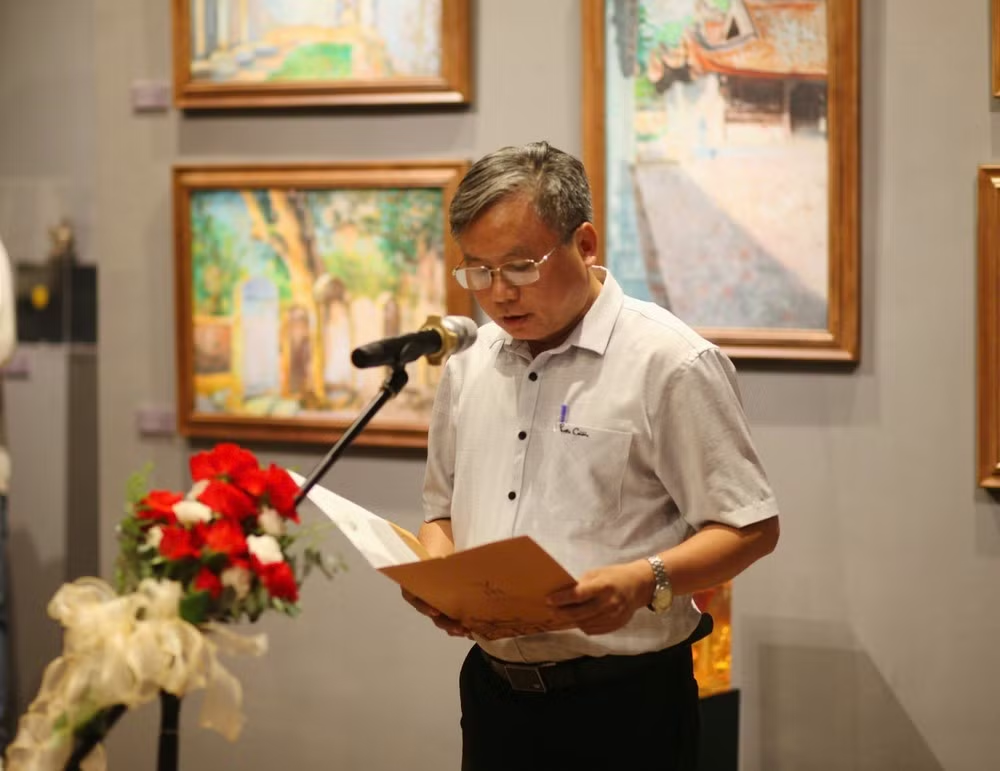
Speaking at the opening ceremony, Dr. Nguyen Van Tu, Deputy Director of the Van Mieu–Quoc Tu Giam Centre for Cultural and Scientific Activities, said that the best way to preserve and promote the value of heritage is to allow historical sites to remain "alive" in contemporary life. He emphasised that art is an important bridge connecting the public with heritage, making history more accessible and spreading cultural values through the language of emotion and creativity.
Through the diverse perspectives of artists from different generations, the exhibition not only celebrates the value of the Temple of Literature today but also helps promote Viet Nam's tradition of learning to audiences at home and abroad, towards to the 950th anniversary of the site's founding.
Also attending the exhibition, curator Nguyen The Son, who holds a Master's degree, said it was a special opportunity to be invited to curate an exhibition celebrating the 950th anniversary of Viet Nam's first university. Noting that the image of Van Mieu is often used as a symbol of Ha Noi but that no exhibition had ever focused specifically on this historic site, he carried out a study offering a "cross-section" of its development over more than 100 years.
After more than three months of preparation, the exhibition has brought together more than 60 works by 36 artists in various genres, including sketches, oil paintings, silk paintings, lacquer paintings, and installation art. He hopes the exhibition will serve as a tribute to history and the tradition of education, while also becoming a bridge connecting different generations of artists with people who appreciate heritage, knowledge and art.
With the aim of introducing a fresh approach to heritage for young people, the exhibition "Temple of Literature in art" also features works by young student artists. Among the highlights are photographs of the natural surroundings of the Temple of Literature by Pham Duy, a second-year student at the School of Interdisciplinary Sciences and Arts, Viet Nam National University, Ha Noi. The photographs were created using the cyanotype technique, a traditional photographic printing technique that produces distinctive blue monochrome images using sunlight.
Explaining why he chose this unique technique, Pham Duy said: "Although it is an old technique, it feels very new. In the digital age, when people are used to storing photographs as data files, this method allows us to touch and hold the finished work directly. It transforms a photograph into a tangible object with real value, rather than just a piece of digital data."
Pham Duy is not the only young artist to make an impression. Many other young participants have also attracted attention with restored works and fresh interpretations that reflect their own distinctive artistic styles.
By presenting carefully restored paintings and photographs, the exhibition "Temple of Literature in art" has built a bridge that brings heritage closer to the public, particularly young people. The event once again affirms that the Temple of Literature is an endless source of creative inspiration, regardless of age or artistic discipline.
Although each work has its own unique character, all share a deep appreciation for heritage, helping to spread Viet Nam's enduring spirit of respect for learning to audiences both at home and around the world.