Shifting from research to practical application
The Government’s orientation towards developing priority strategic technology products signals a shift from scattered research to concentrating resources on solving the economy’s major challenges. although Viet Nam has implemented many scientific projects at various levels, many outcomes have not yet been transformed into widely applied products or competitive businesses, leaving a gap between research and the market.
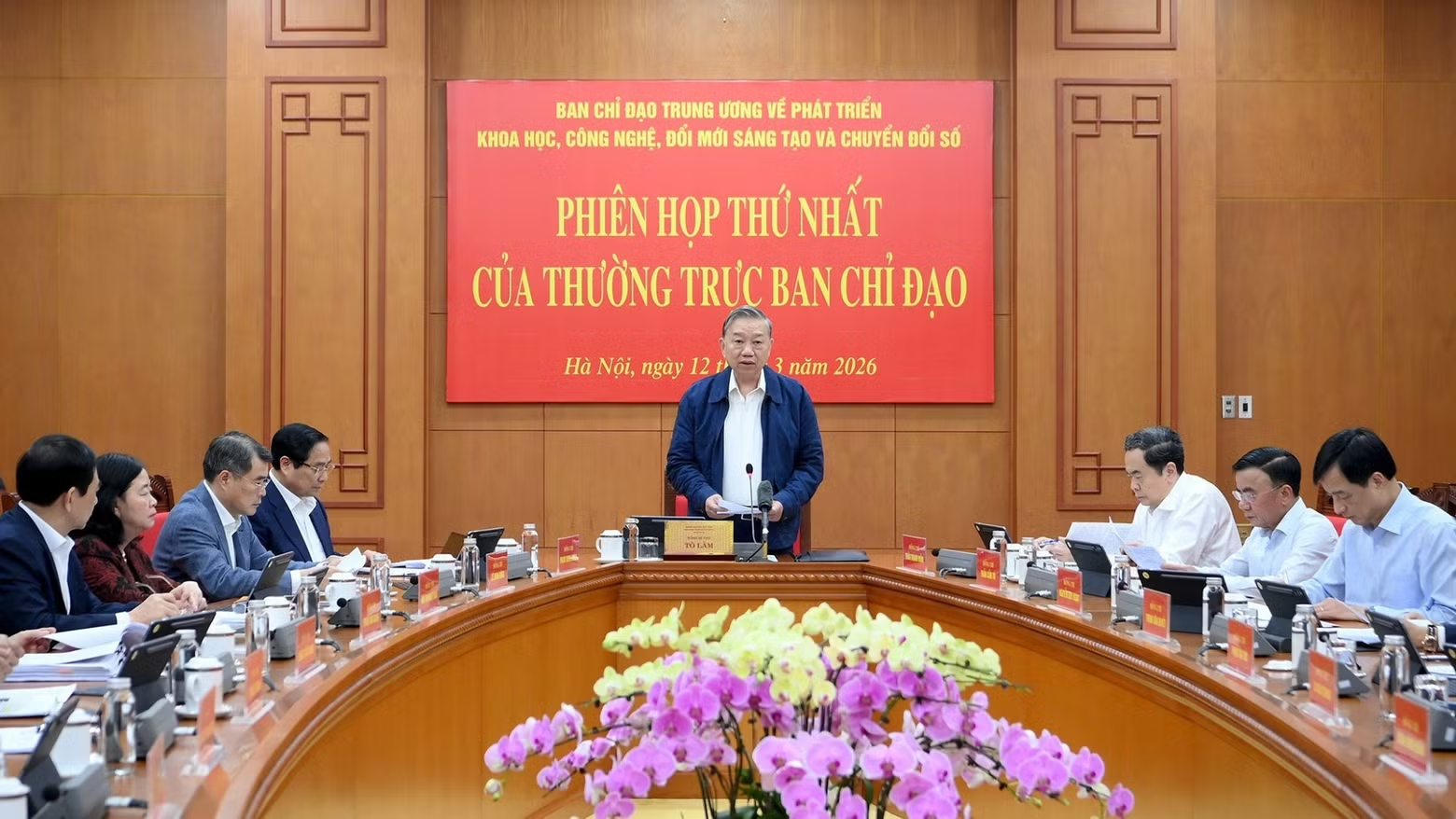
At the first meeting of the Stand Board of the Central Steering Committee for the Development of Science, Technology, Innovation and Digital Transformation, Party General Secretary To Lam, who is also Head of the Steering Committee, emphasised that the need to shift even more strongly from "implementing tasks" to "producing tangible, measurable results", from fragmented, scattered approaches to concentrating resources on solving major strategic national challenges.
Instead of starting from research topics, science and technology must begin with the needs of the economy, businesses, and society.
He highlighted the importance of developing core infrastructure and strategic technologies, including national data infrastructure, large databases, shared digital platforms, research and development facilities, and innovation ecosystems.
Strategic technologies, he stressed, must be linked to market demand and practical needs, creating measurable economic value through research, application, production, and commercialisation. High-quality human resources are essential, alongside broader digital skills training for the public.
This reflects a new approach: instead of starting from research topics, science and technology must begin with the needs of the economy, businesses, and society. Challenges such as boosting productivity, ensuring data security, developing smart cities, and managing resources efficiently are the problems science must address. Only when closely tied to practice can research generate clear economic and social value and enhance national competitiveness.
Building strategic technologies and “Make in Viet Nam” products
The Ministry of Science and Technology recently held a conference to realise Prime Ministerial Decision No. 2815/QĐ-TTg on the national science, technology, and innovation programme for developing priority strategic technology products for immediate implementation.
Six technologies were identified for immediate focus, including large language models and Vietnamese virtual assistants; edge-processing AI cameras; autonomous mobile robots; 5G mobile network systems and equipment; blockchain network infrastructure and application layers for traceability and tokenised assets; and unmanned aerial vehicles.
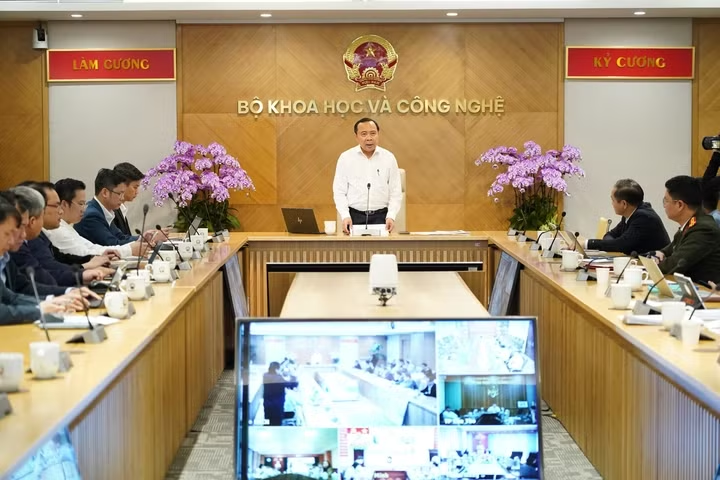
These technologies are foundational, with broad applicability across multiple sectors. Their selection reflects a new approach: concentrating resources to master core technologies and develop competitive “Make in Viet Nam” products.
One reason past research struggled to become products was the lack of linkage between institutes, universities, and businesses with research outcomes not closely aligned with market needs.
To overcome this, the Ministry advocates a three-party cooperation model between State, research institutes-universities, and businesses to concentrate resources on solving major challenges and forming "Make in Viet Nam" products with application and dissemination potential.
Developing strategic technology products not only meets immediate economic needs but also builds long-term resilience, technological self-reliance, and new knowledge-based industries.
In this model, the State provides orientation and policy frameworks; research institutes and universities develop core technologies; and businesses take the lead in commercialisation and application.
In the digital economy era, technological strength increasingly determines a nation’s position. Developing strategic technology products not only meets immediate economic needs but also builds long-term resilience, technological self-reliance, and new knowledge-based industries.
When “Make in Viet Nam” products can solve domestic challenges and compete internationally, science and technology will truly become a driver of development, narrowing the gap between research and real life.