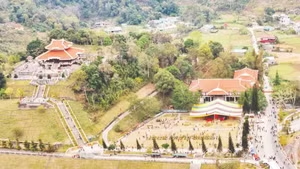
Officially recognised by the People’s Committee of Buon Ma Thuot City at the end of 2021, Ako Dhong's village charter is founded on the principle of promoting community self-governance. Nestled within the city, Ako Dhong stands out for its clean, orderly environment and its distinctive E De cultural flavour. Its highlight lies in the traditional longhouses nestled beneath lush green canopies.
According to Vo Thanh Phuong, Vice Chairman of Tan Loi Ward People’s Committee, Ako Dhong was declared a community-based tourism village at the beginning of 2023. The village is home to 370 households, including 84 ethnic minority households.
With its natural scenery and tourism potential, in the past two years the city has launched awareness campaigns encouraging residents to engage in tourism. People have been motivated to participate in and manage tourism activities, allowing them to benefit directly from community tourism. The city aims to develop tourism in a modern and civilised direction while preserving ethnic cultural identity.
Cultural identity of ethnic minorities is a key focus of Plan No. 65/KH-UBND issued by the People’s Committee of Buon Ma Thuot City, which outlines strategies for preserving and promoting ethnic minority cultures from 2022 to 2025, with a vision to 2030.
Emphasising the principle that the people are the primary actors and the State provides support, the plan has been concretised through media activities, cultural and artistic programmes, and more specifically, integrated into the charters and regulations of ethnic minority villages.
The Ako Dhong village charter affirms that although life in E De villages is rapidly changing, it has not lost its traditional cultural values rooted in ancestral and spiritual heritage. Residents continue to uphold and promote the distinctive customs of their homeland while honouring ethical standards and good traditions of their ethnic group.
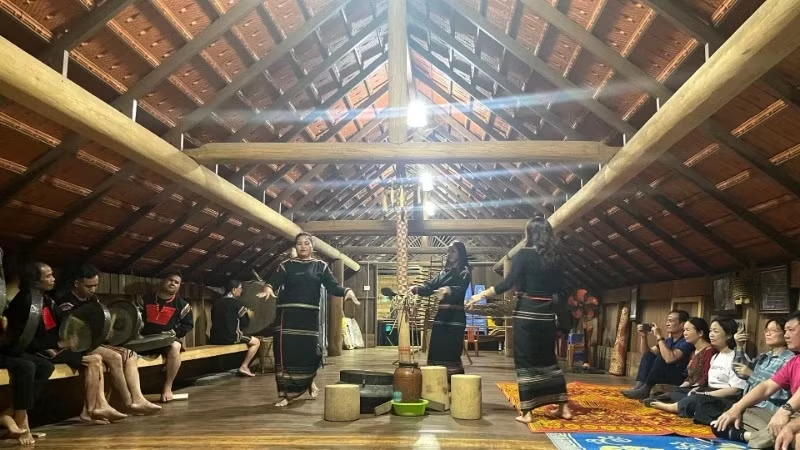
To preserve the unique cultural space of the E De while developing tourism, local authorities have encouraged villagers to restore and renovate traditional longhouses. Five households were initially mobilised to pilot community tourism, investing in the restoration and improvement of longhouses, opening local cuisine restaurants, and organising cultural programmes such as gong performances and xoang dances to welcome visitors.
Resources from provincial resolutions supporting community tourism development in ethnic minority villages have enabled Ako Dhong to build physical infrastructure, improve environmental landscapes, relocate livestock facilities, construct parking lots and public restrooms, and install directional signs. Villagers have also received training in hospitality skills.
The policy of preserving longhouses has been warmly welcomed, aligning with the community's desire to maintain traditional culture and enhance the village’s image. When first established, Ako Dhong had only seven longhouses, each housing two to three families. Today, after various transformations, the village boasts 35 longhouses.
Y Nuel Nie, owner of the Ama H’rin Village Elder's Cultural, Coffee and Culinary Space of the Central Highlands, stated that preserving longhouses for tourism development is a sound and appealing strategy. It serves as a model worth replicating in other villages pursuing community-based tourism.
Despite the fast-paced urbanisation of Central Highlands villages, Ako Dhong has retained a distinctive ethnic cultural space. While the population is now interwoven with various ethnic groups from across the country and modern life is becoming more prevalent, E De cultural traits remain dominant, reflected in traditional attire, housing, and crafts.
Pham Van Thai, Chairman of Tan Loi Ward People’s Committee and the official overseeing the charter’s implementation in Ako Dhong, said that in addition to tourism promotion, the charter also emphasises economic development and improving livelihoods.
Villagers have strictly adhered to the rules and regulations outlined in the charter. Moreover, the local authorities have established a Zalo group that includes the village head, party cell secretary, local police, party officials, and cultural officers to provide timely support to residents in case of emergencies.