Relying on... It’s odd!
It was 1972, in late autumn and early winter, around October, when Hanoi started having chilly days. Ba Tinh and Hoang Dinh Khoi (nicknamed “black” Khoi), were working at the Power and Water Construction Company under Hanoi Construction Department whose director was Bui Giao Kim, a former Hanoi intellectual with a lot of inventions. One morning, Bui Giao Kim had a private meeting with Dang Tran Hoi, Head of Planning and Technical Section and Nguyen Ba Luu, an engineer. The content of the meeting was not disclosed, but after that, Hoi talked in private with Nguyen Ba Luu, Nguyen Van Long, Trang Cong Tien, Hao and engineer Dinh Quang Tinh:
“Let us go in a hurry to a location far from Hanoi to make a fast survey and design of a complex of dwelling units with a bath house served with hot water for the Government guests”.
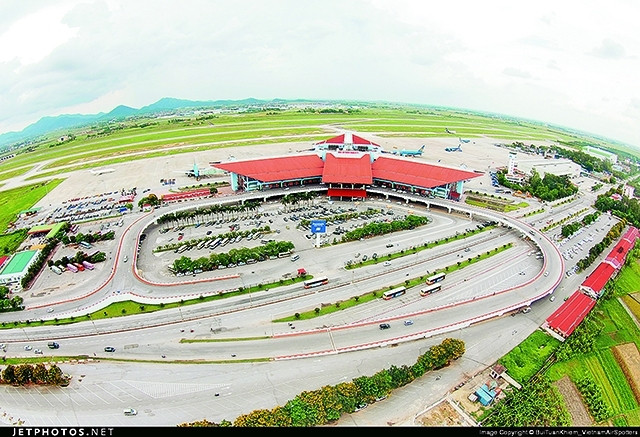
Having heard the order, they all kept it “secret” and started getting on a car with rulers, pens and paper in the hands ready for the job. Having arrived in the northern part of the Red River, Dong Anh area, the then Phuc Yen province, they were gradually able to locate it within Da Phuc Airport. “We crossed a barrier and found an empty airport. Actually there was only one airplane there. What was left was only waste land and sand! So how could we build a bath house with hot water? How is it possible to boil enough hot water?”
“How can we boil it?” – I asked.
Ba Tinh smiled enigmatically: “We have to build a bath house with shower! Each time, this bath house has to serve about 12 persons, you know! It’s odd, isn’t it?”
Oh, Good Heaven! In war time, it was only the dream for the Hanoi people to have a bath house with hot water! And it was even ludicrous to have a hot shower for a dozen of people. Ba Tinh felt vexatious, remembering that patch of land in Da Phuc Airport. How could it be possible to take water from other place? Could it be possible to use a high-pressure pump and put two water tanks high above? To no avail! More difficult was that it was impossible to fetch cold insulation material to wrap up the hot water pipe. Let alone, where could bathroom equipment be found? And the hard nut to crack was that this complex had to be built in five days and not longer. How?
The war time order was executed by engineer Hoang Dinh Khoi with enthusiasm, creativeness and in a relatively militaristic manner.
“Bui Giao Kim said that this was the instruction of the Chairman of Hanoi People’s Committee, Dr. Tran Duy Hung, and the Hanoi Power and Water Construction Company based at 59, Thong Phong Lane was ordered to build this bath house with hot water for the entourage of Henry Kissinger who was in Hanoi for a secret task. At that time, Hanoi and Washington were yet to have the diplomatic relations. So the entourage of Kissinger had to stay on the plane and were not allowed to enter Hanoi…. And as for the hot water bath, it was the US side that asked for our help!”
I was given by the Hanoi People’s Committee Chairman one car, one driver so that we could be able to drive straight to the different units. There were three units being mobilised urgently: The Chua Boc vermicelli plant (which supplied sanitary wares and bathroom equipment); the Hanoi Wood Working Plant (building a 3-compartment house with a bath house for American experts) and the Water Supply Company located in Cao Ba Quat Street (supplying 10 water tank trucks), whereas the Hanoi Power and Water Construction Company was responsible for heating water running through a pipe line to the showers for many people’s use at a time.

Artist Dinh Quang Tinh
“Do you want to kill me?”
After having heard the request from “black” Khoi that the Hanoi Vermicelli plant should urgently disassemble all the sanitary wares, water pipes, showers and so on which had been used to serve the Soviet experts at the plant and transport them to Da Phuc, the director of the plant, a friend of Khoi’s, cried out loud:
“Look, do you want to kill me? How could I do if all these good-quality sanitary wares for the experts get broken when they are disassembled?”
Khoi did not listen to it. He only consoled his friend that this was “the order from superior”, “the political task”, “the State’s foreign relations”, “the confidence of the senior leaders”, “the relations between Vietnam and the US; it was an important task” and “the Chua Boc vermicelli plant was the leading unit of the food sector, so there was no other way than to obey it”, then he asked three technicians of the plant to disassemble all the needed equipment and it took them half a day to finish with!
When the building of the bath house was completed, 10 water tank trucks had arrived, and then electricity was supplied. One big problem was left. They had never done the wrapping up of the hot water pipe with cold insulation materials. Yet, they had to do it anyway. They used the voltage tester pen and it was lighted. No safety! What a fright! How could it be used for bathing? They rushed to look for thermal resistance wire and cold insulation asbestos to wrap the pipe and engineer Nguyen Ba Luu was tasked to do this job.
“Possibly they thought I was helpful enough and still young, so they said to me: ‘Comrade Dinh Quang Tinh, do get into it and take the bath on trial basis to see if it is warm enough!’ I was in great fright upon hearing it, you know! It was very cold that year. Having been inside Da Phuc Airport, I wore a warm vest with fur collar. A strange feeling was creeping all over me. It was a feeling of happiness and pride. The Americans launched a B-52 carpet bombing raid against Hanoi for 12 days and nights in late December 1972, but our job had been well done three months before that.” Tinh looked contented with a smile.
Special reward
So they had finished the work and handed it to the army. Ba Tinh was rewarded with a bowl of phở (a Vietnamese specialty; it is rice noodle served with beef or chicken) by Dang Tran Hoi. Chairman of Hanoi People’s Committee Tran Duy Hung presented a certificate of commendation to those who had done remarkable job. The City also awarded them with a report of current affairs.
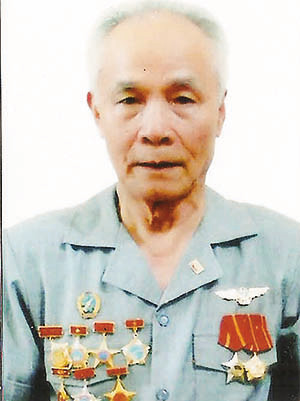
Mr Hoang Dinh Khoi
The next day, a black Volga was seen pulling up at Da Phuc Airport. Getting out of the car was Le Duc Tho who just came from the Paris Conference. He came to keep us informed of the situation of negotiation at the Conference. He talked about the tense situation during the negotiation. We were told about something that was confidential to the outside world at that time. The talk lasted for about one hour. There was one detail about the negotiation in Paris. Advisor Henry Kissinger and Comrade Le Duc Tho were seen taking a walk in the yard after the tense hours of talks. Having seen his silhouette on the ground, Kissinger said to Le Duc Tho:
“Look, Mr. Tho, I am taller than you, am not I?”
“You are longer, not taller than I, you see!” – Le Duc Tho answered.
Le Duc Tho said to us:
“This is the whole process that our Fatherland, our country has fought against the enemy. Your hot water work, the work of technicians and workers, has made a contribution to the victory of the Paris Conference….”
Having remembered the old story after about half a century, Ba Tinh and “black” Khoi felt sad: All the witnesses had gradually gone to the other world. Dang Tran Hoi, head of the section, died three years ago. Bui Giao Kim, the director, also died at the age of 93. The generation at that time was a talented generation! And they had never thought they were the witnesses of a small story out of a great story. Strong will, great energy and creativity of the Vietnamese, how marvelous!.