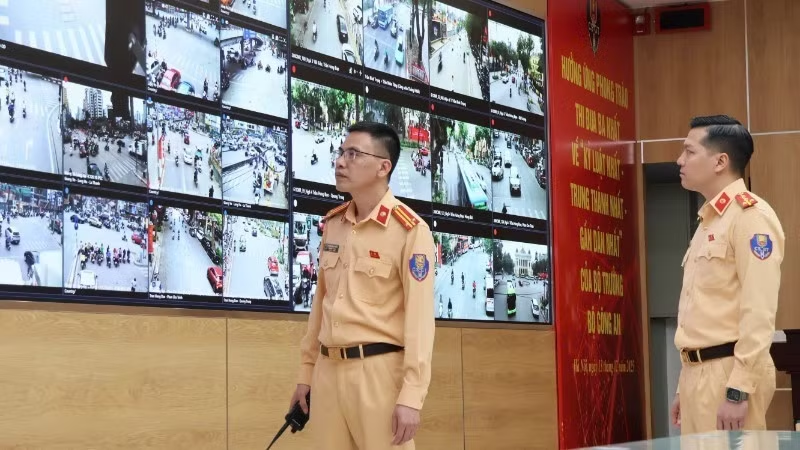
Accordingly, the Project aims to expand the system of surveillance cameras to ensure traffic order and safety, and public order on expressways, national highways, provincial roads, urban roads, and key traffic routes by 2030; gradually expanding to railways and inland waterways. It also aims to perfect a traffic management platform based on data and artificial intelligence to serve in detecting violations, analysing, forecasting, and coordinating traffic in real time; and to develop and provide digital transportation services to citizens and businesses through mobile devices and digital platforms as prescribed, contributing to improving the quality of public services in the transportation sector.
By 2050, it aims to complete a modern, interconnected national digital transportation management system covering all road, rail, and inland waterway routes; upgrade the technological capacity of Level 1 and Level 2 centres to an advanced, highly automated level; effectively apply big data and artificial intelligence in traffic management; and form a modern, proactive national transportation management system capable of forecasting and preventing risks, thereby contributing to reducing traffic accidents, limiting congestion, and improving the safety and smoothness of the transportation system.
The project will be implemented nationwide from 2026 to 2050, divided into three phases, with the goal of building a data centre for managing, monitoring, processing violations, and operating traffic according to a unified model across the country; operating on a shared data platform; and gradually applying artificial intelligence to support analysis, forecasting, and operation.
This centre will be built to become a national traffic management institution based on a unified, interconnected two-tier model nationwide, playing a central role in commanding, managing, monitoring, and processing violations as well as providing public services related to traffic, thereby ensuring centralised management, flexible operation based on geographical areas, and seamless connectivity between the central and local governments.